CM Sukhu triples gold medal prize for HP Commonwealth athletes
Synopsis
Himachal Pradesh CM Sukhvinder Singh Sukhu has revised prize money for Commonwealth and Para Commonwealth Games medallists — ₹3 crore for gold, ₹2 crore for silver, ₹1 crore for bronze — to ensure no talented athlete is held back by lack of financial support.
Key Takeaways
Gold medal prize at Commonwealth and Para Commonwealth Games set at ₹3 crore by the Himachal Pradesh government.
Silver medallists will receive ₹2 crore and bronze medallists ₹1 crore under the revised structure.
The revised prize explicitly covers Para Commonwealth Games athletes, putting them on par with able-bodied competitors.
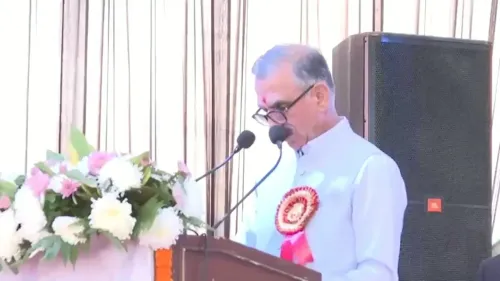
CM Sukhvinder Singh Sukhu announced the revision on 2 November 2026 , framing it as an effort to ensure no HP athlete is held back by lack of resources.
The move supplements central schemes like Khelo India with direct financial incentives for senior international medal performance.
Himachal Pradesh has an established base in wrestling, boxing, and athletics , giving the revised prizes an immediate talent pool to incentivise.
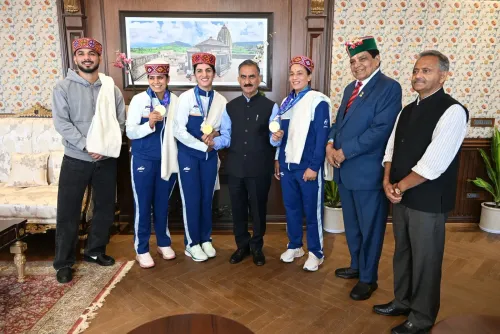
Himachal Pradesh has never lacked talent — it has lacked the reward to match it. On Monday, 2 November 2026, Himachal Pradesh Chief Minister Sukhvinder Singh Sukhu announced a sweeping revision to the state's cash prizes for athletes who win medals at the Commonwealth Games and Para Commonwealth Games, setting a new benchmark that places the mountain state among India's more generous sporting patrons.
Posting on X in Hindi, CM Sukhu declared: 'There is no shortage of talent among Himachal Pradesh's athletes. They simply need encouragement.' Translating that conviction into rupees, his government has now fixed the prize at ₹3 crore for a gold medal, ₹2 crore for silver, and ₹1 crore for bronze — covering both the Commonwealth and Para Commonwealth Games.
What the revised numbers mean for HP's para and able-bodied athletes
The explicit inclusion of Para Commonwealth Games medallists in the revised structure is the policy's sharpest edge. Para athletes have historically been clubbed into lower prize tiers or left out of state sporting incentive frameworks altogether. By parity-mapping them with their able-bodied counterparts, the Sukhu government signals that Himachal Pradesh's sporting ambition spans every category of competition.
The announcement follows a broader national pattern: several Indian states have revisited their cash-award structures in recent Commonwealth Games cycles, partly to supplement central schemes like Khelo India, which fund infrastructure and grassroots development but stop short of direct cash bonuses for senior international medals. State-level prize revisions fill precisely that gap — converting a medal podium finish into immediate, life-changing financial security for an athlete and their family.
A state with the athletes — and now the incentive
Himachal Pradesh has a credible sporting pedigree. The state has produced competitive wrestlers, boxers, and athletics competitors who have represented India at various international levels. The terrain, the training culture in institutions across Shimla and Dharamsala, and the pipeline from district academies to national camps have existed for decades. What has intermittently stalled that pipeline is the absence of a financial safety net strong enough to keep a young athlete in training through lean years rather than seeking steady employment.
A ₹3 crore gold-medal prize changes that calculus entirely. For an athlete from a hill district earning a subsistence income, the prospect of that reward is no longer abstract — it is a concrete reason to push through another season.
CM Sukhu framed the intent plainly: the government's goal is to ensure 'no talented athlete from the state is left behind due to lack of resources or encouragement, and gets every opportunity to prove their talent at the international level.' The next Commonwealth Games cycle will be the first real test of whether that promise translates into medals — and into the stories Himachal Pradesh has been waiting to tell.
Point of View
Himachal Pradesh is trying to close the gap between its athlete pipeline and its podium count. The explicit inclusion of Para Commonwealth Games athletes is a meaningful departure from the usual afterthought status of para sport in state policy. Placed against the national backdrop of Khelo India spending and competing state-level incentive races, the announcement is also a soft political signal — Congress-governed HP aligning its own sports narrative ahead of the next Games cycle. The real measure will be in implementation: whether the awards are paid promptly and publicised enough to actually shift behaviour inside Himachal's district-level sporting ecosystem.
NationPress
2 Nov 2026
Frequently Asked Questions
How much prize money will Himachal Pradesh give for a Commonwealth Games gold medal?
Himachal Pradesh will give ₹3 crore for a gold medal at both the Commonwealth Games and Para Commonwealth Games, as announced by CM Sukhvinder Singh Sukhu on 2 November 2026.
What is the prize money for silver and bronze medals under HP's new sports scheme?
Silver medallists will receive ₹2 crore and bronze medallists will receive ₹1 crore under the revised prize structure announced by the Himachal Pradesh government.
Does the Himachal Pradesh prize money apply to Para Commonwealth Games athletes too?
Yes. The revised prize structure explicitly covers Para Commonwealth Games athletes, placing them on an equal footing with able-bodied Commonwealth Games medallists.
Why did Himachal Pradesh revise its Commonwealth Games prize money?
CM Sukhu stated the revision aims to ensure no talented HP athlete is held back by a lack of resources or encouragement, and that every athlete gets a full opportunity to prove themselves at the international level.
Which sports are Himachal Pradesh athletes known for in Commonwealth Games competitions?
Himachal Pradesh has produced competitive athletes in wrestling, boxing, and athletics , disciplines in which state athletes have participated at national and international levels.