Assam to partner IIT Guwahati for Brahmaputra erosion solution
Synopsis
Assam is moving beyond stopgap embankments: CM Himanta Biswa Sarma has announced a formal IIT-Guwahati partnership to build a science-driven, permanent strategy against Brahmaputra erosion—one of the state’s oldest and most devastating geographic crises—backed by an existing ₹90 crore mitigation fund.
Key Takeaways
Assam CM Himanta Biswa Sarma announced a collaboration with IIT-Guwahati on 3 August to devise a long-term, scientific anti-erosion strategy.
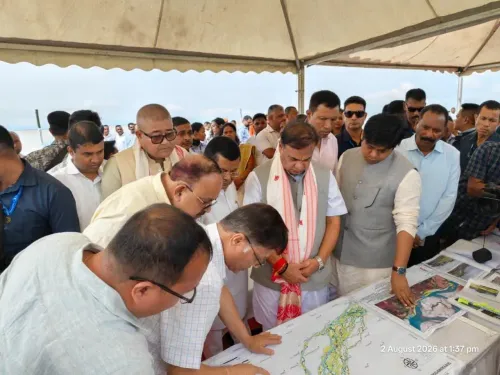
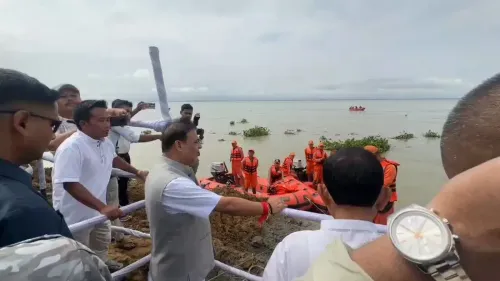
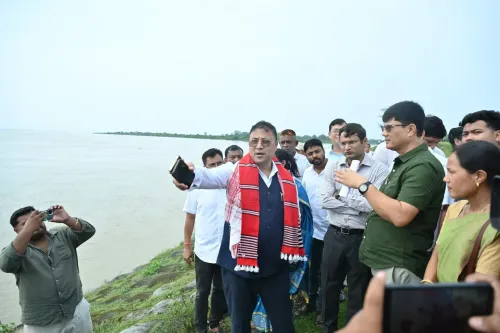
The Chief Minister reviewed erosion damage in Dibrugarh district , visiting sites including Chabua , Balijan , Pukhurijan , Dinjan , and Rahmoria .
The IIT-Guwahati study will complement the state’s ongoing ₹90 crore riverbank erosion mitigation project.
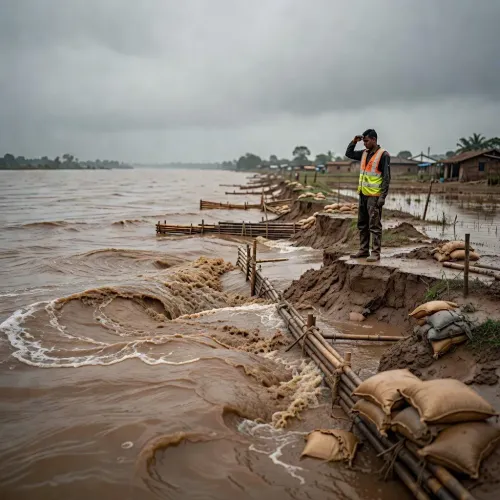
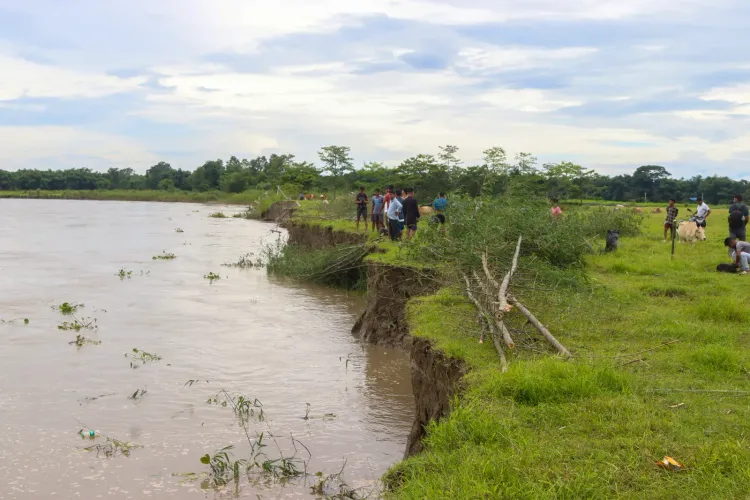
Brahmaputra erosion displaces thousands of families and destroys agricultural land and infrastructure across Assam every monsoon season .
The government aims to replace reliance on temporary measures with advanced engineering techniques and research-backed interventions.
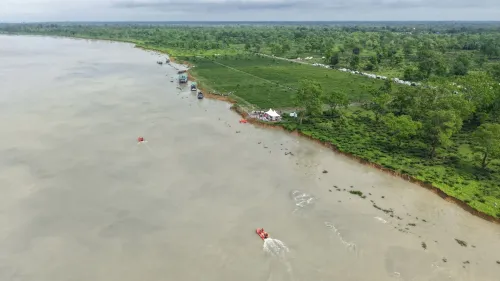
Assam Chief Minister Himanta Biswa Sarma on Monday, 3 August announced that the state government will collaborate with the Indian Institute of Technology Guwahati (IIT-Guwahati) to develop a scientific, long-term strategy against recurring riverbank erosion caused by the Brahmaputra. The move follows a ground-level review by the Chief Minister of erosion-hit sites in Dibrugarh district, where entire stretches of land are being swallowed by the shifting river each year.
What the Government Announced
Chief Minister Sarma said a formal meeting with IIT-Guwahati experts will be convened shortly to identify permanent, research-backed solutions to the erosion crisis. “We will soon hold a meeting with experts from IIT-Guwahati to identify a permanent and scientific solution to the recurring erosion problem. Our teams are already working on mitigation measures, but we need a long-term strategy backed by modern technology and research,” he said.
The proposed IIT-Guwahati collaboration will feed into the state’s existing ₹90 crore erosion mitigation project, which is focused on reinforcing vulnerable riverbanks and limiting the loss of farmland, homes, and public infrastructure.
Ground Situation in Dibrugarh
Sarma visited several high-risk locations in Dibrugarh district, including Chabua, Balijan, Pukhurijan, Dinjan, and Rahmoria, where he interacted directly with residents who have lost significant land to the Brahmaputra’s shifting course. He assured affected communities that the government is closely monitoring the situation and will continue providing all necessary assistance while pursuing permanent protective measures.
Why Brahmaputra Erosion Is a Persistent Crisis
Riverbank erosion along the Brahmaputra is among Assam’s most severe geographical and developmental challenges. The river’s dynamic, braided channel shifts course dramatically during the monsoon, washing away vast tracts of agricultural land and displacing thousands of families annually. Several districts along its banks have recorded large-scale land loss year after year, with critical infrastructure frequently at risk.
The state government has so far relied on a combination of immediate protection works—such as embankment reinforcement—and short-term mitigation measures. Officials acknowledge that these alone are insufficient and that advanced engineering techniques and scientific interventions are now essential.
The IIT-Guwahati Partnership: What It Could Change
Bringing in IIT-Guwahati marks a shift toward evidence-based river management. The institution’s expertise in hydraulic engineering and geospatial analysis could help model the Brahmaputra’s erosion patterns with greater precision, enabling targeted interventions rather than blanket embankment projects. The scientific study is expected to complement, not replace, the ongoing ₹90 crore project.
This is not the first time Assam has sought technical expertise to address Brahmaputra-related challenges, but formalising an IIT partnership for a long-term strategy represents a more structured approach than previous efforts. The outcome of the proposed meeting with IIT-Guwahati experts will be closely watched by communities and policymakers across the Brahmaputra valley.
Point of View
Yet modest against the scale of annual land loss across dozens of affected districts. What Assam really needs is a river-management framework with measurable outcomes, independent monitoring, and community resettlement provisions—not just better engineering blueprints that sit in government files.
NationPress
3 Aug 2026
Frequently Asked Questions
Why is Assam partnering with IIT-Guwahati on Brahmaputra erosion?
Assam is partnering with IIT-Guwahati to develop a permanent, science-backed strategy to combat recurring riverbank erosion caused by the Brahmaputra. CM Himanta Biswa Sarma said existing mitigation measures are insufficient and that modern technology and research are needed for a long-term solution.
What is the ₹90 crore erosion mitigation project in Assam?
It is an ongoing state government project aimed at strengthening vulnerable riverbanks along the Brahmaputra and reducing the loss of agricultural land, homes, and public infrastructure. The proposed IIT-Guwahati scientific study is intended to complement this project with evidence-based planning.
Which areas in Dibrugarh did CM Sarma visit during his erosion review?
CM Sarma visited Chabua, Balijan, Pukhurijan, Dinjan, and Rahmoria in Dibrugarh district, where he interacted with residents who have suffered extensive land loss due to the Brahmaputra’s shifting course.
How serious is Brahmaputra riverbank erosion in Assam?
Brahmaputra erosion is one of Assam’s most severe and recurring geographical challenges. Every monsoon season, large stretches of land are washed away across multiple districts, displacing thousands of families and damaging agricultural land and critical infrastructure.
What approach will IIT-Guwahati bring to tackling Brahmaputra erosion?
IIT-Guwahati’s expertise in hydraulic engineering and geospatial analysis is expected to help model the river’s erosion patterns more precisely, enabling targeted, technology-driven interventions. A formal meeting between state officials and IIT-Guwahati experts is to be convened shortly to begin formulating the strategy.