Lower Subansiri Dam safe, says Assam Minister after site inspection

Synopsis
With Assam's flood season at its peak, a cabinet minister made a rare on-site visit to the 2,000 MW Lower Subansiri Dam — and the numbers from the July 13 inflow event tell the real story: nearly 13,800 cumecs in, 12,500 out in a controlled release, and the rest held back to shield Dhemaji, Lakhimpur, and Majuli. The dam's 15-metre flood cushion is doing the work downstream communities were promised it would.
Key Takeaways
Assam Minister Ranoj Pegu inspected the 2,000 MW NHPC Lower Subansiri Hydroelectric Project at Gerukamukh on 3 August .
The 116-metre-high dam has its reservoir at 92 metres , with a 15-metre flood cushion maintained for monsoon inflows.
Water is currently being released at 3,800 cumecs in a regulated manner.
Peak inflow of 13,800 cumecs was recorded on 13 July ; approximately 12,500 cumecs was discharged in a controlled manner.
Downstream districts of Dhemaji , Lakhimpur , and Majuli were specifically reassured; dam operations comply with National Dam Safety Authority guidelines.
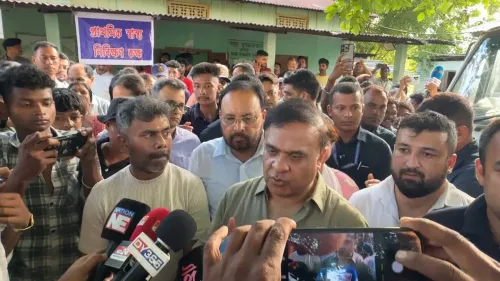
Assam Education and Information Technology Minister Ranoj Pegu on Monday, 3 August visited the 2,000 MW NHPC Lower Subansiri Hydroelectric Project at Gerukamukh and declared the dam structurally sound, seeking to calm fears among downstream communities rattled by recent flooding across the state.
What the Inspection Found
Pegu reviewed the dam structure, reservoir, control room, and the Early Warning System installed at the facility. He also held detailed discussions with NHPC engineers on operational mechanisms and flood management protocols currently in place.
According to the minister, the 116-metre-high dam has its reservoir filled to 92 metres, maintaining a 15-metre flood cushion to absorb excess monsoon inflows and moderate downstream flooding. Water is currently being released at approximately 3,800 cubic metres per second (cumecs) in a regulated manner.
Peak Inflow During July Rains
Pegu noted that the project recorded its highest inflow of nearly 13,800 cumecs during a heavy rainfall spell on 13 July. Of this, approximately 12,500 cumecs was discharged in a controlled manner, while the remaining volume was retained in the reservoir to reduce downstream flood intensity — a figure that officials say demonstrates the dam's buffering capacity under stress conditions.
What the Government Said
'After personally inspecting the project and interacting with the engineers, I am convinced that the Lower Subansiri Dam is safe. The release of water is carefully regulated, and all operations are being carried out under the prescribed safety protocols,' Pegu said.
He added that reservoir levels are under continuous surveillance and that the dam is being operated in line with guidelines set by the National Dam Safety Authority.
Reassurance for Downstream Districts
Pegu specifically addressed residents of downstream districts including Dhemaji, Lakhimpur, and Majuli, stating there was no cause for panic. He underlined that the project has the capacity to temporarily store excess monsoon inflows and release water in a calibrated manner to help mitigate flood risks.
He reiterated that the safety of downstream communities remains the government's foremost priority and that all agencies are working in close coordination. With the monsoon season still active, the dam's operations will remain under close watch in the weeks ahead.
Point of View
Particularly Majuli and Dhemaji, has long carried a disproportionate flood burden that communities attribute, fairly or not, to dam operations. The 13 July inflow data is the most credible element here: retaining roughly 1,300 cumecs of a near-peak event is a meaningful buffer. What the reassurance does not address is the structural question that has shadowed Lower Subansiri for two decades — whether a dam of this scale, in a seismically active zone, has adequate independent third-party safety audits beyond National Dam Safety Authority compliance. Transparency on audit frequency and findings would do more to build lasting public trust than ministerial visits alone.
NationPress
18 Sept 2026
Frequently Asked Questions
Is the Lower Subansiri Dam safe during the 2025 monsoon?
According to Assam Minister Ranoj Pegu, who inspected the site on 3 August, the dam is structurally safe and is being operated under National Dam Safety Authority guidelines. The reservoir currently maintains a 15-metre flood cushion to absorb excess inflows.
What is the current water level at the Lower Subansiri reservoir?
The reservoir is filled to 92 metres against the dam's full height of 116 metres, leaving a 15-metre flood cushion. Water is being released downstream at approximately 3,800 cumecs in a regulated manner.
How much water was released during the July 13 heavy rainfall event?
The dam recorded its highest inflow of nearly 13,800 cumecs on 13 July. Of this, approximately 12,500 cumecs was discharged in a controlled manner, while the remainder was retained in the reservoir to reduce downstream flood intensity.
Which downstream districts are at risk and what is being done?
Districts of Dhemaji, Lakhimpur, and Majuli lie downstream of the project. The minister stated there is no cause for panic, as the dam can temporarily store excess inflows and release water in a calibrated manner to mitigate flood risks.
Who oversees the safety of the Lower Subansiri Dam?
The dam is operated by NHPC and its safety is governed by guidelines set by the National Dam Safety Authority. Reservoir levels are under continuous surveillance, according to the state government.