Assam MLAs, Autonomous Council donate to CM Relief Fund

Synopsis
Two Assam MLAs and the Kamatapur Autonomous Council donated to the Chief Minister's Relief Fund on 24 July 2026 for flood relief. CM Himanta Biswa Sarma expressed gratitude for the contributions as the state battles its annual monsoon flooding crisis.
Key Takeaways
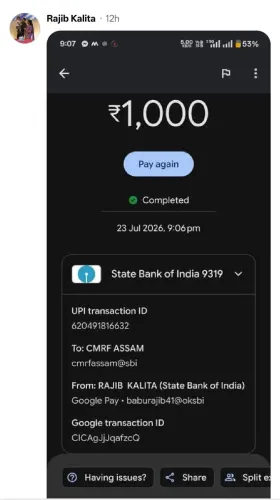
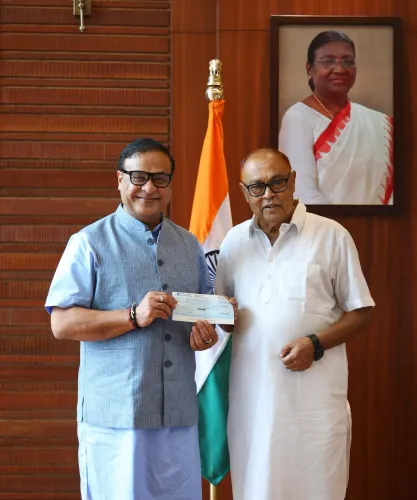
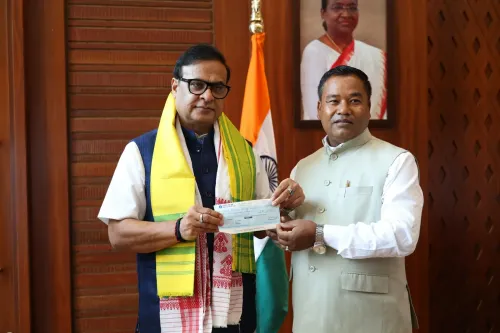
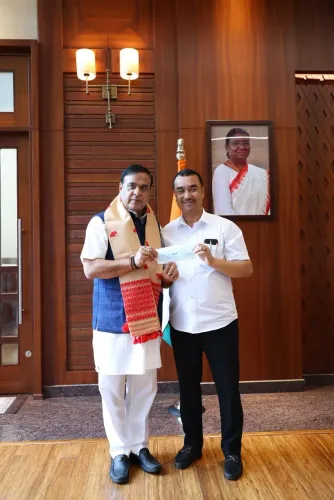
MLA Lunsing Teron and MLA Pabitr Rabha contributed a portion of their salaries to the Chief Minister's Relief Fund on 24 July 2026 .
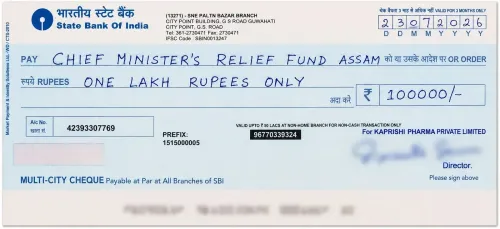
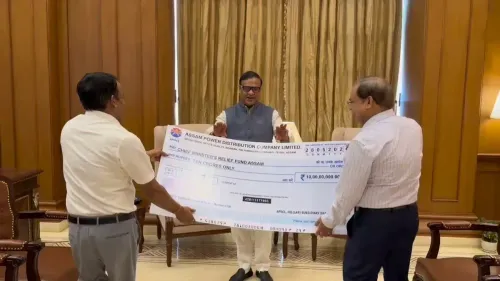
The Kamatapur Autonomous Council, North Salmara, Bongaigaon donated ₹1 lakh to the CMRF.
Himanta Biswa Sarma publicly acknowledged and thanked the contributors for their solidarity with flood-affected Assam residents.
The CMRF is a state-managed fund used for immediate disaster relief beyond regular budget allocations.
Assam faces recurrent annual flooding along the Brahmaputra basin, making CMRF contributions from legislators and local bodies a recurring feature of the state's relief response.
The Chief Minister's Office of Assam announced on Friday, 24 July 2026 that two Members of the Legislative Assembly and a local autonomous body have contributed to the Chief Minister's Relief Fund (CMRF) to support ongoing flood relief operations across the state. Chief Minister Dr. Himanta Biswa Sarma acknowledged the donations and expressed gratitude for the solidarity shown with flood-affected residents.
Context
MLA Shri Lunsing Teron and MLA Shri Pabitr Rabha each contributed a portion of their salary to the CMRF, while the Kamatapur Autonomous Council, North Salmara, Bongaigaon donated ₹1 lakh to the fund. The contributions come as Assam grapples with its annual monsoon flooding season, which regularly displaces hundreds of thousands of residents along the Brahmaputra river basin and its tributaries.
CM Sarma publicly acknowledged the gesture, saying he expressed 'heartfelt gratitude for their generous support and solidarity with the flood-affected people of Assam,' as stated in the official post from the Chief Minister's Office.
Policy Backdrop
The Chief Minister's Relief Fund is a state-managed corpus activated during natural calamities to provide immediate assistance beyond regular budgetary allocations. Assam governments across administrations have periodically called upon legislators, local bodies, and citizens to contribute to the CMRF during peak flood seasons, making such donations a recurring feature of the state's disaster response architecture.
The practice mirrors similar mechanisms in other flood-prone Indian states, where elected representatives voluntarily redirect a portion of their salaries to supplement official relief operations. The CMRF enables faster disbursement of aid compared to formal budgetary channels, which require legislative approval and procedural clearances.
Stakeholders and Impact
The immediate beneficiaries are flood-affected residents of Assam, who rely on CMRF-funded relief for shelter, food, drinking water, and emergency medical assistance during the monsoon months. Contributions from elected representatives carry symbolic weight as well, signalling institutional solidarity at a time when constituents are under acute stress.
The Kamatapur Autonomous Council, a local self-governance body operating in the North Salmara area of Bongaigaon district, represents a grassroots administrative layer whose participation underscores that relief mobilisation is not confined to state-level actors alone. Autonomous councils and district bodies have historically played a role in channelling community resources to the CMRF during emergencies.
What's Next
Attention will now turn to utilisation reports on CMRF disbursements and whether the Assam legislature takes up supplementary budget discussions on long-term flood mitigation infrastructure, including embankment reinforcement and early-warning systems along the Brahmaputra and its tributaries. The pattern of legislator contributions is likely to continue as the monsoon season progresses through July and August 2026.
Broader questions about structural flood management in Assam — including drainage improvement and upstream coordination — remain on the policy agenda, with each flood season renewing pressure on the state government to move beyond relief and toward resilience.
Point of View
Serving both a practical and a performative function. While the amounts are modest relative to the scale of annual flood damage, they signal institutional cohesion around the ruling dispensation's relief narrative. For CM Sarma, publicly acknowledging each donation reinforces his administration's image of proactive disaster management ahead of any critical legislative or electoral scrutiny. The deeper policy question — whether Assam can reduce its structural vulnerability to Brahmaputra flooding — remains unaddressed by such contributions, pointing to the limits of relief-centric approaches to a chronic crisis.
NationPress
24 Jul 2026
Frequently Asked Questions
What is the Chief Minister's Relief Fund in Assam?
The Chief Minister's Relief Fund (CMRF) is a state-managed corpus in Assam used to provide immediate financial assistance to people affected by natural calamities such as floods, beyond what regular budgetary allocations cover. It accepts donations from individuals, elected representatives, institutions, and corporate bodies.
Which MLAs donated to the Assam CMRF in July 2026?
MLAs Shri Lunsing Teron and Shri Pabitr Rabha donated a part of their salaries to the Assam Chief Minister's Relief Fund on 24 July 2026 in support of flood relief efforts.
How much did the Kamatapur Autonomous Council donate to the CMRF?
The Kamatapur Autonomous Council, North Salmara, Bongaigaon donated ₹1 lakh to the Chief Minister's Relief Fund to support Assam flood relief operations.
Why does Assam face floods every year?
Assam experiences recurrent monsoon flooding primarily due to the Brahmaputra river and its tributaries overflowing their banks during the June-to-September monsoon season. Factors include heavy rainfall in upstream catchment areas, sedimentation raising riverbed levels, and inadequate embankment infrastructure.
How can one donate to the Assam Chief Minister's Relief Fund?
Donations to the Assam CMRF can be made through official government channels notified by the state government. Elected representatives, autonomous councils, and members of the public have all contributed to the fund during past flood seasons.