Assam CM Office unveils housing, dairy hubs in flood recovery plan
Synopsis
The Chief Minister's Office of Assam has outlined a long-term flood recovery plan anchored by model housing units and dairy hubs, aiming to rebuild homes and restore rural livelihoods for communities repeatedly displaced by Brahmaputra and Barak river flooding.
Key Takeaways
The Chief Minister's Office of Assam announced model housing and dairy hubs as core elements of the state's long-term flood recovery plan on August 13, 2026 .
The plan targets both shelter reconstruction and livelihood restoration for flood-affected households in one integrated approach.
Dairy farming is a primary income source for many rural families in flood-prone Assam, making dairy hub inclusion strategically significant.
Chief Minister Himanta Biswa Sarma has championed integrated resilience frameworks since taking office in May 2021 .
District-level rollout timelines and implementation reach remain the critical variables to watch.
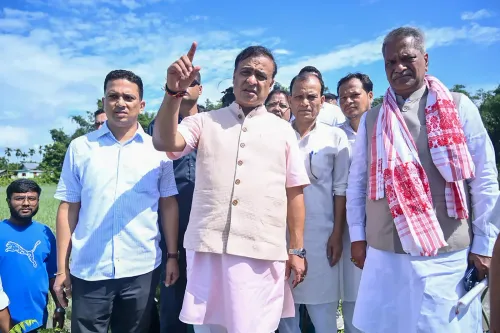
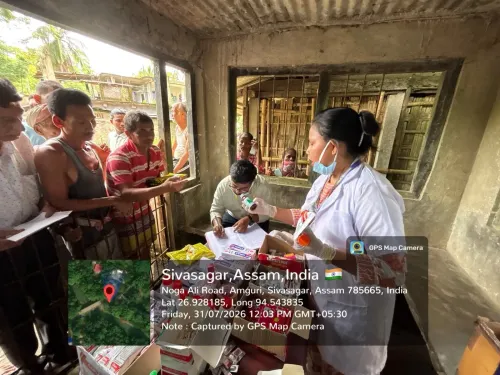
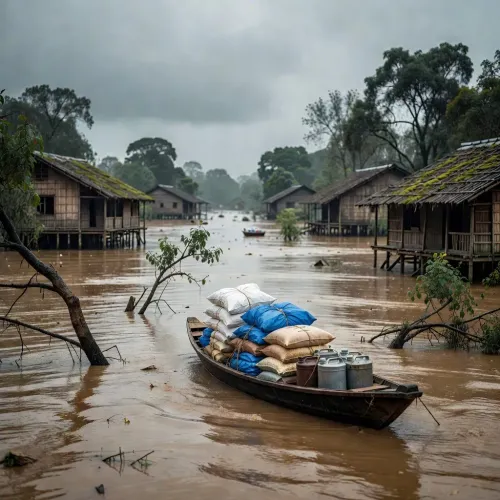
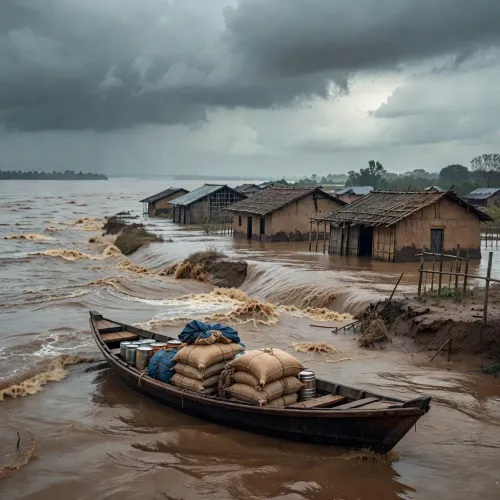
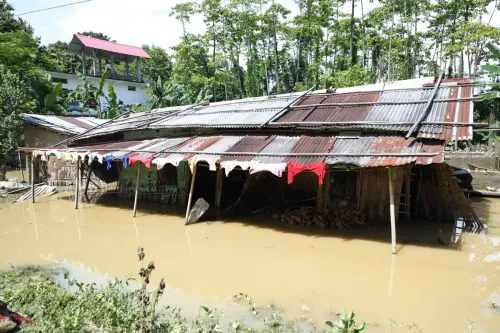
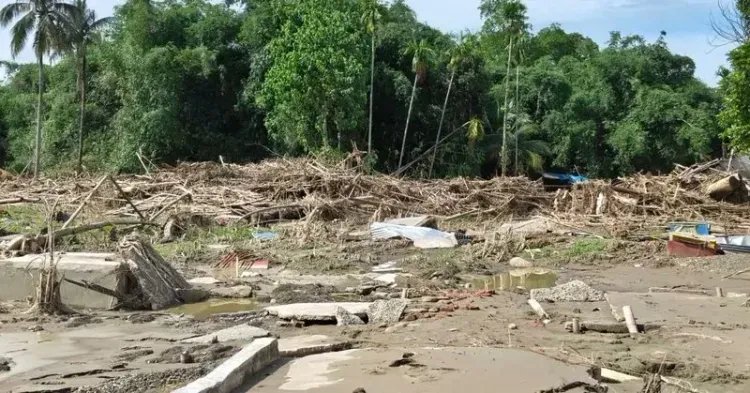
Every monsoon, the Brahmaputra swallows villages whole — and for years, Assam's flood-displaced families rebuilt on the same fragile ground, only to lose everything again. Now, the state is trying something different. The Chief Minister's Office of Assam announced on Thursday, August 13, 2026 that model housing units and dairy hubs are central to the government's long-term flood recovery strategy, aimed at not just rebuilding homes but restoring rural livelihoods at the same time.
Housing and dairy: a twin-track approach to recovery
The plan marks a shift from conventional disaster relief — which typically focuses on immediate shelter and food — toward integrated reconstruction that ties permanent housing to income restoration. By pairing model housing with dairy hubs, the government is betting that flood-affected families need a stable roof and a stable income source to break the cycle of recurring displacement.
Dairy farming is already a significant livelihood for rural households across Assam's flood-prone districts. Embedding dairy infrastructure into recovery planning means livestock-dependent families can resume productive activity faster, rather than waiting months or years for scattered support to arrive.
Why Assam keeps rebuilding — and why this time may differ
Assam is one of India's most flood-vulnerable states, with the Brahmaputra and Barak river systems inundating large swathes of territory nearly every monsoon season. Periodic central government assistance has supplemented state disaster management budgets, but critics have long argued that relief-only responses leave communities exposed to the next flood cycle.
Chief Minister Himanta Biswa Sarma, who has led the state since May 2021, has pushed an integrated resilience framework that links reconstruction with agricultural and livestock-based livelihoods. The model housing and dairy hub announcement fits squarely within that broader arc — moving from emergency response toward structural resilience.
The key test now is execution: whether district-level rollout of model housing units and dairy facilities reaches the most flood-exposed communities on a meaningful timeline, and whether the infrastructure holds against the next monsoon.
Point of View
It also serves a political purpose: demonstrating tangible, long-cycle governance in a state where annual flooding is both a humanitarian crisis and an electoral issue. The real measure of ambition, however, will be district-level implementation speed and whether the most vulnerable, repeatedly displaced communities are prioritised. If the rollout stalls or skews toward accessible areas, the integrated framing risks becoming another well-designed plan that outpaces its own delivery.
NationPress
27 Sept 2026
Frequently Asked Questions
What is Assam's long-term flood recovery plan?
Assam's long-term flood recovery plan includes construction of model housing units and establishment of dairy hubs to help flood-affected families rebuild their homes and restore their livelihoods simultaneously, moving beyond short-term relief.
Why does Assam face severe flooding every year?
Assam experiences severe annual flooding primarily because of the Brahmaputra and Barak river systems, which overflow during the monsoon season and inundate large parts of the northeastern state, displacing hundreds of thousands of people.
How do dairy hubs help flood-affected communities in Assam?
Dairy farming is a major livelihood for rural households in Assam's flood-prone districts. Dairy hubs integrated into recovery plans help livestock-dependent families resume productive income activity faster after displacement, reducing long-term economic damage.
Who is responsible for Assam's flood recovery policy?
Chief Minister Himanta Biswa Sarma , who has led Assam since May 2021 , oversees the state's disaster management and rehabilitation programs, including the latest integrated housing and livelihood recovery framework.
What should we watch for in Assam's flood housing scheme rollout?
The key factors to track are the district-level implementation timelines, whether model housing units and dairy facilities reach the most flood-vulnerable communities, and how quickly the infrastructure becomes operational ahead of future monsoon seasons.