Assam ranks among top states in new criminal law rollout: Centre

Synopsis
The Chief Minister's Office of Assam announced on 1 July 2026 that the Centre has ranked Assam among India's top states for implementing the Bharatiya Nyaya Sanhita, Bharatiya Nagarik Suraksha Sanhita, and Bharatiya Sakshya Adhiniyam, which replaced colonial-era criminal laws from July 2024.
Key Takeaways
The Government of India has cited Assam as one of the top states in rolling out the new criminal laws.
The three new codes — Bharatiya Nyaya Sanhita , Bharatiya Nagarik Suraksha Sanhita , and Bharatiya Sakshya Adhiniyam — replaced colonial-era laws from 1 July 2024 .
Parliament passed the new criminal laws in December 2023 to modernise India's justice system.
Assam undertook early training of police and judicial officers ahead of the national rollout deadline.
Key reforms include e-FIR systems, mandatory investigation timelines, and expanded use of digital records in courts.
The Centre is expected to release formal state rankings and hold further review meetings with chief secretaries.
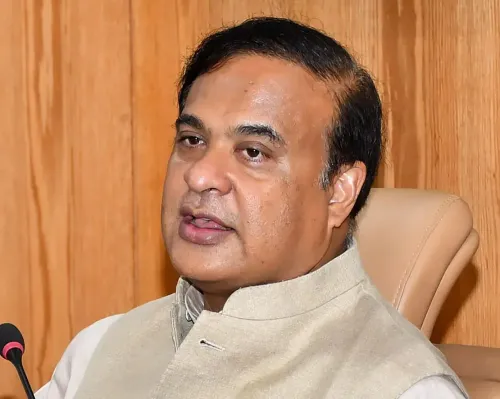
The Chief Minister's Office of Assam on Wednesday, 1 July 2026 shared that the Government of India has recognised Assam as one of the top-performing states in implementing the new criminal laws that replaced colonial-era codes two years ago.
Context
India overhauled its criminal justice framework when Parliament passed three landmark laws in December 2023: the Bharatiya Nyaya Sanhita (BNS), the Bharatiya Nagarik Suraksha Sanhita (BNSS), and the Bharatiya Sakshya Adhiniyam (BSA). These replaced the Indian Penal Code 1860, the Code of Criminal Procedure, and the Indian Evidence Act respectively. The three laws came into force across all states and union territories from 1 July 2024.
The transition required state governments to retrain police personnel, upgrade court infrastructure, and integrate digital systems including e-FIR platforms. The Centre has since conducted periodic reviews to track compliance and adoption across states.
Policy Backdrop
Assam, under Chief Minister Himanta Biswa Sarma, undertook early preparation for the switchover, including capacity-building workshops for police officers and judicial staff. Northeastern states were noted for adopting training modules ahead of the 1 July 2024 national rollout deadline.
The new laws introduce mandatory timelines for investigations and trials, provisions for zero-FIR registration, and expanded use of electronic records in court proceedings — changes designed to reduce case pendency that has long burdened the Indian judiciary. Assam's recognition by the Centre signals that its administrative machinery has moved swiftly to operationalise these changes on the ground.
Stakeholders and Impact
The reforms directly affect Assam's state police force, district and sessions courts, public prosecutors, defence lawyers, and millions of citizens who interact with the criminal justice system. Faster FIR registration through digital channels and stricter investigation timelines are among the most citizen-visible changes under the new framework.
Legal practitioners across the state have had to familiarise themselves with revised section numbering and new procedural requirements. The central government's acknowledgement of Assam's performance is likely to reinforce institutional momentum and encourage other states that are lagging in adoption.
What's Next
The Centre is expected to release comparative state rankings and hold follow-up review meetings with chief secretaries to assess deeper metrics such as conviction rates, digital case-management penetration, and trial-completion timelines. Quarterly reports will be a key indicator of whether early adoption by states like Assam is translating into measurable improvements in justice delivery.
As the new criminal codes complete their second year in force, the focus will shift from implementation readiness to outcome data — putting pressure on all states, including top performers, to demonstrate results beyond procedural compliance.
Point of View
Reinforcing his administration's governance credentials ahead of future electoral cycles. It also reflects the ruling dispensation's broader strategy of using state-level compliance metrics to demonstrate the tangible impact of the 2023 criminal law overhaul — one of the most substantive legislative changes to India's justice architecture in over a century. For Northeastern states long perceived as administratively challenged, Assam's ranking challenges that narrative. The real test, however, will come when outcome data — conviction rates, trial timelines, pendency reduction — is placed alongside procedural adoption figures.
NationPress
1 Jul 2026
Frequently Asked Questions
Why has Assam been recognised by the Centre for criminal law implementation?
The Centre acknowledged Assam as one of the top states for its swift adoption of the three new criminal codes — BNS, BNSS, and BSA — including early police training, e-FIR integration, and procedural compliance since the laws took effect on 1 July 2024.
What are the new criminal laws India introduced?
India replaced three colonial-era laws in 2024: the Bharatiya Nyaya Sanhita replaced the Indian Penal Code 1860, the Bharatiya Nagarik Suraksha Sanhita replaced the CrPC, and the Bharatiya Sakshya Adhiniyam replaced the Indian Evidence Act. All three came into force on 1 July 2024.
When did the new criminal laws come into effect in India?
The Bharatiya Nyaya Sanhita, Bharatiya Nagarik Suraksha Sanhita, and Bharatiya Sakshya Adhiniyam were passed by Parliament in December 2023 and came into force across India from 1 July 2024.
What changes do the new criminal laws bring for citizens in Assam?
Citizens in Assam can now file zero-FIRs at any police station, benefit from mandatory investigation timelines, and have their cases managed through digital records — all aimed at reducing delays and improving access to justice.
Which states are performing best in implementing India's new criminal laws?
The Centre has identified Assam among the top-performing states, with Northeastern states generally noted for early adoption of training and digital systems. A formal comparative ranking across all states is expected in upcoming central government reviews.