CM Himanta Hails Assam's Shift From Disturbed Area to Growth Hub

Synopsis
Assam Chief Minister Himanta Biswa Sarma declared on June 21 that the state has moved from a 'disturbed area' defined by security advisories to a rapidly developing region, expressing confidence that the coming decade will belong to Assam and the North East.
Key Takeaways
Himanta Biswa Sarma on June 21, 2026 said Assam has shifted from a 'disturbed area' to a rapidly developing state.
Security advisories once issued for Assam were cited as symbolic markers of its troubled insurgency-era past.
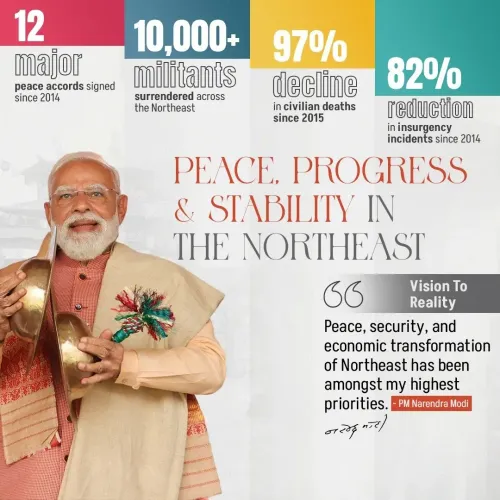
From 2022 onward , the central government progressively reduced AFSPA coverage across Assam following improved security assessments.
The Act East Policy , launched in 2014 , has channelled major central funding into road, rail, and industrial connectivity across the North East .
Sarma leads the North-East Democratic Alliance (NEDA) , consolidating BJP-aligned governments across the region's eight states.
Upcoming AFSPA review notifications and investment summits will be key indicators of whether the transformation narrative translates into sustained economic growth.
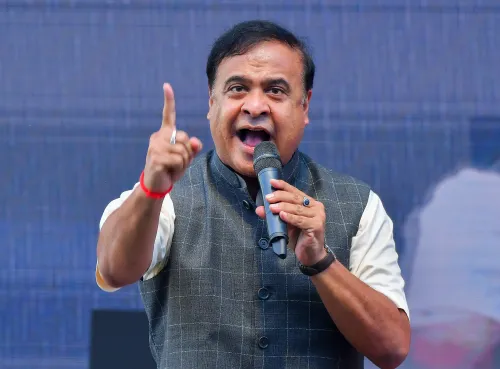
Assam Chief Minister Himanta Biswa Sarma on Sunday, June 21, 2026, declared that the state has undergone a fundamental transformation — moving away from the shadow of security advisories that once defined its troubled past toward becoming a rapidly developing region. Sarma expressed confidence that the coming decade would belong to Assam and the broader North East.
Context
Sarma's remarks carry pointed historical weight. For decades, Assam was designated a 'disturbed area' under the Armed Forces (Special Powers) Act (AFSPA), a classification that enabled security forces to operate with expanded powers amid persistent insurgency. Travel advisories issued by foreign governments and domestic agencies during that era served as a barometer of the state's instability — a reality Sarma now says has been decisively reversed.
In his post, Sarma wrote: 'These advisories were reminiscent of Assam's troubled past. Now, the needle has shifted — from a disturbed area to a rapidly developing one.' The framing is deliberate: the advisory regime is being used as a symbolic marker of before and after.
Policy Backdrop
The shift Sarma references is rooted in a documented policy trajectory. From 2022 onward, the central government progressively reduced AFSPA coverage across Assam and several other Northeastern states following improved security assessments and a measurable decline in militancy incidents. Districts were removed from the disturbed-area list in phased notifications, a process that continued under Sarma's tenure as Chief Minister.
Parallel to the security transition, the Act East Policy — launched in 2014 — channelled significant central funding into road, rail, and industrial connectivity projects across the North East. Infrastructure corridors, tourism promotion, and investment summits have increasingly positioned the region as a frontier destination for domestic and foreign capital rather than a conflict zone.
Sarma also leads the North-East Democratic Alliance (NEDA), a BJP-anchored regional grouping that has worked to consolidate non-Congress governments across the eight Northeastern states, amplifying the political narrative of a unified development push for the region.
Stakeholders and Impact
For ordinary residents of Assam, the withdrawal of security advisories and AFSPA coverage from large parts of the state translates into tangible changes: reduced military checkpoints, a normalising investment climate, and an improved perception among tourists and businesses. The state has seen growing interest from investors in sectors including logistics, horticulture, and energy.
For the broader North East, the narrative carries strategic significance. The region shares international borders with Bhutan, China, Myanmar, and Bangladesh, making its stability and connectivity a matter of national interest. Sarma's confidence in the 'coming decade' signals an intent to sustain and accelerate this momentum through continued central partnership and state-level governance.
What's Next
Observers will watch for upcoming AFSPA review notifications covering any remaining districts still under the disturbed-area designation, as well as the progress of major rail and highway projects under the Act East framework. State-level investment summits are expected to serve as key milestones for translating the political narrative into verifiable economic outcomes. If the pace of transformation holds, Assam and its neighbours are poised to emerge as one of India's more compelling regional growth stories through the next decade.
Point of View
Suggesting coordinated messaging between Dispur and Delhi. By invoking a decade-long horizon, Sarma is also setting a long-term benchmark that extends well beyond any single election, positioning NEDA's regional consolidation as a structural rather than transactional project. The statement will be watched closely by investors and civil society groups who will hold the administration to the implied promise of sustained, measurable progress.
NationPress
20 Sept 2026
Frequently Asked Questions
Why was Assam called a disturbed area?
Assam was designated a 'disturbed area' under the Armed Forces (Special Powers) Act (AFSPA) due to decades of insurgency by various armed groups, which required security forces to have expanded operational powers. The designation began in the 1990s and persisted in various districts until a phased rollback commenced from 2022 following improved security conditions.
Has AFSPA been removed from Assam?
The central government progressively reduced AFSPA coverage across Assam from 2022 onward, removing the disturbed-area designation from several districts following improved security assessments. The process has been phased, with some areas reviewed periodically based on ground conditions.
What is the Act East Policy and how does it affect Northeast India?
The Act East Policy, launched in 2014, is India's strategic framework to boost connectivity, trade, and development in the North East and strengthen ties with Southeast Asia. It has channelled significant central funds into road, rail, and industrial projects across the region's eight states, including Assam.
What is NEDA and what role does Himanta Biswa Sarma play in it?
The North-East Democratic Alliance (NEDA) is a BJP-led regional political grouping that works to consolidate non-Congress governments across Northeast India's eight states. Himanta Biswa Sarma serves as its convenor and has used the platform to coordinate governance and political strategy across the region.
What does Himanta Biswa Sarma mean by the next decade belonging to Assam?
Sarma's statement reflects confidence that Assam and the North East are entering a sustained period of economic growth driven by improved security, increased central investment, and infrastructure development. He is signalling that the region, long held back by insurgency and underdevelopment, is now positioned to become a major contributor to India's growth story.