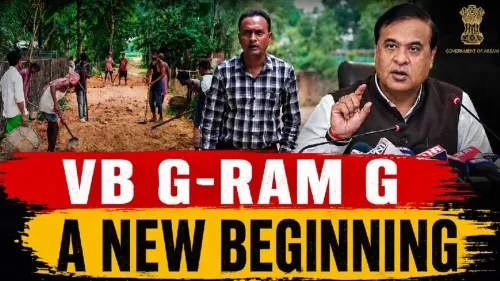
Assam CM Office launches VB-G RAM-G with 125-day rural jobs
Synopsis
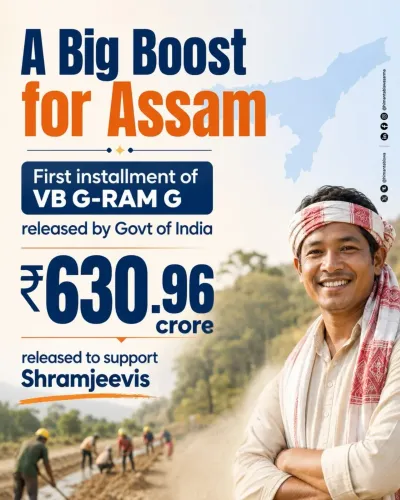
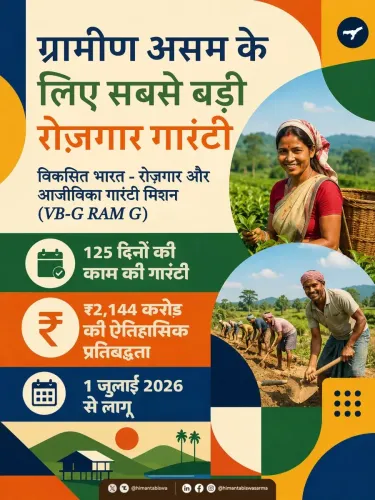
Assam has launched VB-G RAM-G statewide, guaranteeing 125 days of rural employment — 25 more than the central MGNREGA floor — with a 33% women beneficiary mandate, as announced by CM Himanta Biswa Sarma's office on 1 July 2026.
Key Takeaways
VB-G RAM-G was rolled out across Assam on 1 July 2026 .
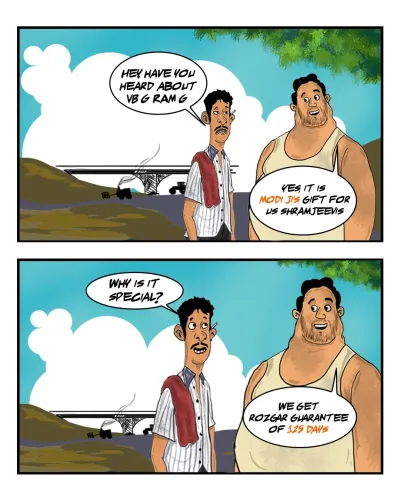
The scheme guarantees 125 days of employment — 25 days more than the central MGNREGA baseline of 100 days.
A mandatory 33% women beneficiary quota is built into the scheme's design.
The initiative targets rural households in Assam to curb distress migration and strengthen local livelihoods.
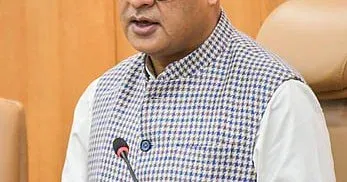
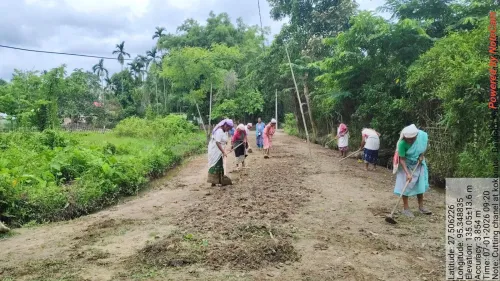
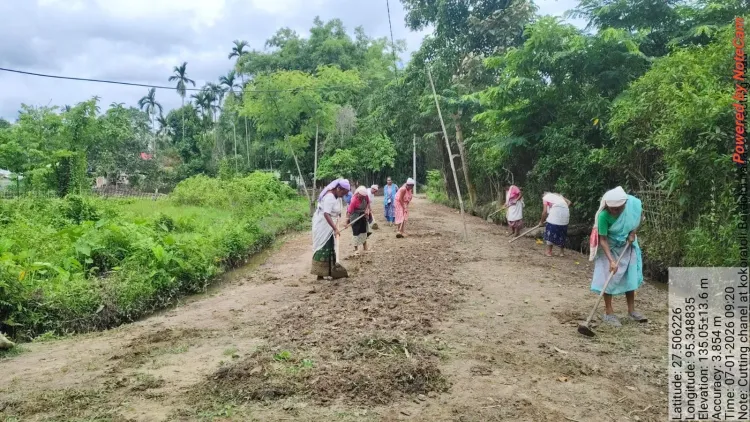
Himanta Biswa Sarma announced the launch; photographs from multiple districts accompanied the official post.
Assam joins states like Rajasthan , Madhya Pradesh , and Odisha in supplementing the central MGNREGA framework with additional guarantees.
The Chief Minister's Office of Assam announced on 1 July 2026 that VB-G RAM-G, the state's rural employment guarantee scheme, has been rolled out across Assam with 125 days of guaranteed employment and a mandate that 33% of beneficiaries be women.
Context
The CMO post, attributed to Chief Minister Dr. Himanta Biswa Sarma, confirmed the scheme's statewide launch with photographs from multiple districts. The announcement marks the beginning of formal implementation of a programme designed to strengthen rural livelihoods in one of India's most agriculture-dependent northeastern states.
Assam has a large rural workforce that relies heavily on seasonal agricultural labour, making distress migration a persistent challenge. The scheme directly targets this vulnerability by guaranteeing work within the state.
Policy Backdrop
VB-G RAM-G builds on the framework of the Mahatma Gandhi National Rural Employment Guarantee Act (MGNREGA), enacted by Parliament in 2005, which guarantees 100 days of wage employment annually to rural households across India. Assam's scheme extends that floor by 25 additional days, bringing the total guaranteed employment to 125 days.
Several Indian states have previously supplemented the central MGNREGA framework — Rajasthan, Madhya Pradesh, and Odisha among them — by adding workdays or gender participation requirements to address local economic conditions. Assam's rollout follows this pattern while embedding an explicit women-inclusion target of 33%.
CM Himanta Biswa Sarma, who has led Assam since 2021, has consistently prioritised state-specific welfare and employment interventions. The scheme reflects a broader push to curb outmigration from rural Assam by making local employment more reliable and accessible.
Stakeholders and Impact
The primary beneficiaries are rural households across Assam, particularly those dependent on daily wages and seasonal farm income. The 33% women beneficiary mandate is designed to increase female workforce participation in the formal rural employment ecosystem, providing women with guaranteed income and greater economic agency.
Women workers in rural Assam have historically faced barriers to consistent wage employment, and the explicit quota signals a policy commitment to closing that gap. District-level muster rolls will be the key measure of whether the target is met in practice.
What's Next
Attention will now turn to state budget allocations earmarked for VB-G RAM-G and whether the scheme will draw on, or run parallel to, central MGNREGA funds. District-wise data on actual workdays provided and women's enrolment figures will be closely watched as early indicators of implementation quality.
If Assam sustains the 125-day guarantee and meets the 33% women's participation target at scale, the model could influence how other northeastern states design their own rural employment supplements in the coming budget cycles.
Point of View
A move that signals both fiscal ambition and political intent ahead of rural constituency consolidation. The 25-day extension beyond the national floor is a meaningful commitment on paper, but the real test lies in district-level delivery and whether muster-roll data reflects genuine additional workdays rather than reclassified existing ones. The 33% women's quota, if enforced, could shift the gender composition of Assam's formal rural workforce in ways that outlast any single electoral cycle. Nationally, it adds to a growing pattern of BJP-governed states differentiating themselves on welfare delivery by building state-funded layers on top of central entitlements.
NationPress
30 Sept 2026
Frequently Asked Questions
What is VB-G RAM-G scheme in Assam?
VB-G RAM-G is Assam's state rural employment guarantee scheme that provides 125 days of guaranteed wage employment to rural households, exceeding the central MGNREGA's 100-day floor by 25 days, with a mandatory 33% women beneficiary requirement.
When was VB-G RAM-G launched in Assam?
VB-G RAM-G was rolled out statewide across Assam on 1 July 2026 , as announced by the Chief Minister's Office.
How is VB-G RAM-G different from MGNREGA?
While MGNREGA guarantees 100 days of rural employment nationally, Assam's VB-G RAM-G extends this to 125 days and adds an explicit 33% women beneficiary mandate, making it a state-level supplement to the central scheme.
Who announced VB-G RAM-G in Assam?
The scheme was announced by Chief Minister Dr. Himanta Biswa Sarma through the official Chief Minister's Office of Assam account on 1 July 2026 .
Who benefits from VB-G RAM-G in Assam?
The primary beneficiaries are rural households across Assam, with at least 33% of all beneficiaries mandated to be women, targeting communities dependent on seasonal agriculture and daily wage labour.