Assam Govt to Survey 1 Lakh Street Vendors in Guwahati
Synopsis
The Assam government will survey 1 lakh street vendors in Guwahati, enabling formal registration and access to micro-credit under PM SVANidhi. The Guwahati Municipal Corporation is expected to lead the enumeration, which could unlock direct-benefit transfers and designated vending zones for the city's informal traders.
Key Takeaways
The Chief Minister's Office of Assam announced a survey of 1 lakh street vendors in Guwahati on 16 June 2026 .
The exercise is linked to the Central government's PM SVANidhi scheme, which provides collateral-free working-capital loans to registered street vendors.
The Guwahati Municipal Corporation is the primary urban local body responsible for civic administration and scheme implementation in the city.
Formal registration through the survey opens access to institutional credit, social security, and legal protection under the Street Vendors Act, 2014 .
Guwahati's inclusion in the Smart Cities Mission since 2015 provides an existing urban-governance framework for vendor mapping and infrastructure.
Completion of the survey is expected to trigger fresh PM SVANidhi loan applications and possible state-level credit support for vendors.
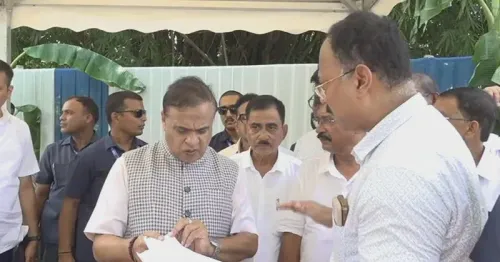
The Chief Minister's Office of Assam announced on Tuesday, 16 June 2026 that the state government will conduct a survey of 1 lakh street vendors across Guwahati, marking a significant step in the formalisation of the city's urban informal economy.
Context
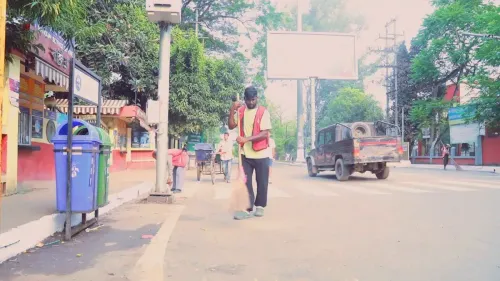
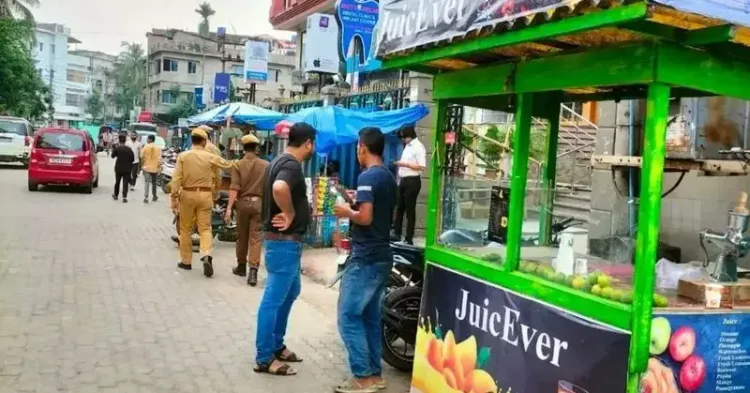
The announcement targets Guwahati, Assam's largest city and primary commercial hub, which is administered by the Guwahati Municipal Corporation (GMC). Street vendors form a critical but largely unregistered segment of the city's economy, operating across markets, footpaths, and transit nodes. A fresh enumeration of 1 lakh vendors would be one of the most comprehensive headcounts of the city's informal trading community to date.
Policy Backdrop
The survey aligns with the Central government's PM Street Vendor's AtmaNirbhar Nidhi (PM SVANidhi) scheme, launched in June 2020, which extended collateral-free working-capital loans to street vendors hit by the COVID-19 pandemic. A precondition for vendor access to this credit is formal registration, which in turn depends on state and municipal surveys to build beneficiary databases. Indian states have periodically refreshed such surveys since 2020 to update digital registries and enable direct-benefit transfers under Atmanirbhar Bharat and the National Urban Livelihoods Mission.
Guwahati was also included in the Smart Cities Mission in 2015, a programme that carried components for street-vending infrastructure and urban livelihood mapping. The current survey initiative builds on that broader urban-governance architecture, signalling the state's intent to bring informal vendors into a structured, digitally traceable system.
Stakeholders and Impact
The primary beneficiaries of the survey are the estimated 1 lakh street vendors in Guwahati whose livelihoods depend on footpath and market-side trade. Formal registration would open pathways to institutional micro-credit, social security benefits, and protection from arbitrary eviction under the Street Vendors (Protection of Livelihood and Regulation of Street Vending) Act, 2014. The Guwahati Municipal Corporation, as the implementing urban local body, will be central to the ground-level enumeration and subsequent vendor-card issuance.
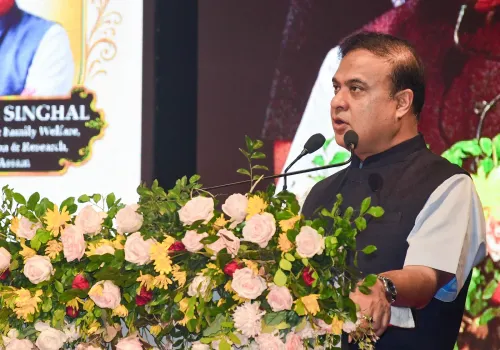
Chief Minister Himanta Biswa Sarma, who has led the state since May 2021, has positioned urban livelihood initiatives alongside broader economic formalisation drives in Assam. A successful survey could serve as a model for other urban centres in the state seeking to replicate Guwahati's enumeration exercise.
What's Next
Completion of the survey is expected to trigger a fresh wave of loan applications under PM SVANidhi and potentially unlock state-level credit support mechanisms. Stakeholders will watch for follow-up announcements on vendor registration portals, issuance of vendor identity cards, and the demarcation of designated vending zones across Guwahati. How swiftly the Guwahati Municipal Corporation operationalises the survey data will determine whether the exercise translates into tangible relief for the city's street-vending community.
Point of View
Where PM SVANidhi has incentivised governments to build or refresh vendor databases ahead of each fresh disbursement cycle. For Chief Minister Himanta Biswa Sarma, the exercise carries political utility too: visible welfare delivery to a large, visible urban constituency ahead of future electoral cycles. The real test will be execution speed — past vendor surveys in other cities have stalled at the data-collection stage without translating into cards, credit, or protected vending zones.
NationPress
20 Sept 2026
Frequently Asked Questions
Why is the Assam government surveying street vendors in Guwahati?
The survey aims to formally enumerate and register street vendors so they can access collateral-free loans under the Central government's PM SVANidhi scheme and receive other urban welfare benefits.
What is PM SVANidhi and how does it help street vendors?
PM Street Vendor's AtmaNirbhar Nidhi, launched in June 2020, provides working-capital loans of up to Rs 10,000 to registered street vendors without requiring collateral, with higher loan tiers available on timely repayment.
How many street vendors will be covered in the Guwahati survey?
The Assam government has announced a target of surveying 1 lakh, or 100,000, street vendors across Guwahati.
Which body will conduct the street vendor survey in Guwahati?
The Guwahati Municipal Corporation, as the urban local body responsible for civic services and vendor regulation in the city, is expected to lead the ground-level enumeration.
What happens after the street vendor survey is completed?
Once surveyed and registered, vendors become eligible for PM SVANidhi loans, vendor identity cards, and potential allocation to designated vending zones, giving them legal protection against eviction.