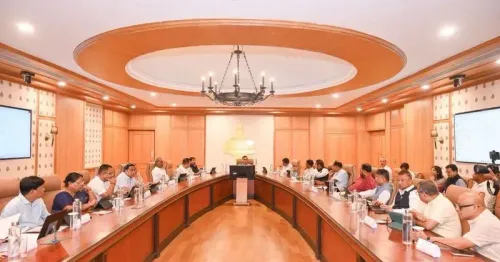
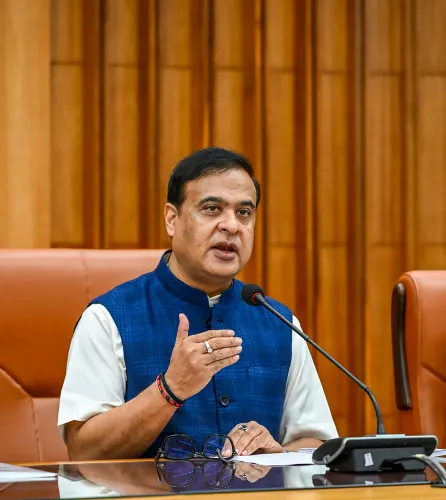
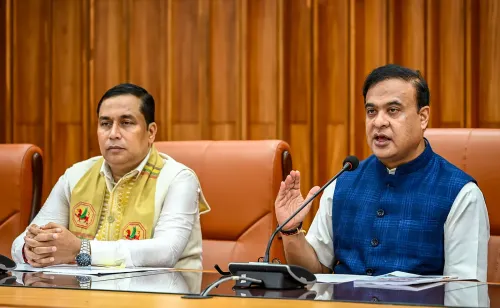
Assam CM Office: Guwahati gets ₹177 cr underground cabling push

Synopsis
The Chief Minister's Office of Assam has announced a ₹177 crore underground power cabling project for Guwahati, set to replace decades-old overhead wire networks, cut weather-related outages, and clean up the city's skyline as part of a broader urban infrastructure push.
Key Takeaways
₹177 crore earmarked for underground power cabling across Guwahati , announced by the Chief Minister's Office of Assam on 27 September 2026 .
The project will bury overhead electricity lines, improving skyline aesthetics and reducing storm-related power outages in a high-rainfall city.
Guwahati has been part of the Smart Cities Mission since 2015 , with APDCL executing phased underground cabling since at least 2018 .
Underground cabling reduces distribution losses and electrocution hazards from sagging overhead wires.
A successful project could set the template for similar underground cabling in other Assam towns.
Guwahati's famously tangled overhead wires — a fixture of the city's skyline for decades — are finally getting a deadline. The Chief Minister's Office of Assam announced on Sunday, 27 September 2026 that Guwahati will undergo a ₹177 crore underground cabling project, a move that promises to clear the aerial clutter and deliver more resilient electricity to India's gateway city to the Northeast.
What ₹177 crore buys Guwahati's skyline
Underground cabling replaces the mesh of overhead power lines with insulated cables buried beneath city streets, eliminating the twin hazards of weather-triggered outages and electrocution from sagging wires. For a city that receives some of the heaviest monsoon rainfall in the country, the resilience dividend alone is significant — storms that routinely snap overhead lines and plunge neighbourhoods into darkness become a far smaller threat once power travels underground.
The ₹177 crore outlay places this among the more substantial single-city cabling commitments in Assam's recent infrastructure history. Beyond aesthetics, the project is expected to reduce distribution losses and improve the quality and continuity of power supply to Guwahati's residents and commercial establishments.
Guwahati's infrastructure arc — from Smart Cities to this moment
Guwahati was selected under the Smart Cities Mission — the Central government scheme launched in 2015 — as one of 100 Indian cities earmarked for integrated urban upgrades, including underground utility works. Since at least 2018, the Assam Power Distribution Company Limited (APDCL) has executed phased underground cabling in the city under a mix of state and central funding streams.
This latest ₹177 crore project continues and scales that trajectory. It also mirrors a broader national pattern: Delhi, Bengaluru, and Hyderabad have all progressively buried their power lines since the 2010s, driven by urban beautification goals and the hard reliability math of avoiding storm-season blackouts. Guwahati — fast-growing, flood-prone, and increasingly commercially vital — has compelling reasons of its own to accelerate the shift.
The announcement raises immediate practical questions that will define the project's impact: which implementing agency leads the excavation works, what the phased timeline looks like, and whether residents can expect temporary supply disruptions during trenching. A successful rollout could also build political and logistical momentum for extending similar underground cabling to other towns across Assam.
Point of View
Visible urban improvements in Guwahati serve a dual purpose: genuine service delivery and a demonstration of governance competence ahead of eventual electoral cycles. The real test, however, lies in execution — phased timelines, disruption management during excavation, and whether the project's scope actually matches the headline outlay. If it delivers, the ripple effect on smaller Assam towns could be the more consequential long-term story.
NationPress
27 Sept 2026
Frequently Asked Questions
What is the Guwahati underground cabling project?
It is a ₹177 crore initiative announced by the Chief Minister's Office of Assam to replace overhead power lines in Guwahati with underground cables, improving the city's skyline and power reliability.
Why is underground cabling important for Guwahati?
Guwahati receives heavy monsoon rainfall that frequently snaps overhead wires and causes outages. Underground cables are far more resilient to weather, also eliminating electrocution hazards from sagging lines.
Who is implementing the Guwahati underground cabling project?
The Assam Power Distribution Company Limited (APDCL) has historically led underground cabling works in Guwahati, though the specific implementing agency for this ₹177 crore project has not been officially confirmed.
Is Guwahati part of the Smart Cities Mission?
Yes. Guwahati was selected under the Smart Cities Mission in 2015 as one of 100 Indian cities earmarked for integrated urban development, including underground utility infrastructure.
Will there be power disruptions during the underground cabling work in Guwahati?
Trenching and excavation works for underground cabling can cause temporary disruptions to power supply in affected areas. The project's specific timeline and disruption management plan have not yet been publicly detailed.