Guwahati underground cabling: ₹2,500 crore project to bury power lines
Synopsis
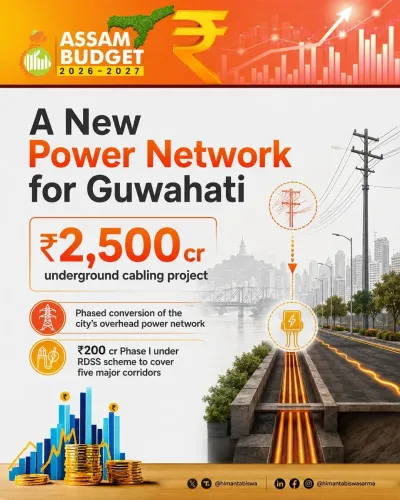
Assam CM Himanta Biswa Sarma has put a ₹2,500 crore price tag on making Guwahati 'wireless' — by burying every overhead power line underground. The first phase kicks off with ₹200 crore across five corridors under the RDSS, with the full city rollout contingent on how that goes. It is the single largest power infrastructure bet in the 2026-27 Assam Budget.
Key Takeaways
Assam CM Himanta Biswa Sarma announced a ₹2,500 crore underground power cabling project for Guwahati on 10 July .
The project will convert all overhead electricity distribution lines to an underground network in phases.
Phase one, under the Revamped Distribution Sector Scheme (RDSS) , allocates ₹200 crore to cover five major corridors .
Goals include reducing storm-related outages, improving road safety, and enhancing the city's visual landscape.
The project was announced alongside the 2026-27 Assam Budget presented by Finance Minister Jayanta Mallabaruah .
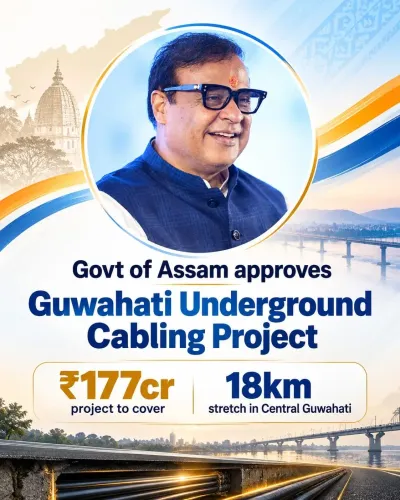
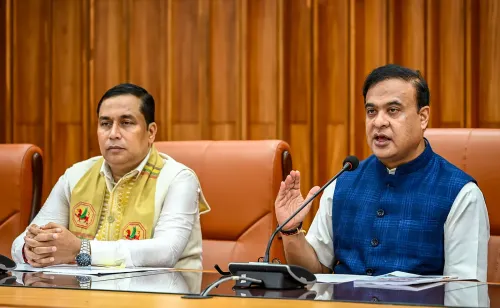
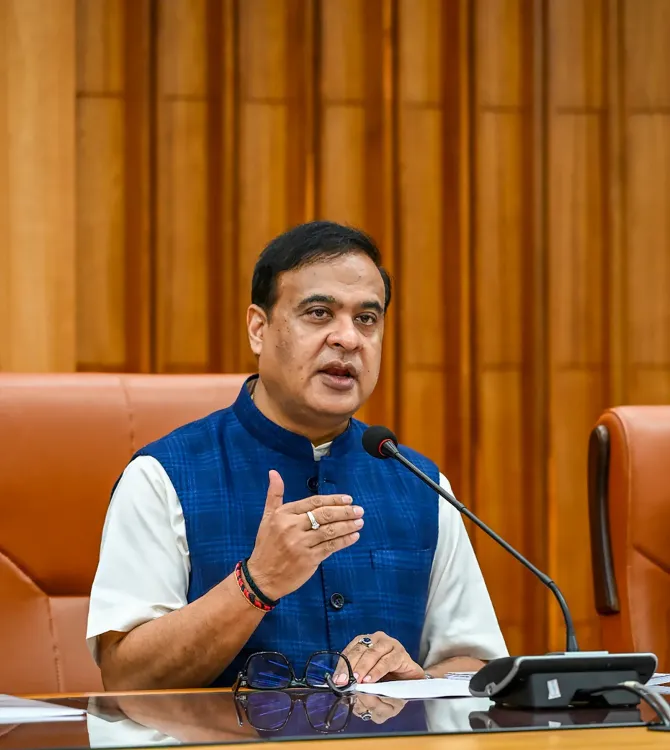
Assam Chief Minister Himanta Biswa Sarma on Friday, 10 July announced a ₹2,500 crore underground power cabling project for Guwahati, pledging to shift the city's entire overhead electricity distribution network below ground and transform it into what he described as a 'wireless' urban centre. The announcement came on the sidelines of the 2026-27 Assam Budget presentation in the state Assembly.
What the Project Entails
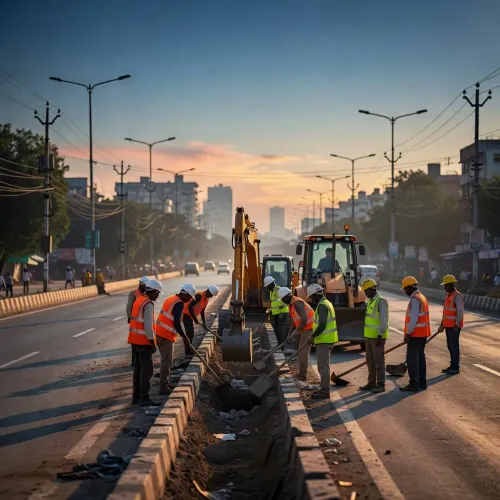
The initiative envisages a phased conversion of Guwahati's overhead electricity grid to an underground cabling system. According to the Budget proposals, the shift is designed to reduce storm-related outages, improve public safety, and enhance the city's visual landscape by eliminating the tangle of overhead poles and wires that currently line its roads.
Sarma said the project would 'significantly strengthen the reliability of power supply while protecting electricity infrastructure from weather-related disruptions' — a recurring problem in Assam during heavy monsoon rains and cyclonic storms.
First Phase: Five Key Corridors Under RDSS
The project will be rolled out in stages. The first phase will be implemented under the Revamped Distribution Sector Scheme (RDSS), with an initial allocation of ₹200 crore earmarked to cover five major corridors in Guwahati. Depending on outcomes, the underground network will be extended across the city in subsequent phases.
Notably, the phased approach signals a degree of fiscal caution — the full ₹2,500 crore outlay will not be deployed upfront, giving the government scope to assess execution before scaling.
Broader Urban Development Push
Chief Minister Sarma positioned the underground cabling drive as one pillar of a larger metropolitan vision for Guwahati, encompassing transport, energy, urban planning, and digital infrastructure. Removing overhead electric poles, he said, would decongest urban spaces and create safer roads alongside the aesthetic improvement.
The 2026-27 Assam Budget, presented by Finance Minister Jayanta Mallabaruah, places heavy emphasis on infrastructure, with major proposed investments spanning power, connectivity, healthcare, and urban development. The underground cabling project is among the flagship capital expenditure commitments of this cycle.
Why It Matters for Guwahati
Guwahati is one of India's fastest-growing tier-2 cities, with its urban population expanding rapidly and demand for reliable electricity rising in step. Overhead distribution networks in the Northeast are particularly vulnerable to weather disruptions — storms frequently bring down lines, triggering prolonged outages for households, businesses, and public institutions.
This is also not the first time underground cabling has been proposed for Indian cities; several metros including Delhi and Mumbai have undertaken similar projects, with mixed results on timelines and costs. Guwahati's execution record on large infrastructure projects will be closely watched. The government has indicated that the full network expansion will be guided by the performance of the initial five-corridor phase.
Point of View
500 crore underground cabling commitment is significant for a state budget, but the proof will be in the phasing. Starting with just ₹200 crore across five corridors under RDSS suggests the government is hedging — sensibly — against execution risk. Guwahati's infrastructure projects have historically faced delays, and underground cabling in a flood-prone, seismically active region presents engineering challenges that cost overruns in Delhi and Mumbai did not fully anticipate. The 'wireless city' framing is good politics; the harder question is whether RDSS disbursements and contractor capacity can keep pace with the ambition.
NationPress
9 Oct 2026
Frequently Asked Questions
What is the Guwahati underground cabling project announced by Assam CM Himanta Biswa Sarma?
It is a ₹2,500 crore initiative to shift Guwahati's entire overhead power distribution network underground, announced on 10 July alongside the 2026-27 Assam Budget. The project aims to reduce outages, improve safety, and modernise the city's infrastructure.
When will the underground cabling project begin in Guwahati?
The first phase has been announced under the Revamped Distribution Sector Scheme (RDSS) with ₹200 crore allocated for five major corridors in Guwahati. A broader city-wide rollout will follow based on the outcome of this initial phase.
What is the Revamped Distribution Sector Scheme (RDSS) and how does it apply here?
The RDSS is a central government scheme aimed at improving the operational and financial health of power distribution companies. Assam will use it to fund the first phase of Guwahati's underground cabling, covering five key corridors with ₹200 crore.
Why does Guwahati need underground power cables?
Guwahati's overhead power lines are frequently damaged by heavy monsoon rains and storms, causing prolonged outages. Underground cabling is meant to make the network weather-resilient while also removing poles and wires that congest roads and affect the city's appearance.
How does this project fit into the 2026-27 Assam Budget?
The underground cabling project is one of the flagship infrastructure commitments in the 2026-27 Assam Budget, presented by Finance Minister Jayanta Mallabaruah. The Budget prioritises power, connectivity, healthcare, and urban development, with Guwahati's cabling project among the largest single allocations.