Assam CM Himanta Biswa Sarma flags canopy bridge win for Hoolock Gibbons on World Gibbon Day
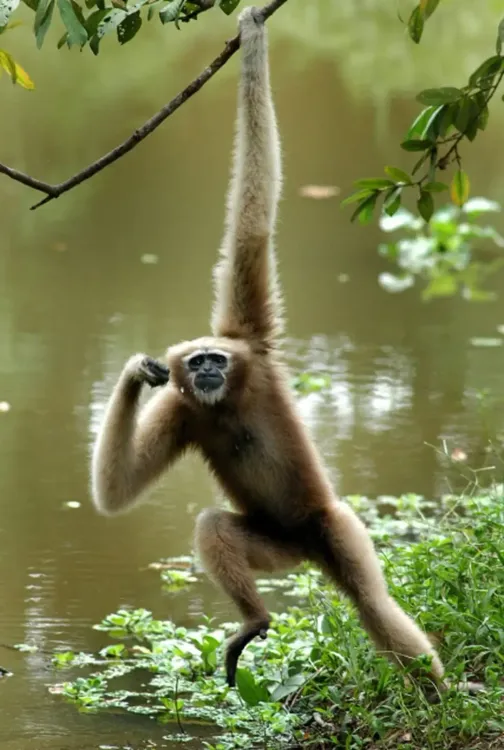
Synopsis
Assam CM Himanta Biswa Sarma used World Gibbon Day to spotlight something quietly remarkable: a canopy bridge at Hollongapar that lets India's only native ape cross a railway line through the treetops. It is a small structure with a large message — that coexistence between development and wildlife is possible, and that political will can make it visible.
Key Takeaways
Assam CM Himanta Biswa Sarma marked World Gibbon Day on 24 October by highlighting the canopy bridge initiative at Hollongapar Gibbon Wildlife Sanctuary .
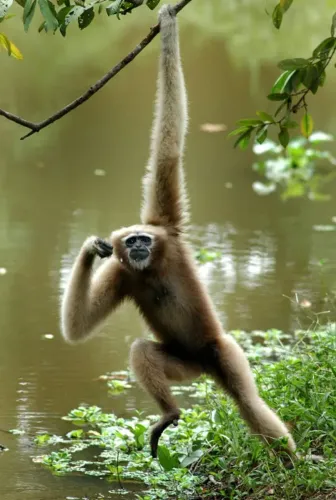
The canopy bridge enables Hoolock Gibbons — India's only native ape species — to cross a railway track safely through the tree canopy.
Hollongapar Gibbon Wildlife Sanctuary in Jorhat district, Assam is dedicated to conserving the endangered Hoolock Gibbon.
Habitat fragmentation and loss remain the primary threats to the Hoolock Gibbon's long-term survival.
Sarma called for collective efforts combining science-led conservation, community participation, and human-animal coexistence.
Assam Chief Minister Himanta Biswa Sarma on Saturday, 24 October drew national attention to the state's canopy bridge initiative for the Hoolock Gibbon — India's only native ape species — marking World Gibbon Day with a call for science-led conservation and human-animal coexistence. The Chief Minister's remarks came alongside a post on X in which he described witnessing a gibbon use a purpose-built canopy bridge at Hollongapar Gibbon Wildlife Sanctuary in Jorhat district to safely cross a railway track.
The Canopy Bridge Moment
Sarma described the sighting at Hollongapar as a tangible proof of concept for infrastructure-based wildlife conservation. 'At Hollongapar, seeing a gibbon use the canopy bridge built to help it cross the railway track safely was a heartening moment,' he said.
The canopy bridge is designed to allow arboreal animals to traverse railway infrastructure through the tree canopy, eliminating the need to descend to ground level where risks from passing trains and other human activity are acute. The initiative represents a growing model of coexistence-by-design — engineering solutions that reduce the collision between development corridors and wildlife movement.
Why the Hoolock Gibbon Needs Urgent Attention
The Hoolock Gibbon, classified as a lesser ape and listed as endangered, is a flagship species of Northeast India's biodiversity. It depends almost entirely on continuous forest canopy for movement, foraging, and survival — making habitat fragmentation one of the most severe threats it faces.
Hollongapar Gibbon Wildlife Sanctuary, Assam's only sanctuary dedicated to the species, sits within Jorhat district and hosts one of the more stable wild populations. However, encroaching railway lines and road infrastructure have historically severed canopy corridors, forcing gibbons to ground-level crossings that carry significant mortality risk.
Habitat loss, fragmentation, and human-induced pressures remain the primary long-term challenges for the species, according to wildlife researchers. Canopy bridges, community participation, and habitat protection are widely regarded by conservationists as complementary tools in addressing these threats.
Sarma's Conservation Message
Beyond the infrastructure measure, Sarma stressed the cultural and emotional ties between Assam's communities and its wildlife. 'Every small step towards coexistence brings us closer to a future where Assam's people and wildlife thrive together,' he said.
The Chief Minister framed conservation not merely as an ecological imperative but as a shared social responsibility, urging collective action to protect the Hoolock Gibbon's place in Assam's natural heritage. This comes amid broader concerns about biodiversity loss across India's northeastern forests, which host some of the subcontinent's richest wildlife corridors.
Broader Significance for Wildlife Policy
The canopy bridge model, if scaled, could inform national-level guidelines for railway and road projects passing through forested areas — a conversation that wildlife bodies and the Ministry of Environment, Forest and Climate Change have been engaged in for several years. Assam's Hollongapar example offers a replicable, evidence-based template.
Conservationists argue that political visibility for such measures — including a Chief Minister publicly championing a canopy bridge — is itself a conservation tool, helping sustain institutional commitment and funding. Whether Assam expands the initiative to other fragmented wildlife corridors in the state remains to be seen.
Point of View
But the harder question is whether it remains a showcase project or becomes a mandated standard for all railway and road expansions through forested corridors in the Northeast. India's infrastructure pipeline is accelerating; without enforceable wildlife passage norms built into project clearances, canopy bridges will stay the exception rather than the rule. The political attention is welcome; the policy follow-through is what the gibbons actually need.
NationPress
24 Oct 2026
Frequently Asked Questions
What is the canopy bridge initiative for Hoolock Gibbons in Assam?
The canopy bridge at Hollongapar Gibbon Wildlife Sanctuary in Jorhat district is a purpose-built structure that allows Hoolock Gibbons to cross a railway track safely through the tree canopy, avoiding the ground-level dangers posed by passing trains. It is part of Assam's broader effort to reduce habitat fragmentation for arboreal wildlife.
What is the Hoolock Gibbon and why is it endangered?
The Hoolock Gibbon is India's only native ape species and belongs to the family of lesser apes. It is listed as endangered primarily due to habitat loss, forest fragmentation, and human-induced pressures across Northeast India, where it depends on continuous forest canopy for movement and survival.
Where is Hollongapar Gibbon Wildlife Sanctuary located?
Hollongapar Gibbon Wildlife Sanctuary is located in Jorhat district of Assam and is the only wildlife sanctuary in India dedicated specifically to the Hoolock Gibbon. It hosts one of the more stable wild populations of the species.
What did Assam CM Himanta Biswa Sarma say on World Gibbon Day?
Sarma shared his experience of seeing a gibbon use the canopy bridge at Hollongapar and called it a heartening moment. He emphasised science-led conservation, the cultural ties between Assam's communities and its wildlife, and the need for collective efforts to ensure human-animal coexistence.
Can the canopy bridge model be replicated elsewhere in India?
Conservationists consider the Hollongapar canopy bridge a replicable, evidence-based model that could inform national guidelines for railway and road projects passing through forested areas. Scaling it would require enforceable wildlife passage norms to be built into infrastructure project clearances.