How Did Sudhanshu Trivedi Challenge the North-South Divide at Delhi Shabdotsav?
Click to start listening
Synopsis
At the Delhi Shabdotsav 2026, Sudhanshu Trivedi delivered a powerful message advocating for national unity, addressing the divisive North-South narrative, and highlighting the BJP's progress in South India. His remarks emphasize the importance of cultural interconnectedness and warn against the dangers of regional politics.
Key Takeaways
- Emphasis on National Unity: Trivedi's speech highlighted the importance of unity in the face of regional divides.
- Celebration of Indian Culture: Every word in India carries celebratory significance.
- BJP's Growing Influence: The party's progress in South India was showcased through electoral successes and investments.
- Warning Against Polarization: Trivedi urged vigilance against identity-based divisions.
- Cultural Interconnectedness: Trivedi recalled significant cultural ties between regions.
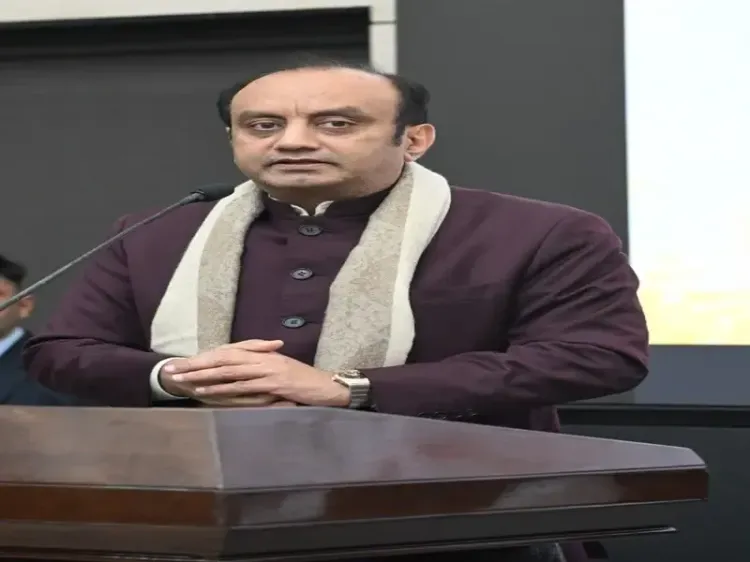
New Delhi, Jan 3 (NationPress) On the second day of Delhi Shabdotsav 2026, a three-day literary and cultural festival dedicated to celebrating India's rich heritage at the Major Dhyan Chand National Stadium, BJP Rajya Sabha MP Sudhanshu Trivedi delivered a compelling speech stressing the importance of national unity and cautioning against efforts to sow discord between North and South India.
Trivedi emphasized the unique essence of Indian culture, noting how every word in India holds celebratory significance, from the verses of the Vedas to the hymns of temples and the poetic lines of Tulsidas’ Ramcharitmanas.
Highlighting the BJP's expanding presence in South India, he pointed to the party's recent success in the Thiruvananthapuram Municipal Corporation elections, which he termed a pivotal achievement.
He also referenced substantial investments in southern states to showcase balanced development, including Microsoft establishing its first international office in Bengaluru under former Prime Minister Atal Bihari Vajpayee, Amazon opening its largest campus outside the US in Hyderabad, and Apple launching its largest manufacturing facility in Karnataka, alongside proposed semiconductor plants in Karnataka and Tamil Nadu.
Trivedi further mentioned the creation of two defense corridors—one in Uttar Pradesh and another in Tamil Nadu—to demonstrate that development initiatives transcend political motivations.
Vigorously challenging narratives of regional division, he accused specific political elements of intentionally promoting linguistic and ethnic divides for electoral benefits.
Referencing a previous comment by a Tamil Nadu minister linking the BJP’s rise to regions that utilize cow urine, Trivedi noted that the medicinal benefits of cow urine distillate have been acknowledged through US patents for antibacterial and antifungal purposes.
He underscored cultural interconnectedness by recalling Prime Minister Narendra Modi's visit to the Ranganathaswamy Temple in Tamil Nadu during the Ram Janmabhoomi consecration rituals, noting that Lord Ranganatha is considered the family deity of Ayodhya.
Trivedi also questioned the prevalence of Dravidian parties in Tamil Nadu's political landscape, pointing out that the term “Dravidian” has its roots in Sanskrit, meaning a land encircled by seas.
Addressing the subject of vote-bank politics, he criticized leaders such as AIMIM chief Asaduddin Owaisi, accusing them of exploiting divisions based on regional and identity lines.
Urging against the transformation of India’s diversity into a source of fragmentation, Trivedi called upon citizens, particularly the youth, to stay vigilant against polarization stemming from caste, language, or religion.
In a light-hearted yet cautionary tone, he quoted poetic lines from the Ramayana, asserting that genuine affection does not culminate in breakups, advising young women to be wary of deceit cloaked as virtue, and encouraging young men to resist temptations that could lead them astray.
The session, attended by BJP leader Madhavi Latha, received enthusiastic engagement amid a festival filled with discussions, poetry recitals, and cultural showcases.
Point of View
It's essential to recognize the importance of Sudhanshu Trivedi's message on national unity amid rising regional divides. His emphasis on cultural interconnectedness and balanced development reflects a need for cohesive progress, which is vital for India's future.
NationPress
08/01/2026
Frequently Asked Questions
What was the main focus of Sudhanshu Trivedi's speech?
Sudhanshu Trivedi focused on advocating for national unity and warned against the divisive narratives between North and South India.
What significant achievements did Trivedi highlight regarding the BJP in South India?
He highlighted the BJP's recent success in the Thiruvananthapuram Municipal Corporation elections and emphasized major investments by companies like Microsoft and Amazon in southern states.
What cultural references did Trivedi make during his address?
Trivedi referenced the Vedas, temple hymns, and Tulsidas' Ramcharitmanas to illustrate the celebratory nature of Indian culture.
How did Trivedi address regional politics?
He criticized leaders exploiting regional divisions for electoral gains and urged vigilance against polarization based on caste, language, or religion.
What was the atmosphere at the Delhi Shabdotsav during Trivedi's session?
The session drew enthusiastic participation and was part of a festival that included discussions, poetry sessions, and cultural performances.