Atal Vayo Abhyuday Yojana: How India is caring for 23 crore elderly by 2036
Synopsis
India's elderly population is racing toward 23 crore by 2036, and the government's AVYAY scheme is its most comprehensive answer yet — spanning 764 old age homes, 55 lakh-plus assistive devices, a new JEEVAN mobile app, and a ₹1 crore equity push for silver-economy start-ups. The scale is impressive; the question is whether the infrastructure can keep pace with the demographic wave.
Key Takeaways
India's elderly population is projected to reach 23 crore by 2036 , driving demand for the Atal Vayo Abhyuday Yojana (AVYAY) .
The government released ₹77.98 crore as grant-in-aid to 755 projects under IPSrC for the quarter ending 30 September 2026 .
764 senior citizen homes , 13 continuous care homes , 17 mobile medical units , and 3 physiotherapy clinics are currently operational under IPSrC.
Rashtriya Vayoshri Yojana has cumulatively benefited over 10.45 lakh senior citizens with more than 55.87 lakh assistive devices .
The SHATAYU geriatric dashboard lists 30,151 trained caregivers ; the Elderline helpline has handled over 8.66 lakh actionable calls since its October 2021 launch.
SAGE offers up to ₹1 crore in equity support to start-ups developing elderly-care solutions to grow India's silver economy.
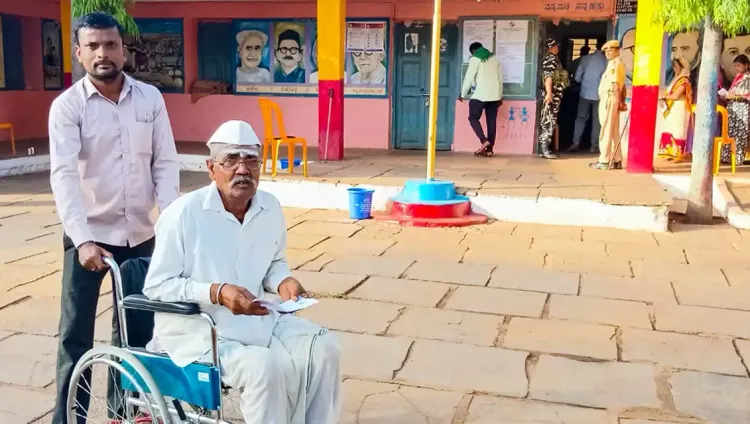
India's elderly population is projected to reach 23 crore by 2036, and the government's Atal Vayo Abhyuday Yojana (AVYAY) is the flagship scheme designed to meet this demographic challenge — combining institutional homes, mobile healthcare, assistive devices, and a growing geriatric care workforce into a single integrated framework. An official factsheet released on Tuesday, 27 October 2026 detailed the scheme's current reach, funding, and latest digital additions.
Funding and Institutional Reach
The government disbursed ₹77.98 crore as grant-in-aid to 755 projects under the Integrated Programme for Senior Citizens (IPSrC) component of AVYAY for the quarter ending 30 September 2026 during financial year 2026–27. IPSrC serves as the primary implementation arm of the scheme, channelling funds to non-governmental organisations (NGOs), Panchayati Raj Institutions, and local bodies.
These grants support the operation of old age homes, continuous care homes, mobile medical units, physiotherapy clinics, and Regional Resource and Training Centres (RRTCs). Currently, 764 senior citizen homes, 13 continuous care homes, 17 mobile medicare units (MMUs), and 3 physiotherapy clinics are being supported under IPSrC. The scheme's present expansion focus is primarily on establishing and maintaining senior citizen homes to ensure shelter for indigent seniors, according to the factsheet.
State-Level Strategy and Capacity Building
The State Action Plan for Senior Citizens (SAPSrC) complements the central framework by providing grants to state and Union Territory governments to train geriatric caregivers, conduct cataract surgery drives, and roll out state-specific welfare initiatives. States can deploy up to 20 per cent of their allocated funds for locally designed programmes, though funding is admissible only for components approved under AVYAY. States are also expected to contribute their own funds to supplement central resources.
RRTCs receive an annual financial support of ₹19.58 lakh each and play a key institutional role in outreach, capacity building, and service delivery at the grassroots level.
Assistive Devices and the Rashtriya Vayoshri Yojana
A separate standalone central sector scheme — Rashtriya Vayoshri Yojana (RVY) — targets senior citizens with age-related disabilities or infirmity, providing assistive living devices to help restore near-normal bodily function. Cumulatively, the scheme has benefited over 10.45 lakh senior citizens, distributing 55,87,653 assistive living devices through camp mode and walk-in centres of the Artificial Limbs Manufacturing Corporation of India (ALIMCO) at Pradhan Mantri Divyasha Vayoshri Kendras (PMD-VK).
Digital Tools: JEEVAN App, SHATAYU Dashboard, and Elderline
In May 2026, the government launched the Joint Elderly Empowerment and Virtual Assistance Network (JEEVAN) mobile application and the Senior Holistic Care Assistance and Training for Your Utility (SHATAYU) geriatric dashboard. The SHATAYU platform helps senior citizens and families locate trained geriatric caregivers by district and state, supporting India's organised care economy. The dashboard currently lists 30,151 caregivers — 6,817 male and 23,334 female.
The Elderline national helpline for senior citizens, launched in October 2021, provides free information, guidance, and emotional support. It has received over 8.66 lakh actionable calls since inception, reflecting broad demand for accessible support among the elderly.
Supporting the Silver Economy Through SAGE
The government's Seniorcare Ageing Growth Engine (SAGE) initiative provides financial assistance of up to ₹1 crore through equity participation to selected start-ups working on elderly-care solutions, alongside mentoring and market linkages. SAGE is positioned as both a welfare and economic tool, aiming to professionalise and scale India's emerging silver economy. With the elderly demographic set to swell over the next decade, the breadth of AVYAY's current infrastructure will be tested against rapidly rising demand.
Point of View
Which raises questions about real-world quality of care. The SHATAYU dashboard's 30,151 caregivers serving a potential elderly population of over 14 crore today — let alone 23 crore by 2036 — reveals a structural gap. The SAGE initiative's start-up bet is forward-looking, but equity support capped at ₹1 crore per company is unlikely to attract the capital intensity needed to professionalise elder care at scale. The policy architecture is in place; the fiscal commitment needs to match the demographic urgency.
NationPress
27 Oct 2026
Frequently Asked Questions
What is the Atal Vayo Abhyuday Yojana (AVYAY)?
AVYAY is the Indian government's integrated scheme for the welfare of senior citizens, combining institutional care homes, mobile healthcare units, assistive device programmes, caregiver training, and a national helpline under one framework. It is administered through components including IPSrC, SAPSrC, and the standalone Rashtriya Vayoshri Yojana.
How much funding has the government released under AVYAY in 2026–27?
The government released ₹77.98 crore as grant-in-aid to 755 projects under the Integrated Programme for Senior Citizens (IPSrC) component of AVYAY for the quarter ending 30 September 2026, in the financial year 2026–27.
What is the Rashtriya Vayoshri Yojana and who does it help?
Rashtriya Vayoshri Yojana (RVY) is a standalone central sector scheme that provides assistive living devices to senior citizens with age-related disabilities or infirmity. It has cumulatively benefited over 10.45 lakh senior citizens with more than 55.87 lakh devices through ALIMCO camps and walk-in centres.
What are the JEEVAN app and SHATAYU dashboard?
Launched in May 2026, the JEEVAN mobile application and SHATAYU geriatric dashboard are digital tools under AVYAY. SHATAYU helps senior citizens and families find trained geriatric caregivers by district and state, currently listing 30,151 caregivers, while JEEVAN supports broader elderly empowerment and virtual assistance.
What is the SAGE initiative under AVYAY?
The Seniorcare Ageing Growth Engine (SAGE) provides financial assistance of up to ₹1 crore through equity participation to start-ups developing credible elderly-care solutions. It also offers mentoring and market linkages to scale the silver economy and improve quality of life for older Indians.