Will the Ayush Expo Highlight India's Role in the Second WHO Global Traditional Medicine Summit?
Synopsis
The upcoming Ayush Expo at the second WHO Global Traditional Medicine Summit promises to be a remarkable showcase of India's ancient medicinal practices, blending them with global methodologies and modern health priorities. This event aims to foster international dialogue and collaboration in the field of traditional medicine.
Key Takeaways
Ayush Expo as a focal point of the WHO Global Traditional Medicine Summit.
Showcase of India's diverse traditional medicine practices.
Integration of traditional knowledge with modern health systems.
Global participation from various countries' healing traditions.
Focus on preventive health through traditional practices.
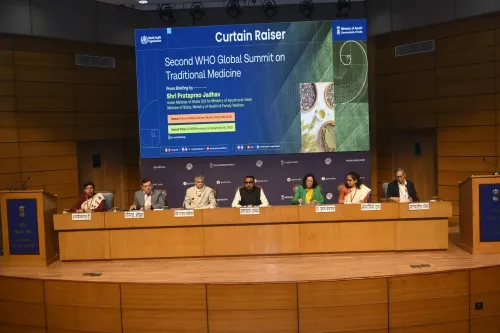
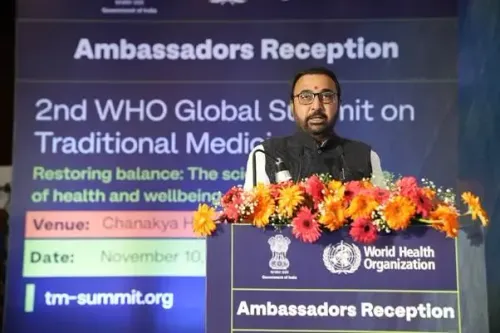
New Delhi, Dec 16 (NationPress) The Ayush Expo will serve as a pivotal element of the upcoming second WHO Global Traditional Medicine Summit (GTMC), scheduled for this week, showcasing India's rich heritage of medicinal practices alongside various global methodologies, as stated by the Ministry of Ayush on Tuesday.
The GTMC, organized by the Ministry of Ayush in collaboration with the World Health Organization (WHO), will take place from 17 to 19 December at Bharat Mandapam, New Delhi.
This Expo will offer a well-rounded and curated exhibition of Ayurveda, Yoga, Naturopathy, Unani, Siddha, Sowa-Rigpa, and Homoeopathy, incorporating immersive displays, scientific elucidations, and digital technologies.
The goal of the exhibition is to translate India's traditional knowledge systems into narratives that are relevant on a global scale, aligning with current public health objectives.
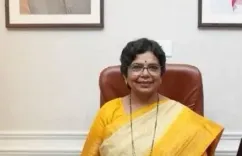
Prof. (Dr.) Tanuja Manoj Nesari, Director of the Institute of Teaching and Research in Ayurveda (ITRA), remarked, “The Ayush Expo at the Second WHO Global Traditional Medicine Summit is crafted to present India’s traditional medicine systems in a scientifically sound and globally pertinent way.”
“By merging classical knowledge with evidence-based practices and cutting-edge technologies on a unified platform, the Expo aims to encourage informed discussions, enhance research partnerships, and promote the responsible integration of traditional medicine into modern health systems,” she further explained.
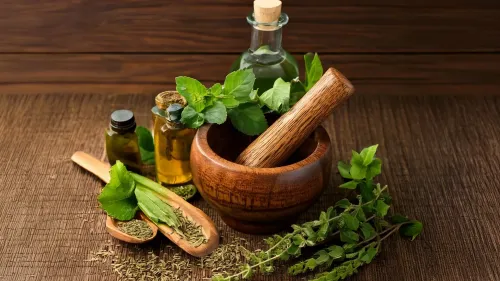
A major highlight will be the Medicinal Plants and Seeds Pavilion, which will feature nearly 40 live medicinal plants and rare seeds, showcasing India’s rich botanical legacy and the ecological roots of traditional medicine.
The Spices of India Pavilion will delve into the scientific aspects of popular culinary herbs and their importance in preventive health, while the Metallotherapeutics Zone will unveil classical purification techniques, bhasma preparation methods, and safety validation protocols.
The Expo will also include displays on Dinacharya, Ritucharya, and Panchakarma, illustrating the principles of preventive care, seasonal routines, and therapeutic practices through traditional instruments and informative formats.
Additionally, India's Traditional Knowledge Digital Library (TKDL) will be highlighted as a globally recognized initiative aimed at safeguarding traditional knowledge and preventing bio-piracy, according to the Ministry.
The Expo will also feature a dedicated WHO Zone, showcasing traditional medicine systems from various WHO Member States. Countries from different regions will present their healing traditions, community health models, and indigenous knowledge systems. The global displays will reflect the rich diversity of traditional medicine practices, organized through WHO-curated zones focusing on healthy ecosystems, social innovation, and nature-based health solutions.
Point of View
The Ayush Expo at the WHO Global Traditional Medicine Summit represents a significant opportunity for India to establish its leadership in the realm of traditional medicine. It not only showcases India's rich heritage but also facilitates critical conversations around integrating ancient practices with modern healthcare systems, which is vital for addressing contemporary health challenges.
NationPress
21 Sept 2026
Frequently Asked Questions
What is the Ayush Expo?
The Ayush Expo is a significant exhibition showcasing India's traditional medicine systems, including Ayurveda, Yoga, and more, as part of the WHO Global Traditional Medicine Summit.
When and where is the second WHO Global Traditional Medicine Summit taking place?
The summit is scheduled from December 17 to 19 at Bharat Mandapam, New Delhi.
What can attendees expect at the Expo?
Attendees can expect immersive exhibits, scientific explanations, and presentations of various traditional medicine practices and their relevance to modern health.
How does the Expo aim to integrate traditional medicine into contemporary health systems?
The Expo aims to foster informed dialogue, research collaborations, and the responsible integration of traditional medicine through evidence-based practices.
What role does the WHO play in this summit?
The WHO is collaborating with the Ministry of Ayush to organize the summit, focusing on traditional medicine systems from various countries.