Is India Leading the Global Push for Traditional Medicine?
Synopsis
India is set to co-host the WHO Global Summit on Traditional Medicine, aiming to enhance traditional healing practices worldwide. Union Minister Prataprao Jadhav highlights India's commitment to this initiative, emphasizing the role of traditional medicine in global health and sustainability. This summit promises to unite over 100 countries to discuss innovations in healthcare.
Key Takeaways
India is co-hosting the second WHO Global Summit on Traditional Medicine.
The summit will focus on integrating traditional medicine into modern healthcare.
Participation from over 100 countries is expected.
Ayush systems are gaining international recognition.
Holistic healthcare approaches are becoming increasingly vital.
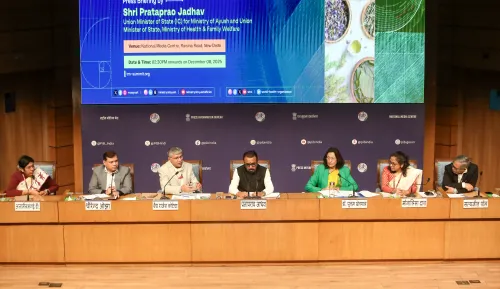
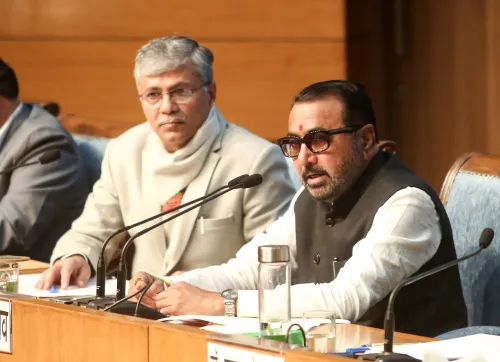
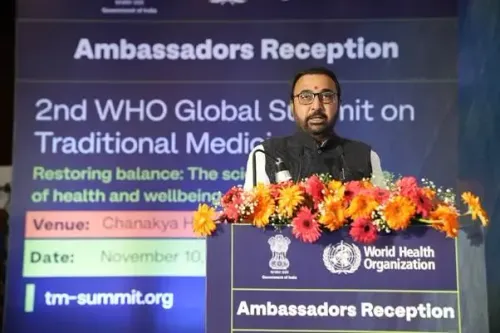
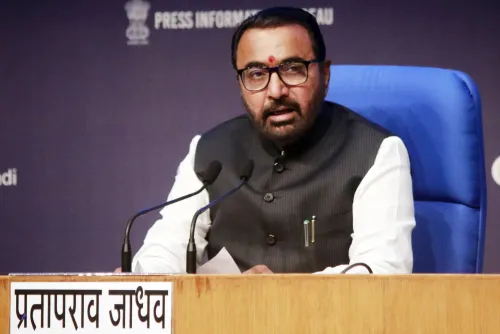
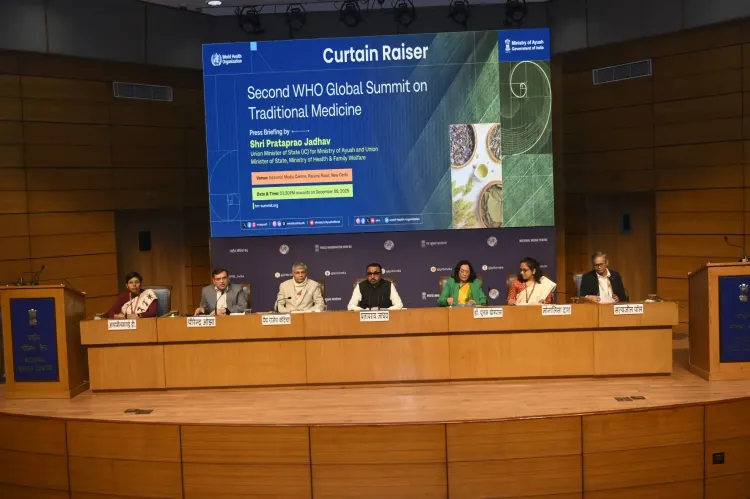
New Delhi, Dec 8 (NationPress) India takes immense pride in spearheading a global initiative to promote traditional medicine, stated Union Minister of State (Independent Charge) for Ayush, Prataprao Jadhav, on Monday. This announcement comes as the nation prepares to co-host the second edition of the WHO Global Summit on Traditional Medicine.
At a promotional event in the capital, Jadhav revealed that the summit is scheduled from December 17-19 at Bharat Mandapam, New Delhi, focusing on the theme “Restoring balance for people and planet: The science and practice of well-being”.
“India is honored to co-host the second edition of the WHO Global Summit on Traditional Medicine, following the outstanding success of the inaugural summit held in India in 2023,” Jadhav remarked.
He further mentioned that the ongoing global trust in India's Ayush systems is highlighted by the establishment of the WHO Global Centre for Traditional Medicine in Jamnagar.
“India’s extensive heritage in Ayurveda, Yoga, Naturopathy, Unani, Siddha, Sowa-Rigpa, and Homoeopathy has been fundamental in holistic healthcare for centuries, gaining increasing recognition globally as a potent integrative health strategy,” the Minister stated.
He emphasized that traditional medicine serves as a crucial component in attaining Universal Health Coverage, enhancing resilient health systems, and driving forward the Sustainable Development Goals.
Jadhav pointed out that the Global Summit is being organized in partnership with the World Health Organization (WHO) under an agreement signed in September 2025. This initiative aligns with the WHO Traditional Medicine Strategy 2025-2034, which was adopted during the 78th World Health Assembly.
With anticipated participation from over 100 countries, the summit will focus on scientific validation and innovation within traditional medicine, fortifying digital health and global data systems, incorporating traditional medicine into public health and wellness initiatives, ensuring equitable access, advocating sustainable practices, preserving biodiversity, fostering responsible industry growth, tackling intellectual property challenges, and investigating emerging applications such as artificial intelligence.
Point of View
India's leadership in traditional medicine signifies its commitment to enhancing global health standards. As the nation co-hosts the WHO Global Summit, it underscores the importance of integrating traditional practices within modern healthcare systems, ensuring a more holistic approach for future generations.
NationPress
30 Sept 2026
Frequently Asked Questions
What is the WHO Global Summit on Traditional Medicine?
The WHO Global Summit on Traditional Medicine is an event that brings together countries to discuss the integration and advancement of traditional healing practices globally.
When will the summit take place?
The summit is scheduled to occur from December 17 to 19 at Bharat Mandapam in New Delhi.
Why is traditional medicine important?
Traditional medicine plays a crucial role in holistic healthcare and is essential for achieving Universal Health Coverage and Sustainable Development Goals.
What role does India play in traditional medicine?
India is recognized for its rich heritage in various traditional medicine practices, including Ayurveda and Yoga, and is a global leader in promoting these systems.
How many countries are expected to participate in the summit?
Over 100 countries are expected to participate in the summit to discuss innovations in traditional medicine.