Odisha CM Office Highlights Ayushman Bharat's ₹1.25 Lakh Crore Savings
Synopsis
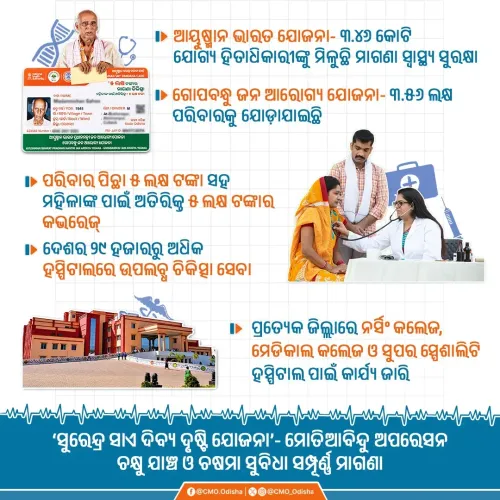
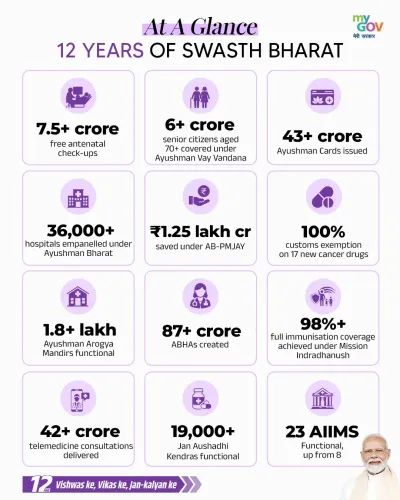
The Chief Minister's Office of Odisha has highlighted Ayushman Bharat's nationwide impact: ₹5 lakh cashless coverage across 36 States and UTs, 38,000+ empanelled hospitals, 179 free medicines, 63 free diagnostics, and over ₹1.25 lakh crore saved in out-of-pocket health expenditure.
Key Takeaways
Ayushman Bharat now covers families across 36 States and Union Territories with up to ₹5 lakh in cashless hospitalisation cover under PM-JAY.
More than 38,000 hospitals are empanelled under the scheme, forming one of the world's largest publicly funded hospital networks.
Ayushman Arogya Mandirs provide 179 medicines and 63 diagnostic services free of cost at the primary-care level.
Over ₹1.25 lakh crore has been saved in out-of-pocket health expenditure since the scheme's launch in 2018 .
The scheme combines insurance (PM-JAY) and primary care infrastructure (Arogya Mandirs) to address both catastrophic and routine healthcare costs.
Odisha's CMO sharing the data reflects active state-level engagement with the scheme's rollout and narrative.
India's most ambitious public health guarantee is now quantifying its own impact — and the numbers are striking. The Chief Minister's Office of Odisha, on Thursday, 24 September 2026, shared a sweeping summary of Ayushman Bharat's nationwide reach, spotlighting how the scheme has reshaped healthcare access across 36 States and Union Territories.
₹5 Lakh Cashless Cover and a Network of 38,000+ Hospitals
At the scheme's core is the Pradhan Mantri Jan Arogya Yojana (PM-JAY), which extends up to ₹5 lakh in cashless health coverage per eligible family for secondary and tertiary hospitalisation. What was once a promise on paper is now backed by a hospital network of over 38,000 empanelled facilities spread across the country — giving low-income families a real, accessible safety net when illness strikes hardest. The financial relief is the most dramatic headline: more than ₹1.25 lakh crore in out-of-pocket expenditure has been saved since the scheme's rollout. In a country where catastrophic medical bills have historically pushed households into poverty, that figure represents millions of families who did not have to sell land, borrow at punishing interest rates, or simply go without care.Ayushman Arogya Mandirs: Free Medicines and Diagnostics at the Door
Beyond insurance, Ayushman Arogya Mandirs — the rebranded Health and Wellness Centres that form the primary-care spine of the programme — are now dispensing 179 medicines and 63 diagnostic services free of cost. Launched under the broader Ayushman Bharat framework that debuted in 2018, these centres were designed to catch illness before it escalates to hospitalisation — a public-health logic that reduces both human suffering and system-wide costs. The dual architecture matters: PM-JAY catches the big, ruinous hospital bills, while Ayushman Arogya Mandirs tackle the everyday chronic and preventive needs that quietly drain household budgets. Together, they represent a layered approach to what planners call 'comprehensive primary care.'Odisha's Place in a Nationwide Health Shift
Odisha's CMO amplifying this data signals active state-level ownership of the scheme's narrative — a pattern seen across participating states that have integrated their own health programmes with the central framework. States determine how many hospitals are empanelled, how effectively beneficiaries are enrolled, and how fluidly patients move from Mandirs to secondary care referrals. That integration gap — between a primary-care visit and a hospital bed — remains the key metric watchers are tracking as the scheme matures. The post's closing line carries the broader ambition: 'A healthier India is paving the way for a stronger and more prosperous nation' — framing health spending not as a fiscal liability but as national investment. With over ₹1.25 lakh crore pulled back from household catastrophe, the argument is no longer theoretical.Point of View
If verified at scale, would represent one of the most consequential social-protection outcomes in post-liberalisation India. The dual architecture of PM-JAY plus Ayushman Arogya Mandirs is a deliberate policy bet that insurance alone cannot drive health outcomes without strong primary care; the real test now is seamless referral linkage between the two tiers. State-level utilisation data and hospitalisation claim patterns will ultimately determine whether the scheme's reach translates into measurable improvements in population health indicators.
NationPress
24 Sept 2026
Frequently Asked Questions
What is Ayushman Bharat and who does it cover?
Ayushman Bharat is India's flagship public health programme launched in 2018. It covers eligible low-income families across 36 States and UTs with up to ₹5 lakh in cashless hospitalisation insurance under PM-JAY, alongside free primary care at Ayushman Arogya Mandirs.
How much has Ayushman Bharat saved in out-of-pocket health expenses?
According to the Chief Minister's Office of Odisha's 24 September 2026 post, Ayushman Bharat has saved over ₹1.25 lakh crore in out-of-pocket health expenditure for beneficiary families since the scheme's launch.
What are Ayushman Arogya Mandirs?
Ayushman Arogya Mandirs are rebranded Health and Wellness Centres that form the primary-care arm of Ayushman Bharat. They offer 179 medicines and 63 diagnostic services free of cost, aiming to address routine and preventive health needs before they escalate to hospitalisation.
How many hospitals are empanelled under Ayushman Bharat?
As highlighted by the CMO Odisha on 24 September 2026, over 38,000 hospitals are empanelled under Ayushman Bharat, creating one of the largest publicly funded hospital networks in the world.
What is the difference between PM-JAY and Ayushman Arogya Mandirs?
PM-JAY (Pradhan Mantri Jan Arogya Yojana) is the insurance component offering ₹5 lakh cashless cover for secondary and tertiary hospitalisation, while Ayushman Arogya Mandirs handle free primary care — medicines and diagnostics — at the community level. Together they form a two-tier health safety net.