Odisha CM Office: Free health cover for all via Ayushman & Gopabandhu
Synopsis
The Chief Minister's Office of Odisha has highlighted free health coverage for every family under Ayushman Bharat and Gopabandhu Jan Arogya Yojana, with added benefits for women and district-level medical colleges being built to decentralise healthcare access across the state.
Key Takeaways
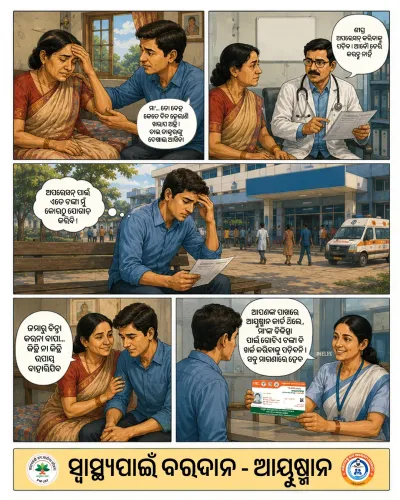
Every family in Odisha is receiving free medical coverage through the convergence of Ayushman Bharat Yojana and Gopabandhu Jan Arogya Yojana .
Women beneficiaries receive additional coverage advantages beyond the standard family entitlement.
Beneficiaries can access advanced treatment at major empanelled hospitals across India, not just within Odisha.
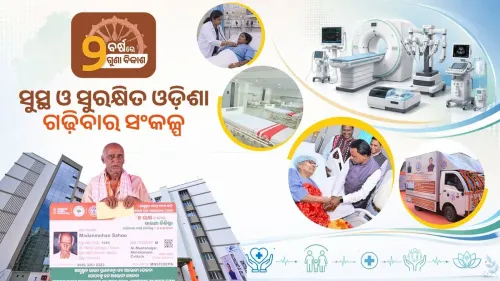
Medical and nursing colleges are being constructed in every district of Odisha to decentralise tertiary care.
The announcement marks the second anniversary of the current Odisha government under the campaign #2YearsofSwasthyaSurakhya .
Odisha's model mirrors similar central-state scheme convergence strategies seen in Andhra Pradesh and Tamil Nadu.
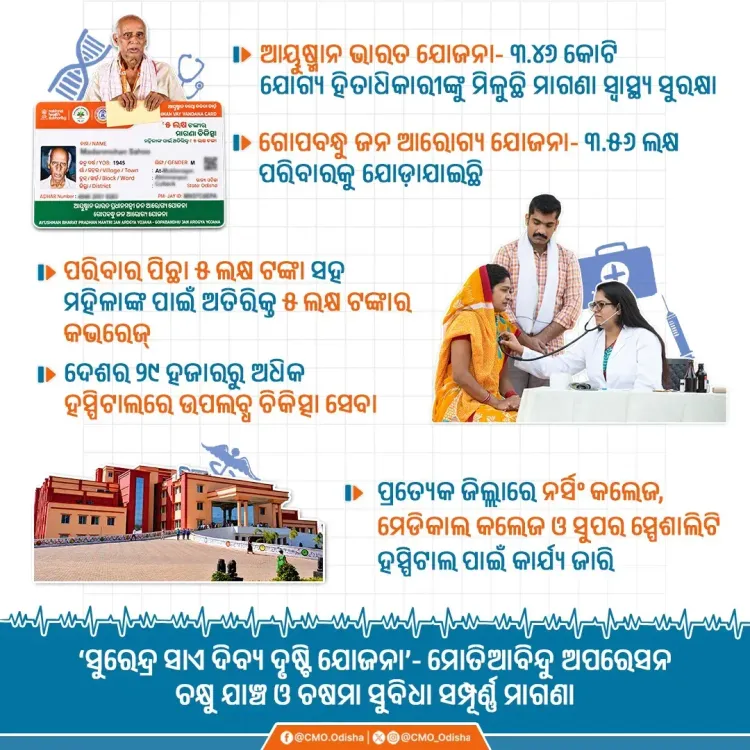
The Chief Minister's Office of Odisha announced on Wednesday, 17 June 2026 that every family in the state is receiving free medical coverage through the convergence of Ayushman Bharat Yojana and the state's own Gopabandhu Jan Arogya Yojana, with additional benefits for women and access to leading hospitals across India. The announcement was made as part of the government's celebration of two years in office, marked under the hashtags #2YearsofLokankaSarakar and #2YearsofSwasthyaSurakhya.
Context
The post, originally in Odia, states: 'Through Ayushman Bharat Yojana and Gopabandhu Jan Arogya Yojana, every family is getting free medical protection. With additional benefits for women, advanced treatment is available at major hospitals across the country.' It further notes that medical and nursing colleges are being built in every district to bring healthcare closer to the people.
The announcement coincides with the second anniversary of the current Odisha government, framing the dual health scheme and infrastructure push as signature achievements of its tenure.
Policy Backdrop
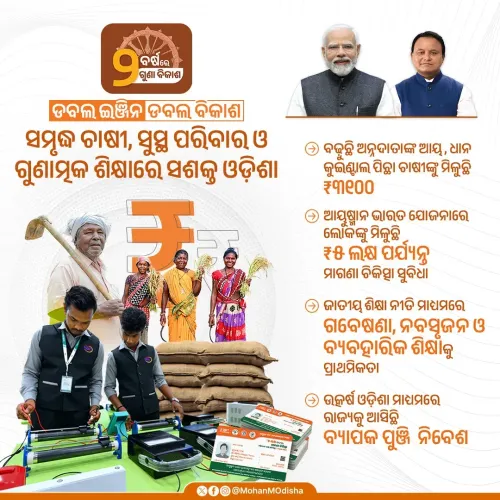
Ayushman Bharat Pradhan Mantri Jan Arogya Yojana, launched nationally in 2018, provides cashless hospitalisation coverage of up to Rs 5 lakh per family per year for secondary and tertiary care, targeting economically vulnerable households. Gopabandhu Jan Arogya Yojana is Odisha's state-level scheme that supplements the central programme with additional cashless treatment benefits specific to state residents, including enhanced provisions for women.
The convergence of the two programmes allows Odia beneficiaries to access empanelled hospitals not just within the state but across the country, significantly expanding portability of coverage. Odisha's health policy framework has, since 2020, emphasised building at least one medical college and one nursing college in each of its 30 districts to decentralise tertiary care and address human resource shortages.
Stakeholders and Impact
The primary beneficiaries are Odia families enrolled under the twin schemes, with women identified as a distinct group receiving additional coverage advantages. The dual-scheme model ensures that even patients requiring specialised treatment unavailable locally can seek care at empanelled hospitals in other states without out-of-pocket expenses.
The district-level medical and nursing college programme addresses a structural gap: Odisha, like many eastern Indian states, has historically had a lower density of medical institutions relative to its population. Expanding local medical education is intended to simultaneously improve service delivery and build a pipeline of healthcare workers who may remain in the state.
This approach mirrors strategies adopted in Andhra Pradesh and Tamil Nadu, where state governments have layered their own schemes on top of Ayushman Bharat to deepen coverage and add gender-specific benefits, reflecting a broader national trend of central-state scheme convergence in public health.
What's Next
The key metrics to watch will be the construction timelines for district medical and nursing colleges and the pace of hospital empanelment under the combined schemes. The government's framing of these initiatives as a two-year milestone suggests further announcements on health infrastructure are likely as the anniversary period continues.
Sustained expansion of the empanelled hospital network and timely commissioning of new colleges will determine whether the policy ambition translates into measurable improvements in healthcare access for rural and semi-urban Odisha.
Point of View
Allowing the ruling dispensation to claim ownership of a popular welfare outcome. The emphasis on women's additional benefits taps into a well-established electoral calculus in Indian state politics, where gender-targeted welfare has proven to be a durable vote-mobilising instrument. Building medical colleges in every district simultaneously addresses a long-standing structural deficit and generates visible, constituency-level infrastructure that is harder for opponents to dismiss than abstract coverage statistics. The broader arc here is one of competitive federalism in health policy, where states race to layer benefits on central schemes to differentiate their governance brand.
NationPress
23 Sept 2026
Frequently Asked Questions
What is Gopabandhu Jan Arogya Yojana?
Gopabandhu Jan Arogya Yojana is an Odisha state health scheme that supplements the central Ayushman Bharat programme, providing additional cashless treatment benefits to state residents, including enhanced provisions for women.
How much coverage do Odisha families get under Ayushman Bharat?
Under Ayushman Bharat Pradhan Mantri Jan Arogya Yojana, eligible families receive cashless hospitalisation coverage of up to Rs 5 lakh per year for secondary and tertiary care at empanelled hospitals.
Can Odisha residents use these health schemes in hospitals outside Odisha?
Yes. The convergence of Ayushman Bharat and Gopabandhu Jan Arogya Yojana allows beneficiaries to access treatment at major empanelled hospitals across India, making the coverage portable.
Is Odisha building medical colleges in every district?
According to the Chief Minister's Office, medical and nursing colleges are being constructed in every district of Odisha as part of an effort to decentralise tertiary healthcare and expand local medical education.
What extra benefits do women get under Odisha's health schemes?
The CMO's post states that women receive additional benefits under the combined Ayushman Bharat and Gopabandhu Jan Arogya Yojana framework, though the specific monetary or coverage details were not enumerated in the announcement.