CM Majhi Marks 2 Years With Health, Farm, Industry Push
Synopsis
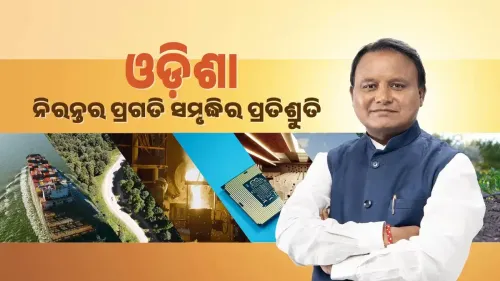
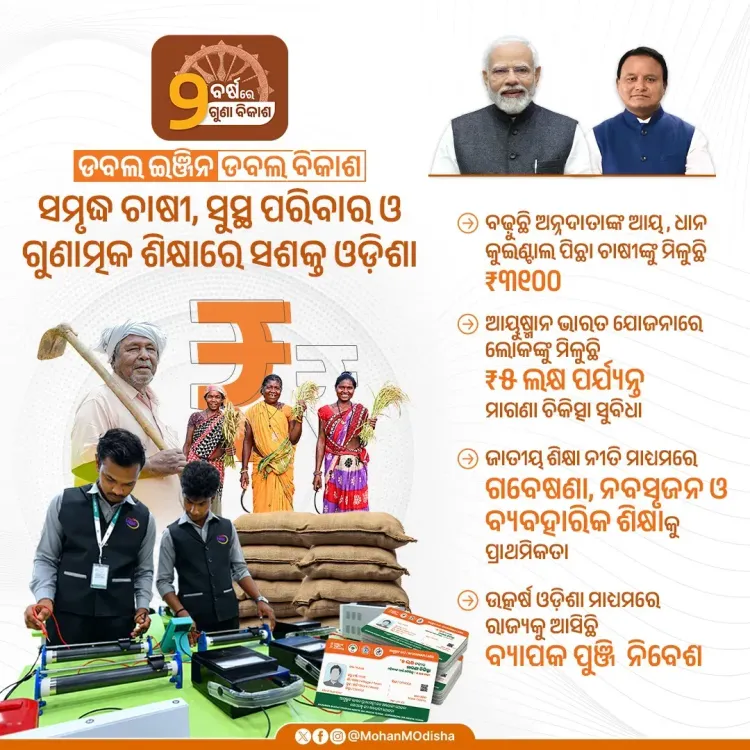
On the second anniversary of his government, Odisha Chief Minister Mohan Charan Majhi highlighted the integration of Ayushman Bharat with Gopabandhu Jan Arogya Yojana for universal free healthcare, fair paddy pricing for farmers, and industrial investment — framing it as the BJP's 'double engine, double development' model in action.
Key Takeaways
CM Mohan Charan Majhi marked two years of the BJP government in Odisha on 18 June 2026 .
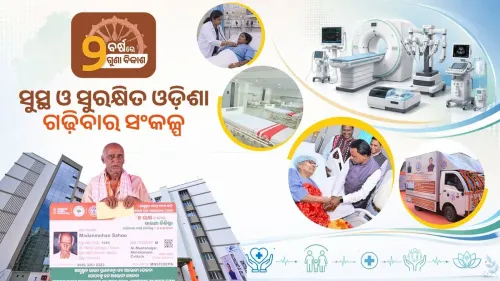
The central Ayushman Bharat scheme and the state's Gopabandhu Jan Arogya Yojana have been merged to provide free healthcare to every Odia family.
Ayushman Bharat offers up to Rs 5 lakh per family per year for hospitalisation under its national framework.
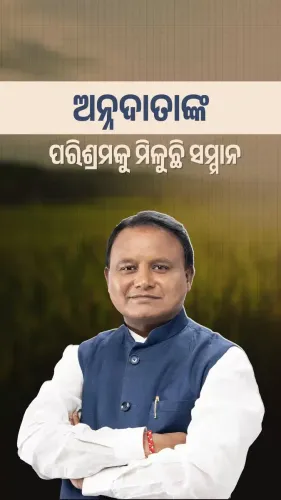
The government cited fair paddy pricing as a measure to strengthen the economic position of Odisha's farming households.
Quality education and expanded industrial investment were identified as additional pillars of the administration's development agenda.
The BJP's 'double engine, double development' framework underpins the government's integrated central-state policy delivery model.
Odisha Chief Minister Mohan Charan Majhi on Thursday, 18 June 2026 highlighted his government's two-year record, citing the convergence of the central Ayushman Bharat scheme with the state's Gopabandhu Jan Arogya Yojana, fair pricing for paddy farmers, and expanded industrial investment as pillars of the BJP's 'double engine' governance model in Odisha.
Context
Posting in Odia under the hashtag #2YearsofLokankaSarakar (Two Years of the People's Government), CM Majhi described the merger of the two health schemes as an 'apurba mahamilan' — an 'extraordinary confluence' — that now extends free medical protection to every Odia family. The post also referenced fair remuneration for paddy, framing it as economic strengthening for farming households across the state.
The BJP won Odisha's assembly elections in June 2024, ending over two decades of Biju Janata Dal rule. Majhi, who took charge as Chief Minister that month, has since anchored his administration's public messaging around the party's 'double engine, double development' (Double Engine, Double Vikas) framework.
Policy Backdrop
Ayushman Bharat Pradhan Mantri Jan Arogya Yojana, launched nationally in 2018, provides health coverage of up to Rs 5 lakh per family per year for secondary and tertiary hospitalisation. Gopabandhu Jan Arogya Yojana is Odisha's own state-level health scheme, designed to extend affordable treatment to residents, and has now been integrated with the central programme for broader reach.
Odisha has maintained state-specific health coverage schemes since at least 2018 alongside central initiatives. The integration of both programmes represents the kind of central-state policy convergence that the BJP has consistently showcased in states where it governs at both levels. On agriculture, the government's stated commitment to 'fair price' (uchit mulya) for paddy aligns with the broader national minimum support price framework, though specific updated figures were not cited in the post.
Stakeholders and Impact
The primary beneficiaries identified in CM Majhi's post are Odia families accessing free healthcare and farming households receiving improved paddy prices. Odisha, with a largely agrarian economy, has a substantial share of its population dependent on paddy cultivation, making MSP-linked assurances politically and economically significant.
On the industrial front, the post cited 'extensive investment in quality education and industry' as a third pillar. This signals the government's intent to position Odisha as a leading and prosperous state, a narrative that has gained traction since the state hosted major investors' summits in recent years. The merged health scheme, if effectively implemented, could expand the coverage net for millions of families currently outside formal insurance.
What's Next
The two-year mark typically serves as a checkpoint for mid-term governance reviews, and CM Majhi's post sets the tone for the BJP's communication ahead of any upcoming budget cycle or investors' summit in Odisha. Rollout metrics for the merged health scheme — including enrolment numbers and claim settlements — will be a key measure of whether the 'extraordinary confluence' translates into on-ground delivery.
Sustained paddy price support and new industrial investment announcements in the coming months will determine whether the 'double engine' model produces measurable economic outcomes for the state's farmers and youth, reinforcing or testing the political narrative Majhi has staked his administration on.
Point of View
Agriculture, and industry into a single governance narrative that credits both the state and the Centre. The integration of Ayushman Bharat with Gopabandhu Jan Arogya Yojana is the most substantive claim, as it represents a structural policy convergence rather than mere rhetoric. However, the absence of specific enrolment data or paddy MSP figures leaves the post in the realm of assertion; the real test will be delivery metrics over the next budget cycle. If the merged health scheme achieves wide coverage and paddy pricing commitments hold, the 'double engine' model gains a credible Odisha case study ahead of future electoral cycles.
NationPress
19 Sept 2026
Frequently Asked Questions
What is the merger of Ayushman Bharat and Gopabandhu Jan Arogya Yojana in Odisha?
The two schemes — the central government's Ayushman Bharat and Odisha's state-level Gopabandhu Jan Arogya Yojana — have been integrated to provide free healthcare coverage to every Odia family, combining central and state resources for broader reach.
How much coverage does Ayushman Bharat provide per family?
Ayushman Bharat Pradhan Mantri Jan Arogya Yojana provides up to Rs 5 lakh per family per year for secondary and tertiary hospitalisation at empanelled hospitals.
What is the 'double engine' model that CM Majhi refers to?
'Double engine' is the BJP's governance framework emphasising coordinated action between a BJP-ruled state government and the BJP-led central government to accelerate development and welfare delivery.
When did Mohan Charan Majhi become Chief Minister of Odisha?
Mohan Charan Majhi became Chief Minister of Odisha in June 2024 after the BJP won the state assembly elections, ending over two decades of Biju Janata Dal rule.
What is Gopabandhu Jan Arogya Yojana?
Gopabandhu Jan Arogya Yojana is Odisha's state-specific health insurance scheme aimed at providing affordable medical treatment to residents, now integrated with the central Ayushman Bharat programme for expanded coverage.