CM Majhi marks 2 years with push for Odisha farmers

Synopsis
Odisha Chief Minister Mohan Charan Majhi marked two years of BJP rule on 9 June 2026 by citing three state schemes — covering paddy MSP, direct farmer income support, and dairy empowerment — as proof of his government's agricultural welfare record under the 'double engine' model.
Key Takeaways
CM Majhi's post on 9 June 2026 marks two years since the BJP formed the Odisha government after the 2024 assembly elections.
The Samruddha Krishak Yojana is cited as raising the minimum support price for paddy in Odisha.
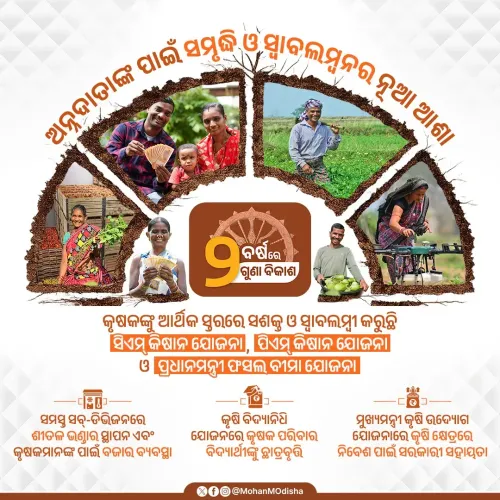
The CM Kisan Yojana targets small and landless farmers with direct financial security, complementing the central PM-KISAN scheme.
The Kamdhenu Yojana is aimed at empowering dairy farmers across the state.
The CM invoked the BJP's 'double engine government' model, arguing coordinated centre-state governance has strengthened Odisha's farm infrastructure.
Independent verification of scheme coverage and income outcomes is yet to be established in public records.
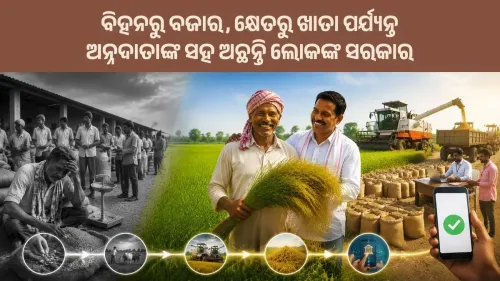
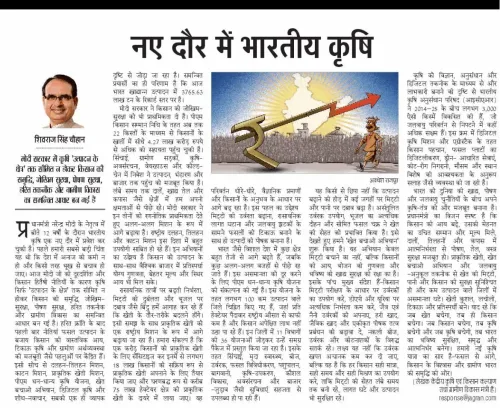
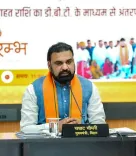
Odisha Chief Minister Mohan Charan Majhi on Tuesday, 9 June 2026 highlighted the state government's two-year record on agricultural welfare, citing three flagship schemes aimed at paddy growers, small and landless farmers, and dairy producers as evidence of what he called the 'people's government' completing a successful term.
Context
Posting in Odia under the hashtags #2YearsofLokankaSarakar and #BikasharaDharaOdishaSara, the Chief Minister described farmers as 'the backbone of the state's economy' and said their 'all-round development and welfare remains the government's topmost priority.' The post marks two years since the Bharatiya Janata Party formed the Odisha government following its majority win in the 2024 state assembly elections, ending a long period of opposition rule in the state.
The message frames the government's agricultural interventions as 'epoch-making steps that have created a new chapter in the state's farm sector,' positioning the anniversary as a moment to account for rural delivery rather than political milestones alone.
Policy Backdrop
CM Majhi cited three state schemes by name. The 'Samruddha Krishak Yojana' is described as raising the minimum support price for paddy. The 'CM Kisan Yojana' is presented as delivering financial security to small and landless cultivators — a state-level complement to the central government's PM-KISAN scheme, which has provided direct income support to landholding farmer families since 2019. The 'Kamdhenu Yojana' targets the empowerment of dairy farmers.
The post invokes the BJP's 'double engine government' concept — coordinated policymaking between the central government in New Delhi and a BJP-ruled state — arguing that this alignment has not only given farmers 'financial self-reliance' but has 'strengthened Odisha's agricultural infrastructure and widened the path to prosperity.'
Stakeholders and Impact
Agriculture employs a large share of Odisha's population, and the state's farm economy is dominated by paddy cultivation. Small and marginal farmers, who own limited land or none at all, and dairy producers represent some of the most economically vulnerable rural households in the state.
The three schemes, if fully implemented at the scale implied, would affect millions of rural households across the state. Independent assessment of scheme coverage, beneficiary counts, and actual income effects has not yet been established in verified public records, and official evaluation data will be a key measure of whether the two-year claims hold up to scrutiny.
What's Next
Attention will now turn to Odisha's state budget allocations for agriculture in the coming fiscal cycle and any official audits or beneficiary surveys that quantify the reach of the three named schemes. The BJP's 'double engine' framing also sets an expectation that central scheme funds flowing into Odisha will be tracked alongside state outlays as a combined measure of rural welfare delivery. How the government translates its two-year narrative into verifiable outcomes will shape its political standing ahead of the next electoral cycle.
Point of View
Using three named schemes to argue that the BJP's 'double engine' model has delivered tangible rural gains in a state where agriculture underpins both the economy and electoral arithmetic. The framing mirrors a pattern seen in other BJP-governed states — pairing enhanced state support prices with central income-transfer programmes to project a seamless centre-state welfare pipeline. What distinguishes this moment is the absence of verified outcome data; the political claim is ahead of the audit trail, which means the government's credibility on farmer welfare will increasingly depend on independently measurable results rather than scheme announcements. The anniversary communication sets a benchmark against which the next budget cycle and any official evaluations will be judged.
NationPress
19 Sept 2026
Frequently Asked Questions
What is the CM Kisan Yojana in Odisha?
The CM Kisan Yojana is an Odisha state scheme that provides direct financial support to small and landless farmers, functioning as a state-level complement to the central PM-KISAN programme.
What is the Samruddha Krishak Yojana?
The Samruddha Krishak Yojana is an Odisha government scheme described as raising the minimum support price for paddy, aimed at improving income for rice-growing farmers in the state.
What is the Kamdhenu Yojana in Odisha?
The Kamdhenu Yojana is a state scheme focused on empowering dairy farmers in Odisha by strengthening the dairy farming sector.
How long has Mohan Charan Majhi been Chief Minister of Odisha?
Mohan Charan Majhi has been Chief Minister of Odisha for two years as of June 2026, having taken office after the BJP's victory in the 2024 state assembly elections.
What is the 'double engine government' model the BJP refers to in Odisha?
The 'double engine government' refers to the BJP's concept of coordinated governance where the same party rules both at the centre and in a state, allowing central and state schemes to be aligned for faster delivery of welfare and development programmes.