Bankers' Books Evidence, ISI Bills introduced in Lok Sabha on 3 August
Synopsis
Two landmark Bills landed in Lok Sabha on 3 August: one to retire a 135-year-old colonial banking-evidence law and another to recast the Indian Statistical Institute as a body corporate with a President-appointed Board of Governors — all while Opposition disruptions over NEET and Ram Temple donations repeatedly stalled proceedings.
Key Takeaways
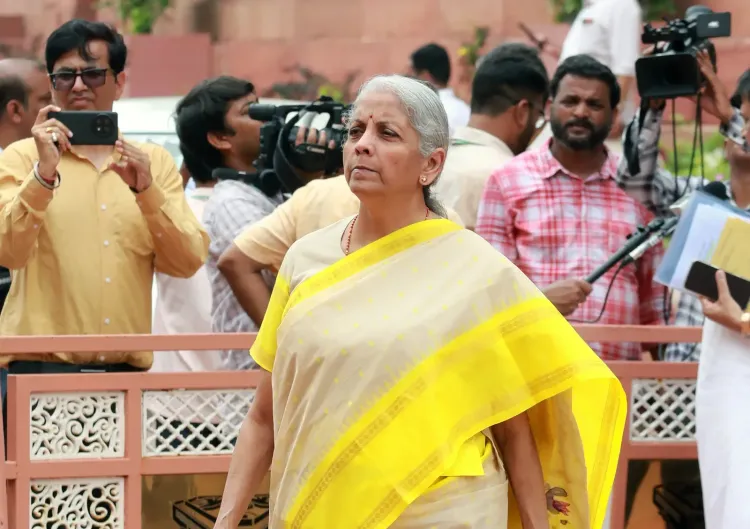
Finance Minister Nirmala Sitharaman introduced the Bankers' Books Evidence Bill, 2026 in Lok Sabha on 3 August , replacing the Bankers' Books Evidence Act, 1891 .
The new Bill aligns banking-evidence law with contemporary digital banking practices and shifts toward better-targeted judicial oversight.
The Indian Statistical Institute Bill, 2026 , tabled by Rao Inderjit Singh , proposes ISI's reconstitution as a body corporate with the President of India as Visitor.
ISI's Board of Governors will be chaired by an eminent figure from academia, industry, or statistical sciences.
Lok Sabha was adjourned after Opposition disruptions over the NEET paper leak and alleged Ram Temple donation theft blocked the Question Hour.
The MSME Development (Amendment) Bill, 2026 is slated for introduction in Rajya Sabha by Union Minister Jitan Ram Manjhi .
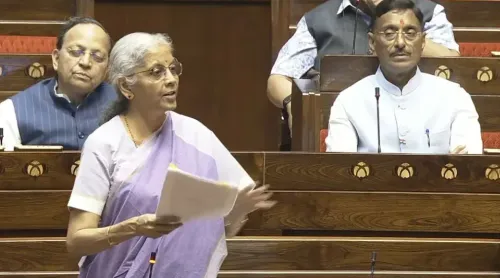
Finance Minister Nirmala Sitharaman introduced the Bankers' Books Evidence Bill, 2026 in Lok Sabha on Monday, 3 August, seeking to replace a 135-year-old colonial-era law that has governed the production of banking records in Indian courts since 1891. Simultaneously, Union Minister of State (Independent Charge) for Statistics and Programme Implementation Rao Inderjit Singh tabled the Indian Statistical Institute Bill, 2026, proposing to reconstitute the premier statistics body as a statutory 'body corporate'.
Bankers' Books Evidence Bill: What Changes
The proposed legislation aims to replace the Bankers' Books Evidence Act, 1891, which has remained in force for over 125 years. According to the Bill's statement of objects, it seeks to provide 'for law relating to evidence with respect to bankers' books and to align it with contemporary digital banking practices.'
Crucially, the new framework shifts the emphasis toward better-targeted judicial oversight rather than unrestricted access to banking records. The government's stated intent is to protect banks from unnecessary legal proceedings while preserving legitimate judicial access to banking evidence — a balance that the 19th-century statute was never designed to strike.
Indian Statistical Institute Bill: Key Provisions
The Indian Statistical Institute (ISI) Bill, 2026 proposes to incorporate the institute as a body corporate, strengthening its governance architecture and enabling it to respond to emerging national needs in statistical sciences. Under the Bill, the President of India will serve as the Visitor of the institute.
A Board of Governors will function as ISI's principal policy and executive body, to be headed by a Chairperson drawn from the fields of academia, industry, education, public policy, or statistical sciences. The restructuring is intended to promote academic excellence and research at the institution.
Parliament Proceedings and Opposition Disruptions
The introduction of both Bills took place against a backdrop of persistent disruptions in the Monsoon Session. Lok Sabha proceedings were adjourned after Opposition members raised objections over police action against students protesting the NEET paper leak and the alleged theft of donations at the Ram Temple, preventing the House from taking up the Question Hour.
This is the third week of the Monsoon Session, which has witnessed repeated adjournments and heated exchanges over issues including examination paper leaks, police action during demonstrations at Jantar Mantar, and the Ram Mandir donation theft case. Further disruptions are expected as the Centre pushes to advance several pending Bills.
Rajya Sabha and MSME Bill
In the Rajya Sabha, Union Minister Jitan Ram Manjhi is scheduled to introduce the Micro, Small and Medium Enterprises Development (Amendment) Bill, 2026 for consideration and passage. Finance Minister Sitharaman also presented a statement on Demands for Excess Grants for 2022-23 as part of the day's legislative agenda.
With the government aiming to clear a significant legislative backlog, the coming days will test whether the treasury benches can steer key Bills through a session marked by persistent political turbulence.
Point of View
1891 is long overdue — digital banking has rendered its paper-era assumptions obsolete — but the real test lies in the drafting details. The shift toward 'better-targeted judicial oversight' sounds measured, yet without clear thresholds for court-ordered access, it could either over-protect banks from legitimate scrutiny or under-protect borrowers from arbitrary disclosure. The ISI reconstitution, meanwhile, is structurally sensible, but elevating a Board of Governors without ring-fencing research funding risks turning a statistics powerhouse into another governance-heavy body. Both Bills deserve scrutiny in committee, not just a monsoon-session sprint to passage amid walkouts.
NationPress
17 Sept 2026
Frequently Asked Questions
What is the Bankers' Books Evidence Bill, 2026?
It is a proposed law introduced in Lok Sabha on 3 August by Finance Minister Nirmala Sitharaman to replace the Bankers' Books Evidence Act, 1891. The Bill aims to align banking-evidence rules with digital banking practices and introduce better-targeted judicial oversight of bank records.
Why is the 1891 Bankers' Books Evidence Act being replaced?
The 135-year-old Act was framed for paper-based banking and does not address digital records or modern court procedures. The new Bill seeks to protect banks from unnecessary legal proceedings while preserving legitimate judicial access to banking evidence.
What does the Indian Statistical Institute Bill, 2026 propose?
The Bill proposes to reconstitute the Indian Statistical Institute as a body corporate, with the President of India as Visitor and a Board of Governors as its principal policy and executive body. The restructuring is intended to strengthen governance and promote research excellence.
Who introduced the ISI Bill in Lok Sabha?
The Indian Statistical Institute Bill, 2026 was tabled by Rao Inderjit Singh, Union Minister of State (Independent Charge) for the Ministry of Statistics and Programme Implementation.
Why was Lok Sabha adjourned on 3 August?
The House was adjourned after Opposition members disrupted proceedings over police action against students protesting the NEET paper leak and the alleged theft of Ram Temple donations, preventing the Question Hour from being taken up.