Sitharaman Slams Opposition Walkout on Bankers' Bill

Synopsis
Finance Minister Nirmala Sitharaman criticised opposition parties for walking out of Rajya Sabha during debate on the Bankers' Books Evidence Bill, 2026, calling the legislation reformatory and beyond partisan dispute. The bill seeks to modernise the colonial-era Bankers' Books Evidence Act of 1891 for the digital banking era.
Key Takeaways
The Bankers' Books Evidence Bill, 2026 proposes to modernise the Bankers' Books Evidence Act, 1891 , updating rules on the admissibility of bank records — including electronic records — as evidence in courts.
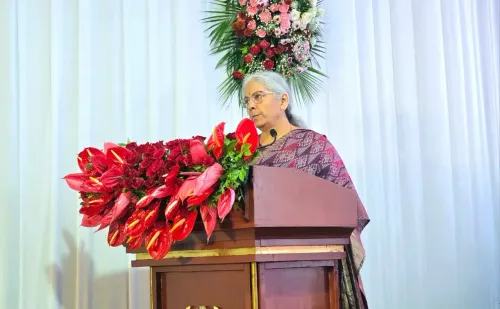
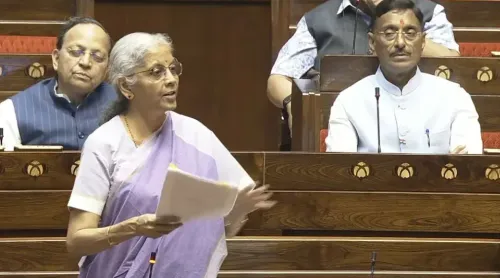
Union Finance Minister Nirmala Sitharaman made the remarks on the floor of the Rajya Sabha on Monday, August 10, 2026 .
Sitharaman described the bill as 'very reformatory' and said it would 'help the country move forward fast,' arguing no one should have a difference of opinion on its core purpose.
She specifically criticised opposition parties for walking out of the debate rather than participating to suggest improvements to the legislation.
Opposition walkouts during non-money bills in the Rajya Sabha have been a recurring pattern in recent parliamentary sessions.
The bill still faces committee scrutiny, potential amendments, and passage through both Houses before implementation.
A colonial-era banking law is finally getting a 21st-century overhaul — and Union Finance Minister Nirmala Sitharaman wants to know why the Opposition wasn't in the room to debate it. Speaking in the Rajya Sabha on Monday, August 10, 2026, Sitharaman called out opposition parties for walking out during deliberations on The Bankers' Books Evidence Bill, 2026, a reform she described as broadly beneficial and beyond partisan disagreement.
A 135-year-old law meets the digital age
The bill in question targets a statute that has been on the books since 1891. The Bankers' Books Evidence Act, 1891 was designed for an era of ink ledgers and paper registers — it allowed certified copies of bank records to serve as prima facie evidence in court. That framework, largely unchanged for over a century, now sits awkwardly against a banking system built on electronic records, core-banking software, and digital audit trails.
The 2026 Bill is aimed at modernising those admissibility rules for the digital era, making it easier for courts and litigants to rely on electronic bank records in legal proceedings. For a country where banking disputes routinely clog the judiciary, the downstream impact on dispute resolution speed could be significant.
Sitharaman's pointed challenge to the Opposition
'These are very reformatory. These are going to help the country move forward fast,' Sitharaman said from the floor of the Upper House, her words directed squarely at the empty benches left by departing opposition members. She went further, arguing that the only legitimate reason to engage with such a bill was to suggest improvements — not to absent oneself entirely. 'It's such a sad state that our Opposition chooses to walk out on these kinds of important debates,' she said.
The rebuke was precise. Sitharaman did not accuse the Opposition of opposing the bill — she accused them of refusing to engage with it at all. That framing shifts the argument from ideology to institutional responsibility.
Walkouts as a parliamentary pattern
Opposition walkouts during non-money bills in the Rajya Sabha have become a recurring feature of recent parliamentary sessions. The tactic is often deployed as a protest signal — against government conduct, pending demands, or broader political grievances — but it carries a cost: the debates proceed, the record is made, and the absent party loses its voice in shaping the final text.
For a bill like this one — touching the banking sector and the judiciary, with implications for how financial evidence is handled in courts across India — the stakes of non-participation are real. Committee scrutiny, amendments, and the final passage through both Houses remain ahead. What gets written into the rules notification after enactment will matter as much as the bill itself.
India's banking reform agenda has been built, piece by piece, on updating statutes that predate independence. The Finance Minister's message on Monday was unambiguous: this particular piece belongs to everyone, and opting out is not a neutral act.
Point of View
She positions any opposition absence not as a political protest but as institutional negligence. The 1891 Act is an easy target — few will defend a colonial-era statute — which makes the walkout politically costly for the Opposition to justify publicly. The broader pattern here is the government's steady effort to reframe banking and financial-sector modernisation as above-politics territory, making non-engagement look obstructionist rather than principled. Whether the Opposition returns to the debate table or doubles down on the walkout will signal how it intends to navigate the remainder of this parliamentary session.
NationPress
24 Sept 2026
Frequently Asked Questions
What is the Bankers' Books Evidence Bill 2026?
The Bankers' Books Evidence Bill, 2026 is proposed legislation to modernise the rules governing the admissibility of bank records as evidence in Indian courts, updating the framework of the colonial-era Bankers' Books Evidence Act of 1891 to account for digital and electronic banking records.
What did Nirmala Sitharaman say about the opposition walkout in Rajya Sabha?
Speaking in the Rajya Sabha on August 10, 2026, Sitharaman said it was 'such a sad state' that the opposition chose to walk out on an important debate, arguing the bill was reformatory and that the only legitimate reason to engage with it was to suggest improvements.
What was the Bankers' Books Evidence Act 1891?
The Bankers' Books Evidence Act, 1891 is a colonial-era law that allowed certified copies of bank ledgers to serve as prima facie evidence in legal proceedings. The 2026 Bill seeks to update this framework for the modern digital banking environment.
Why does the Bankers' Books Evidence Bill matter for India?
Modernising the rules on electronic bank records as court evidence can speed up the resolution of banking disputes, which frequently clog India's judiciary, and bring the legal framework in line with how banks actually operate today.
Is the Bankers' Books Evidence Bill 2026 passed yet?
As of the Rajya Sabha debate on August 10, 2026, the bill had not yet been passed. It still faces committee scrutiny, possible amendments, and passage through both Houses of Parliament before it can be enacted and implemented.