Trump hosts Xi Jinping at White House for first-ever state visit
Synopsis
For the first time, Xi Jinping is at the White House — and the optics are deliberate. Trump and Xi used the state visit ceremony to signal warmth and lay out a sweeping agenda covering trade access, AI governance, military crisis communication and people-to-people ties. No deals were announced, but the breadth of topics — from superintelligence to panda diplomacy — signals both sides are investing in managing the world's most consequential rivalry.
Key Takeaways
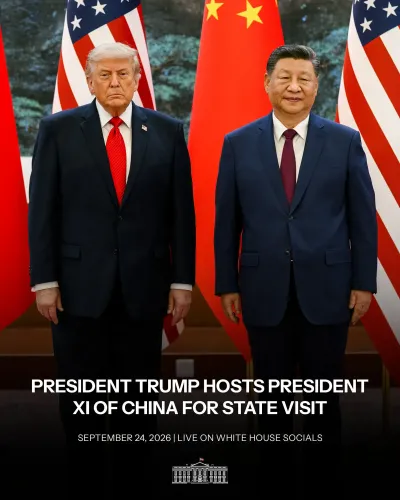
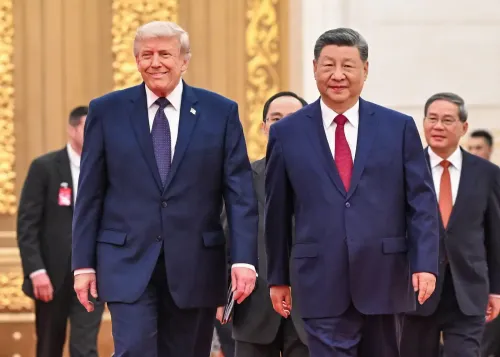
US President Donald Trump hosted Chinese President Xi Jinping at the White House on 24 September 2026 — their first meeting at the White House.
Talks are set to cover trade , security , technology , and artificial intelligence , including what Trump called 'superintelligence.' Trump said a new trade mechanism is being used to seek greater Chinese market access for American farmers and ranchers; no deal details were announced.
Xi invited 100,000 young Americans to visit China over the next five years and confirmed two pandas will arrive at Zoo Atlanta .
Xi called for regular military dialogue and better crisis communication mechanisms between the two countries.
The visit follows Trump's trip to Beijing in May and builds on their relationship that dates to a 2017 Mar-a-Lago summit.
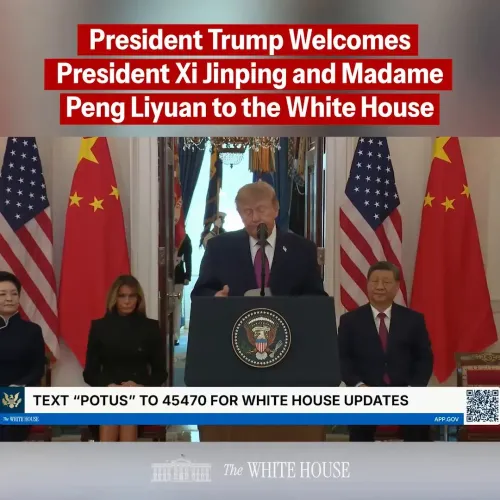
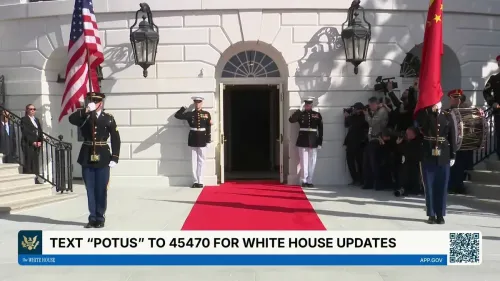
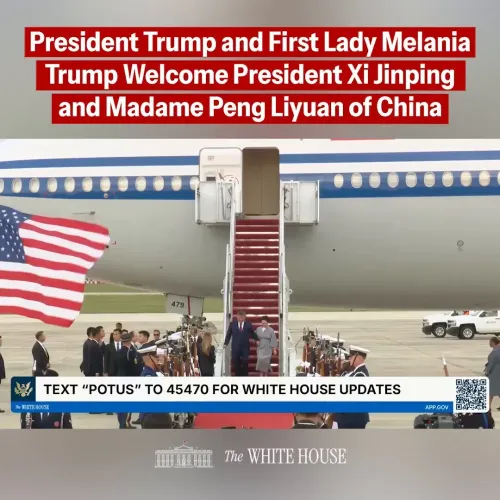
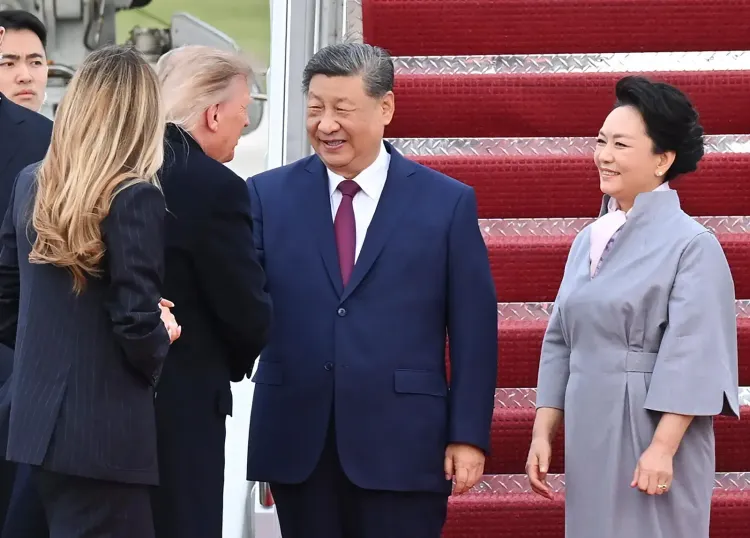
US President Donald Trump on Thursday, 24 September 2026 welcomed Chinese President Xi Jinping to the White House for a formal state visit — the first time the two leaders have met at the White House — with both heads of state calling for expanded cooperation across trade, security, technology, and artificial intelligence. The ceremony, attended by First Lady Melania Trump and Peng Liyuan, included the national anthems of both nations and set the stage for substantive talks on the most consequential bilateral relationship in the world.
Opening Remarks and Tone
'President Xi and I have forged a friendship, a truly great friendship actually, built on the mutual respect and the vital interests of our people,' Trump said at the welcoming ceremony. Xi, for his part, said he had come at Trump's invitation to 'continue their friendship, expand cooperation and improve the lives of people in both countries.' The public remarks struck a notably warm tone, though no concrete agreements were announced at the ceremony.
The visit follows Trump's own trip to Beijing in May, and both sides have since been engaged through what Trump described as 'a new trade mechanism' aimed at achieving a more balanced economic relationship. Trump specifically mentioned greater access to China's market for American farmers and ranchers but offered no details of any new trade agreement.
Key Agenda: Trade, Technology and Superintelligence
Trump said the Washington talks would cover security, technology, and what he termed 'superintelligence', adding that decisions in those fields 'could shape peace and prosperity for decades.' Xi echoed the technology theme, stating that both countries had a responsibility to develop artificial intelligence for the public good and keep it 'under human control.'
Xi also called for structured dialogue among officials responsible for foreign affairs, the economy, finance, and law enforcement. He said China welcomed American companies seeking to invest there and expressed hope that Chinese companies would be treated fairly in the United States — a pointed reference to ongoing regulatory scrutiny of Chinese firms on US soil.
Security, Narcotics and Crisis Communication
On security, Xi urged both nations to keep their competition 'within bounds' and maintain regular military dialogue. He called for better crisis communication mechanisms to prevent escalation — language that carries particular weight given recent tensions over Taiwan and the South China Sea. Xi also proposed closer cooperation on counter-narcotics and law enforcement, along with more direct flights to support travel and trade.
This comes amid a broader pattern: the two countries have repeatedly established crisis hotlines and military communication channels over the past decade, only to see them go dormant during periods of friction. Whether this visit produces durable mechanisms remains to be seen.
Symbolic Gestures and People-to-People Ties
Xi announced an invitation for 100,000 young Americans to visit China for exchanges and study over the next five years. He also confirmed that two pandas would soon arrive at Zoo Atlanta, framing the move as a gesture of friendship between the two peoples — a revival of China's long-standing 'panda diplomacy.'
The leaders also used the occasion to mark the 250th anniversary of US independence, with Xi offering congratulations to Americans. Trump said he would take Xi to the National Archives on Friday to view the Declaration of Independence, the Constitution, and the Bill of Rights.
Historical Context
Trump previously hosted Xi at his Mar-a-Lago estate in Florida in 2017 during his first term, with Xi returning the gesture later that year in Beijing. Thursday's White House ceremony marked a new chapter — and a notably different diplomatic register — for the two leaders' relationship. The public remarks laid out the subjects for discussion but announced no outcome from the Washington talks, leaving the substance of any agreements to emerge from the closed-door sessions.
Point of View
A deliberate upgrade from the informal Mar-a-Lago format of 2017. Yet the ceremony produced no announced outcomes, which is either diplomatic prudence or a sign that the two sides remain far apart on the hard specifics of trade and technology access. The invocation of 'superintelligence' by Trump and AI governance by Xi reflects how the competition has shifted from tariffs to who writes the rules of the next technological era. India, caught between its US alignment and its deep economic ties with China, will be watching for any US-China framework on AI and critical technology that could constrain New Delhi's own manoeuvring room.
NationPress
24 Sept 2026
Frequently Asked Questions
What is the Trump-Xi White House state visit about?
US President Donald Trump hosted Chinese President Xi Jinping at the White House on 24 September 2026 for a formal state visit — the first time the two leaders have met at the White House. The talks are focused on trade, security, technology, artificial intelligence, and people-to-people ties.
Was any trade deal announced at the Trump-Xi summit?
No trade agreement was announced at the opening ceremony. Trump referenced a 'new trade mechanism' aimed at a more balanced relationship and greater Chinese market access for American farmers, but gave no specifics. The closed-door talks are expected to address the substance.
What did Xi Jinping offer during the state visit?
Xi announced an invitation for 100,000 young Americans to visit China over the next five years, confirmed that two pandas would arrive at Zoo Atlanta, and proposed closer cooperation on counter-narcotics, law enforcement, and more direct flights between the two countries.
What is the history of Trump-Xi meetings?
Trump first hosted Xi at his Mar-a-Lago estate in Florida in 2017 during his first term. Xi later hosted Trump in Beijing that same year. Trump visited Beijing again in May before this White House visit, which marks the first time Xi has attended a state ceremony at the White House.
What did Trump and Xi say about artificial intelligence?
Trump said discussions would cover technology and what he called 'superintelligence,' warning that decisions in those fields could shape peace and prosperity for decades. Xi said both nations had a responsibility to develop AI for the public good and keep it under human control.