BBMB dispute resolved: Himachal BJP credits Modi, Centre for Supreme Court win
Synopsis
A dispute that began with Punjab's reorganisation in 1966 and reached the Supreme Court in 1996 has finally moved toward resolution — and Himachal Pradesh BJP is making sure the political credit lands with Modi and the Centre, not the Congress-led state government. At stake: the state's legally recognised 7.19% share of BBMB hydropower output and years of unpaid electricity dues.
Key Takeaways
Himachal Pradesh BJP President Rajiv Bindal welcomed the Supreme Court's ruling on BBMB electricity dues on 7 November .
Bindal credited PM Narendra Modi and Union Power Minister Manohar Lal Khattar for resolving the decades-old dispute.
The Supreme Court had first recognised Himachal Pradesh's entitlement to a 7.19 per cent power share on 27 September 2011 , during the Dhumal -led BJP government.
The dispute dates to 1966 ; Himachal Pradesh filed an original suit in the Supreme Court in 1996 .
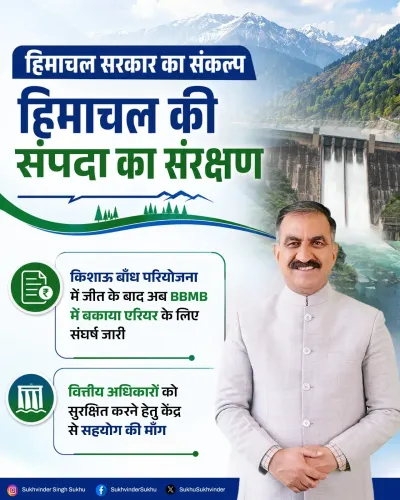
Bindal urged CM Sukhvinder Singh Sukhu not to claim political credit and to present the full history of the dispute to the public.
Outstanding dues remained unsettled even after the 2011 verdict, with complex tariff and capital-cost calculations cited as contributing factors.
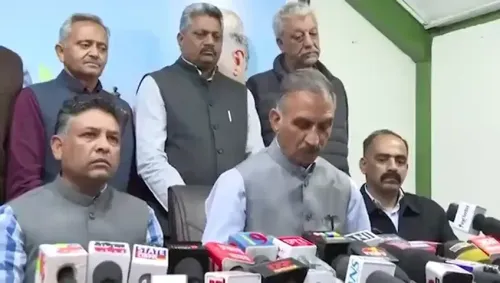
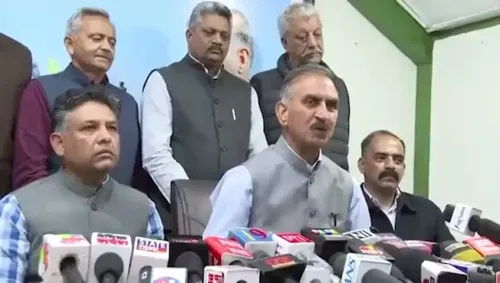
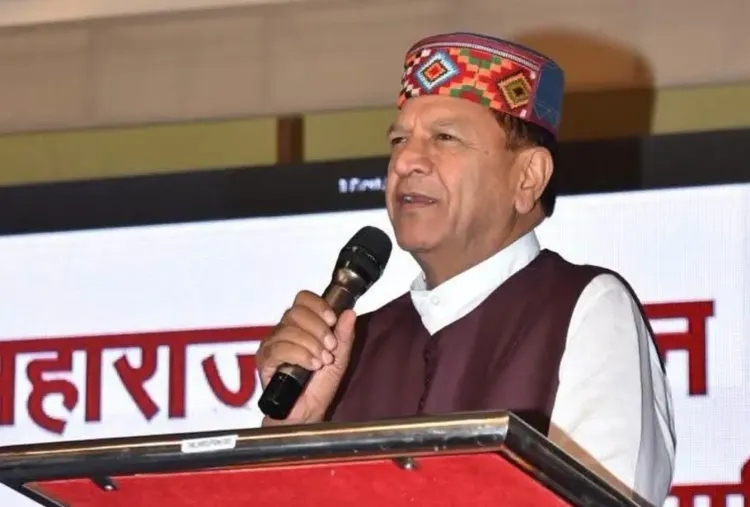
Himachal Pradesh BJP President Rajiv Bindal on Saturday, 7 November welcomed the Supreme Court's landmark ruling on the state's long-pending electricity dues from hydropower projects managed by the Bhakra Beas Management Board (BBMB), calling it a decisive victory for the people and constitutional rights of Himachal Pradesh. Bindal credited Prime Minister Narendra Modi, Union Power Minister Manohar Lal Khattar, and the Centre for their pivotal role in bringing the decades-old dispute to resolution.
BJP's Position on the Verdict
Bindal described the ruling as a 'historic achievement' — the culmination of decades of legal struggle, a judicial victory first secured during the BJP government led by former Chief Minister Prem Kumar Dhumal, and ultimately clinched through a resolution formula presented by the Centre under Prime Minister Modi. He said constructive cooperation between the Centre and the state was essential for protecting Himachal Pradesh's interests, and argued that the contributions of successive BJP governments must not be overlooked.
Bindal also urged Chief Minister Sukhvinder Singh Sukhu not to claim political credit for the verdict. 'Inform the people of the state about the complete history of the dispute,' he said, directing the Congress-led state government to acknowledge the full arc of events that led to the ruling.
Roots of a Decades-Old Dispute
According to Bindal, the origins of the dispute trace back to the reorganisation of Punjab in 1966. Himachal Pradesh formally raised its claim to a share in power generated by BBMB-managed projects before the Centre in 1969. After multiple rounds of negotiations at various levels failed to produce a settlement, the state filed an original suit in the Supreme Court in 1996, launching what would become a prolonged legal battle spanning multiple governments and decades.
The issue remained a stated priority during BJP governments in Himachal Pradesh from 1998 to 2003 and again from 2007 to 2012. A critical breakthrough arrived on 27 September 2011, when the Supreme Court delivered a landmark verdict formally recognising Himachal Pradesh's legal entitlement to a 7.19 per cent share in the electricity generated by the projects — a ruling that, Bindal noted, came while the Dhumal-led government was in office.
Congress Under Fire Over Delayed Settlement
Bindal questioned why the outstanding electricity dues remained unsettled for years even after the Supreme Court had determined the state's rights in 2011. He pointed out that when the Congress returned to power in Himachal Pradesh in 2012, the dues were not finally resolved despite the court's clear directive. 'Why could Himachal Pradesh not receive its full outstanding dues for years?' he asked, directing the question squarely at the Congress.
He also acknowledged that implementing the 2011 verdict involved resolving several complex technical and financial questions — including the calculation methodology for electricity dues, applicable tariffs, and the capital costs of the projects — which contributed to the delay in final settlement.
Role of the Thakur Government and the Centre
Bindal noted that the issue remained a priority during the BJP government led by Jai Ram Thakur between 2017 and 2022 as well. He stressed that the resolution formula ultimately presented by the Centre under Prime Minister Modi was instrumental in translating the 2011 judicial recognition into a concrete financial settlement. The BJP leader said this multi-government, multi-decade effort represented a model of how Centre-state cooperation can protect a state's constitutional and economic rights.
With the Supreme Court ruling now in place, attention will turn to the timeline and mechanism for disbursing the outstanding dues to Himachal Pradesh — a process that both the state government and the BBMB will need to operationalise in the coming months.
Point of View
Which established the 7.19% entitlement, did not by itself deliver a rupee to Himachal Pradesh; the dues remained in legal limbo for over a decade under governments of both parties. The real accountability question is not who deserves the garland, but why implementation of a clear judicial order took so long — and what the disbursement mechanism and timeline will actually look like now that the latest ruling is in place.
NationPress
7 Nov 2026
Frequently Asked Questions
What is the BBMB electricity dues dispute involving Himachal Pradesh?
The dispute concerns Himachal Pradesh's claim to a share of electricity generated by hydropower projects managed by the Bhakra Beas Management Board (BBMB). The state formally raised its claim in 1969, filed a Supreme Court suit in 1996, and won a landmark ruling in 2011 recognising its 7.19 per cent entitlement — though the financial settlement of outstanding dues remained unresolved until the latest Supreme Court decision.
What did the Supreme Court rule in 2011 about Himachal Pradesh's power share?
On 27 September 2011, the Supreme Court delivered a verdict formally recognising Himachal Pradesh's legal entitlement to a 7.19 per cent share of electricity generated by BBMB-managed hydropower projects. The ruling came while the BJP government led by Prem Kumar Dhumal was in power in the state.
Why did Himachal BJP credit PM Modi for the BBMB resolution?
BJP state president Rajiv Bindal said the resolution formula presented by the Centre under Prime Minister Narendra Modi was instrumental in translating the 2011 judicial recognition into a concrete financial settlement. He also credited Union Power Minister Manohar Lal Khattar for their role in the process.
Why did the outstanding dues remain unsettled for so long after the 2011 verdict?
Bindal acknowledged that implementing the 2011 verdict required resolving several complex issues, including the methodology for calculating electricity dues, applicable tariffs, and the capital costs of the projects. He also questioned why the Congress, which returned to power in Himachal Pradesh in 2012, did not secure the final settlement during its tenure.
What happens next after the Supreme Court's latest BBMB ruling?
Attention will now shift to the timeline and mechanism for disbursing the outstanding electricity dues to Himachal Pradesh. Both the state government and the BBMB will need to operationalise the settlement in the coming months, with the specifics of payment yet to be publicly detailed.