CM Himanta thanks West Bengal for ₹10 crore flood relief to Assam
Synopsis
Assam Chief Minister Himanta Biswa Sarma acknowledged a ₹10 crore contribution from the West Bengal Chief Minister's Relief Fund to Assam's relief corpus, calling it an act of solidarity between historically linked neighbours and invoking the spirit of Ek Bharat, Shreshtha Bharat.
Key Takeaways
West Bengal's Chief Minister's Relief Fund transferred ₹10 crore to the Assam Chief Minister's Relief Fund amid an ongoing crisis in the state.
Assam CM Himanta Biswa Sarma publicly thanked West Bengal CM Suvendu on August 13, 2026 .
Sarma described the two states as sharing 'deep historical and civilisational ties.' The transfer fits a broader pattern of eastern and northeastern Indian states providing mutual disaster relief assistance.
Sarma invoked Ek Bharat, Shreshtha Bharat — the Centre's 2015 national integration programme — to frame the gesture.
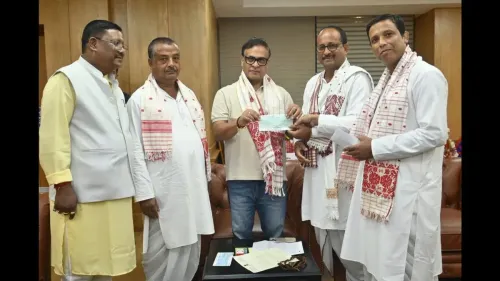
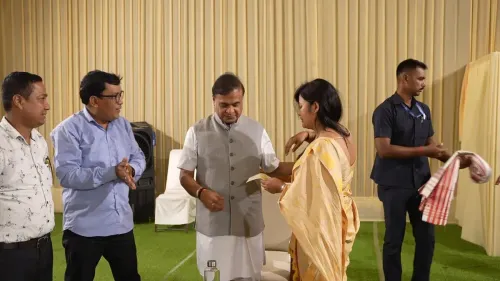
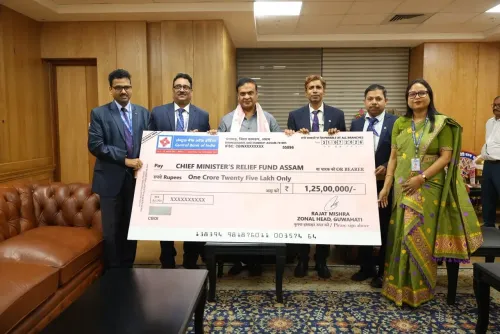
A cheque worth ₹10 crore travelling from West Bengal to Assam is more than an accounting entry — it is a signal of how India's eastern neighbourhood holds together when the ground gives way. Assam Chief Minister Himanta Biswa Sarma on Thursday, August 13, 2026, publicly acknowledged the contribution, saying the West Bengal Chief Minister's Relief Fund had made a 'generous contribution' to the Assam Chief Minister's Relief Fund during what he called a 'difficult hour' for the state.
A ₹10 crore transfer and what it signals
The contribution flows directly from the West Bengal Chief Minister's Relief Fund — a state-level corpus typically activated during natural disasters and humanitarian emergencies. Sarma extended his 'sincere gratitude' to West Bengal Chief Minister Shri Suvendu for the gesture, framing it as an expression of solidarity between two neighbours who, in his words, share 'deep historical and civilisational ties.' The two states share a long border and centuries of intertwined cultural and demographic history, making the gesture symbolically resonant beyond its monetary value.
Eastern India's relief corridor in practice
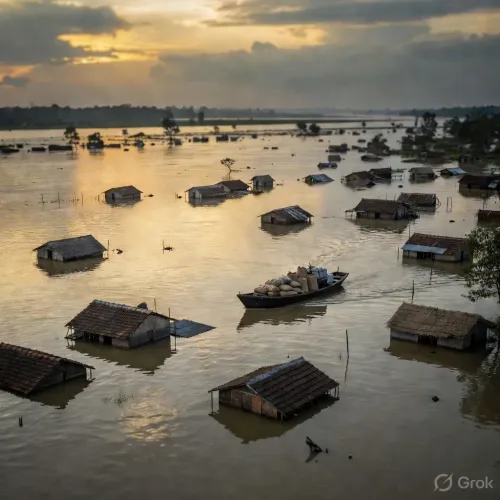
Indian states routinely activate their Chief Minister's relief funds during large-scale calamities — floods, cyclones, and earthquakes — and inter-state transfers of this kind are an established, if infrequent, feature of cooperative federalism. For Assam, which faces annual flood cycles along the Brahmaputra and its tributaries, external support supplements the state's own disaster response machinery. The ₹10 crore figure represents a tangible commitment rather than a diplomatic gesture, entering a fund that directly finances relief operations on the ground.
Ek Bharat, Shreshtha Bharat — the frame Sarma chose
Sarma closed his statement by invoking Ek Bharat, Shreshtha Bharat, the Central government programme launched in 2015 to deepen cultural and institutional ties between Indian states. The choice of frame is deliberate: it positions a bilateral relief transfer as evidence of a larger national integration project. 'When neighbours stand together, Eastern India grows stronger — and a stronger East strengthens India,' Sarma wrote, anchoring a humanitarian moment to a political philosophy of regional interdependence. Whether that philosophy translates into sustained coordination or remains a post-crisis sentiment is the question the coming weeks will answer.
Relief funds move fast in a crisis; what follows — reconstruction, accountability, and long-term interstate frameworks — moves considerably slower. Assam's eastern neighbours are watching.
Point of View
But the political framing here is worth noting: Sarma's invocation of Ek Bharat, Shreshtha Bharat positions a humanitarian act within the BJP's cooperative federalism narrative. For the Northeast, where NEDA functions as a political consolidation project, gestures of solidarity from a neighbouring non-BJP-governed state carry added weight. The ₹10 crore figure is meaningful, but the optics of eastern India presenting a united front — cutting across party lines — may be the more durable dividend.
NationPress
27 Sept 2026
Frequently Asked Questions
Why did West Bengal send money to Assam's relief fund?
West Bengal contributed ₹10 crore to the Assam Chief Minister's Relief Fund as an act of solidarity during a crisis in Assam. Indian states routinely support one another through relief fund transfers during natural calamities or other emergencies.
What is the Assam Chief Minister's Relief Fund?
The Assam Chief Minister's Relief Fund is a state-level fund that collects contributions from governments, institutions, and individuals to finance disaster relief and humanitarian assistance for affected residents of Assam.
What is Ek Bharat Shreshtha Bharat?
Ek Bharat, Shreshtha Bharat is a Central government programme launched in 2015 to promote national integration by fostering cultural, educational, and institutional exchanges between Indian states.
Who is Himanta Biswa Sarma?
Himanta Biswa Sarma is the Chief Minister of Assam and a senior BJP leader. He also serves as the convenor of the North-East Democratic Alliance (NEDA) , a BJP-led political coalition of northeastern parties.
What crisis is Assam facing in August 2026?
Assam CM Sarma referred to a 'difficult hour' facing the state, which prompted the inter-state relief contribution. The specific nature of the crisis has not been independently detailed in his post.