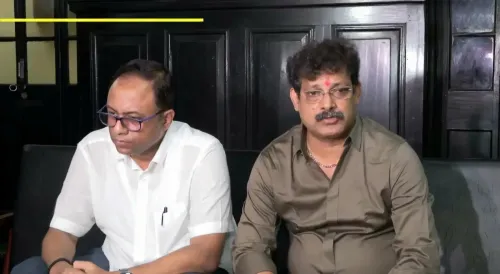
KMC board dissolution notice: Bengal govt gives 3 days after Firhad Hakim quits
Synopsis
West Bengal's own government has served a dissolution notice on Kolkata's TMC-run municipal board — days after Mayor Firhad Hakim resigned. With two sections of the KMC Act pulling in opposite directions and civic services already under strain, the three-day deadline could trigger either a new Mayor vote or a full board dissolution in India's third-largest city.
Key Takeaways
The West Bengal Municipal Affairs and Urban Development Department served a notice on KMC on 6 June 2025 , demanding a reply within three days .
Mayor Firhad Hakim officially resigned on Friday , triggering the legal dispute over board continuity.
The state invoked Section 117(1) of the KMC Act, 1980, which empowers it to dissolve the corporation.
KMC Chairperson Mala Roy argues Section 38 allows Deputy Mayor Atin Ghosh to continue in the Mayor's role until a new Mayor is elected.
The department cited failure to deliver civic services as an additional ground for the notice.
No dissolution order has been issued yet; the next step depends on KMC's written response.
The West Bengal Municipal Affairs and Urban Development Department on Saturday, 6 June served a formal notice on the Kolkata Municipal Corporation (KMC), demanding a written explanation within three days on why the All India Trinamool Congress (TMC)-run board should not be dissolved following the resignation of Mayor Firhad Hakim on Friday. The notice marks a sharp escalation in the legal standoff between the state government and the civic body over who holds legitimate authority at Kolkata's municipal helm.
Who Received the Notice
The notice was addressed to the KMC Chairperson, the Municipal Commissioner, the KMC Secretary, and other senior officials of the corporation. The department cited the corporation's alleged failure to deliver civic services to citizens as one of the grounds for issuing the notice — a pointed administrative charge that goes beyond the procedural question of the Mayor's vacancy.
The Legal Fault Lines
At the heart of the dispute is a conflict between two provisions of the KMC Act, 1980. The state department has invoked Section 117(1), which empowers the state government to dissolve the corporation, arguing that the TMC-run board cannot legitimately continue after the Mayor's resignation. KMC Chairperson Mala Roy has pushed back, citing Section 38 of the same Act, which allows the Deputy Mayor to assume the Mayor's functions under unforeseen circumstances or in the Mayor's absence. She has also cited Section 28, arguing that the Deputy Mayor can discharge the Mayor's duties until a new Mayor is elected from among the existing councillors through a vote of confidence.
The current Deputy Mayor of the KMC is Atin Ghosh, who would assume the Mayor's functions under Roy's interpretation of the law.
What the Government Said
A state government official from the Municipal Affairs and Urban Development Department clarified the procedural logic: although Section 117(1) grants the state the power to dissolve the KMC board, due process requires that the corporation first be given an opportunity to respond. 'The next decision on this count will be taken only after the reply from the KMC authorities is received,' the official said.
This means the state has stopped short of an outright dissolution order for now, leaving open the possibility of a negotiated resolution — or a legal battle — depending on how the KMC responds within the three-day window.
Background and What Is at Stake
The standoff is not merely procedural. Kolkata is India's third-largest city by population, and the KMC governs civic services — water supply, sanitation, roads, and public health — for millions of residents. A prolonged power vacuum or a contested dissolution could disrupt municipal operations at a time when the corporation is already under scrutiny for service delivery failures. Notably, the dispute pits a TMC-controlled civic body against a TMC-led state government, signalling internal fault lines within the ruling party over the handling of Hakim's exit. The outcome of the KMC's reply will determine whether the board continues, a new Mayor is elected internally, or the state proceeds with dissolution under the Act.
Point of View
But the political subtext is whether Firhad Hakim's exit was managed or forced, and who controls Kolkata's municipal machinery going forward. The allegation that KMC is 'failing to provide civic services' is a serious administrative charge that the state has not yet substantiated publicly — and if left uncontested, it could become the legal justification for dissolution regardless of how the Mayoral succession question is resolved. Kolkata's residents, caught between competing legal interpretations, face the real risk of governance paralysis in a city already stretched on infrastructure.
NationPress
21 Oct 2026
Frequently Asked Questions
Why has the West Bengal government issued a notice to KMC?
The West Bengal Municipal Affairs and Urban Development Department issued the notice on 6 June 2025 after Mayor Firhad Hakim officially resigned, asking the KMC to explain within three days why the TMC-run board should not be dissolved. The department also cited the corporation's alleged failure to deliver civic services as a ground for the notice.
What does Section 117(1) of the KMC Act say?
Section 117(1) of the KMC Act, 1980, empowers the West Bengal state government to dissolve the Kolkata Municipal Corporation board. The state department has argued this provision applies once the Mayor has resigned and the board can no longer function effectively.
Why is KMC Chairperson Mala Roy opposing dissolution?
Mala Roy argues that Section 38 of the KMC Act allows the Deputy Mayor to assume the Mayor's duties under unforeseen circumstances, ensuring continuity of governance. She contends the board should serve its full term, with Deputy Mayor Atin Ghosh discharging the Mayor's functions until a new Mayor is elected by the councillors.
Who is the current Deputy Mayor of KMC?
The current Deputy Mayor of the Kolkata Municipal Corporation is Atin Ghosh, who would assume the Mayor's responsibilities under the KMC Chairperson's interpretation of Section 38 of the KMC Act, 1980.
What happens next after the three-day notice period?
The state government has stated it will take its next decision only after receiving the KMC's written reply. Depending on the response, the state could proceed with dissolution under Section 117(1), or the board could elect a new Mayor from among existing councillors through a vote of confidence.