KMC board crisis: Legal battle erupts after Mayor Firhad Hakim's resignation

Synopsis
Firhad Hakim's resignation as Kolkata Mayor has set off a sharp constitutional clash — the TMC-controlled KMC board is defying a state government dissolution notice by invoking continuity clauses in the KMC Act, while the BJP argues the entire Mayor-in-Council stands dissolved automatically. The dispute could end up in court, leaving governance of India's oldest major civic body in limbo.
Key Takeaways
Firhad Hakim officially resigned as Mayor of Kolkata Municipal Corporation (KMC) on 6 June .
The state municipal affairs department issued a notice to Mala Roy under Section 117(1) of the KMC Act, directing dissolution of the board.
Mala Roy refused to comply, citing Section 38 of the KMC Act to argue the board can continue under Deputy Mayor Atin Ghosh .
BJP councillor Sajal Ghosh countered that the Mayor's resignation automatically dissolves the entire Mayor-in-Council .
The legal standoff may require judicial intervention to resolve the competing interpretations of the KMC Act, 1980 .
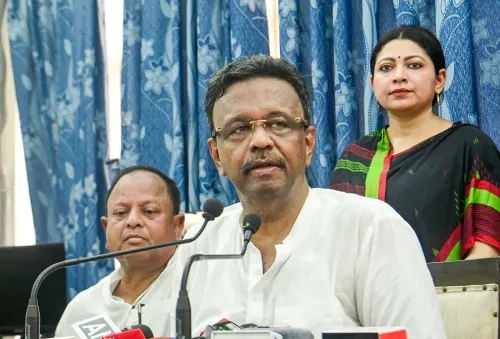
A constitutional standoff has erupted within the Kolkata Municipal Corporation (KMC) following the resignation of Mayor Firhad Hakim on 6 June, with the Trinamool Congress (TMC)-controlled board refusing a state government directive to dissolve, triggering competing legal interpretations of the KMC Act, 1980. The dispute has placed the governance of Kolkata — West Bengal's oldest and largest urban civic body — in an uncertain limbo.
The Resignation and State Government Response
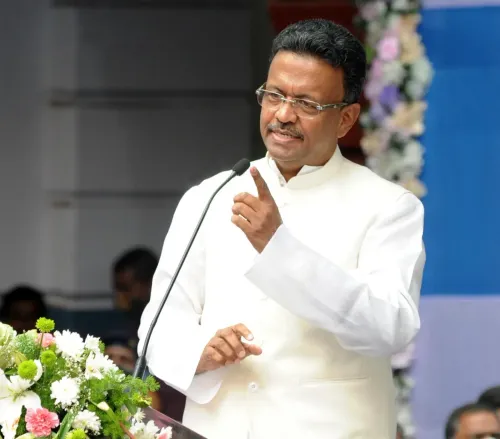
Firhad Hakim officially tendered his resignation as Mayor on Friday afternoon, a decision he had signalled earlier in the week. Explaining his departure, Hakim cited the changed political circumstances, saying: 'The chair of the Mayor of KMC has a different sort of dignity considering the great personalities who occupied the chair before me. I had worked with full authority as a Mayor for a long time, since I was the Mayor and also handled the state municipal affairs and urban development department then. I single-handedly managed the dual duties. But in the changed situation, that is not possible anymore. So, I do not want to insult the chair anymore.'
Following the resignation, the state municipal affairs and urban development department issued a formal notice to KMC Chairperson and TMC Lok Sabha MP Mala Roy under Section 117(1) of the KMC Act, directing her to dissolve the existing board — a provision that explicitly empowers the state government to dissolve the corporation.
TMC Board Defies Dissolution Notice
Mala Roy declined to comply with the directive, invoking Section 38 of the KMC Act, which provides that the Deputy Mayor may assume the Mayor's duties under unforeseen circumstances or in the Mayor's absence. Roy argued that until a new Mayor is elected from among the existing councillors through a vote of confidence, Deputy Mayor Atin Ghosh could lawfully discharge mayoral functions under Section 28 of the Act.
Her position is that the board is entitled to serve out its full term, and that Section 38 ensures continuity in executive governance without stalling city administration. This interpretation, if upheld, would allow the TMC-controlled board to remain functional despite the Mayor's exit.
BJP Raises Constitutional Objection
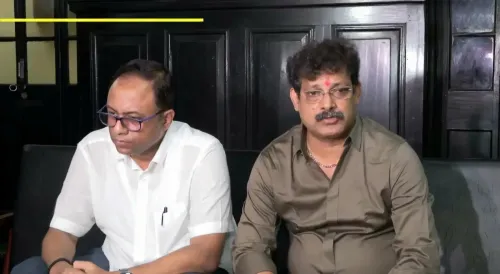
The Bharatiya Janata Party (BJP) has mounted a direct challenge to this reading. BJP councillor and party legislator Sajal Ghosh argued that the Mayor's resignation automatically triggers the dissolution of the entire Mayor-in-Council — not merely the vacancy of the mayoral chair. 'The councillors remain. But the Mayor-in-Council is dissolved upon the Mayor's resignation. It is a constitutional matter. The Municipal Commissioner, who is a bureaucrat, can give further insight on the matter,' Ghosh said.
This counter-interpretation, if accepted, would mean the TMC board cannot simply continue under a stand-in arrangement and would require a fresh reconstitution of the executive body.
What the KMC Act Says
The legal dispute hinges on the interplay between at least three provisions of the KMC Act, 1980. Section 117(1) grants the state government dissolution powers; Section 38 addresses continuity of mayoral functions in the event of absence or unforeseen circumstances; and Section 28 defines the scope of the Deputy Mayor's authority. Legal experts note that the Act does not appear to explicitly address whether a voluntary resignation — as opposed to absence — triggers Section 38 protections, leaving room for judicial interpretation.
What Happens Next
The standoff is likely to escalate to the courts, given that both sides are invoking statutory provisions with competing force. The role of the Municipal Commissioner — a bureaucratic appointee — may become pivotal in the interim, as Ghosh himself acknowledged. This is not the first time KMC governance has faced a legal challenge, but the simultaneity of a mayoral vacancy, a state government directive, and a board refusal to step down makes the current crisis particularly acute. Observers will watch whether the state government escalates enforcement or seeks a judicial ruling to resolve the impasse.
Point of View
Not just statutory interpretation. The fact that the state government itself issued the dissolution notice is the real story: it implies the Mamata Banerjee administration wants a clean break from the Hakim era, while the board is resisting. The BJP's constitutional argument about automatic dissolution of the Mayor-in-Council is legally pointed and could find traction in court. Kolkata's civic governance has long been a political instrument; this crisis exposes how thin the line between party control and institutional function has become.
NationPress
29 Jul 2026
Frequently Asked Questions
Why did Firhad Hakim resign as Kolkata Mayor?
Firhad Hakim resigned on 6 June citing changed political circumstances, stating he could no longer exercise the full authority the mayoral chair requires. He said he had previously held both the Mayor's position and the state municipal affairs portfolio simultaneously, but that dual arrangement was no longer possible.
What is the legal dispute over the KMC board's continuation?
The state government issued a notice under Section 117(1) of the KMC Act, 1980, directing KMC Chairperson Mala Roy to dissolve the board. Roy has refused, invoking Section 38, which allows the Deputy Mayor to assume mayoral functions — a reading the BJP disputes, arguing the Mayor's resignation dissolves the entire Mayor-in-Council automatically.
Who is currently acting as Mayor of Kolkata?
No new Mayor has been appointed. TMC's position is that Deputy Mayor Atin Ghosh can discharge mayoral functions under Section 28 of the KMC Act until a new Mayor is elected by councillors through a vote of confidence.
What does the BJP say about the KMC board's legal status?
BJP councillor and legislator Sajal Ghosh has argued that the Mayor's resignation automatically dissolves the Mayor-in-Council under the KMC Act, meaning the board cannot simply continue under a stand-in arrangement. He has suggested the Municipal Commissioner can provide authoritative guidance on the matter.
What happens next in the KMC governance dispute?
The standoff is likely to be resolved through legal proceedings, given the conflicting statutory interpretations. The Municipal Commissioner's position may prove decisive in the interim, and a court ruling on the interplay between Sections 28, 38, and 117(1) of the KMC Act, 1980, could be required to settle the matter.