Will the Hearing on Voters' Claims and Objections in Bengal Start Today?
Synopsis
As the second phase of the Special Intensive Revision (SIR) begins in West Bengal, the focus is on addressing claims and objections related to the draft voters' list. With a significant number of unmapped voters and dubious cases detected, this process is critical for ensuring electoral integrity ahead of the upcoming Assembly elections.
Key Takeaways
Initiation of the second phase of SIR in West Bengal.
Focus on claims and objections regarding the draft voters' list.
Deployment of 4,600 micro-observers for oversight.
Target of 150 cases per day for EROs.
Significant number of unmapped and dubious voter cases identified.
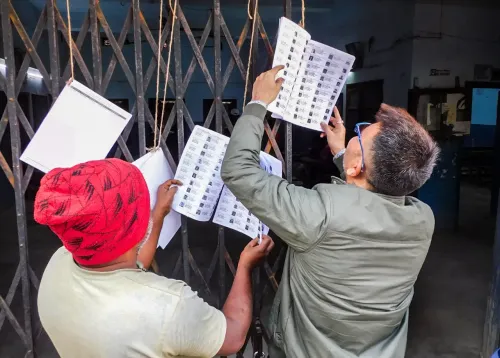
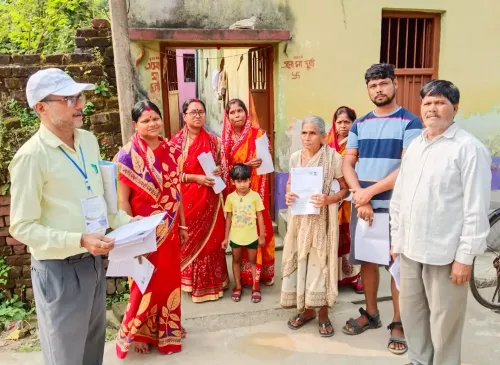
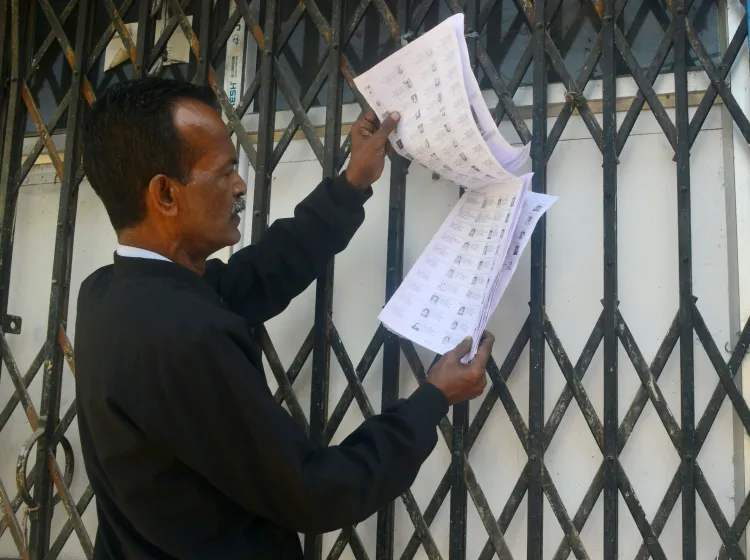
Kolkata, Dec 27 (NationPress) Following the conclusion of the initial phase of the three-part Special Intensive Revision (SIR) in West Bengal, which focused on enumeration, the second phase will commence on Saturday. This phase will involve hearing sessions regarding claims and objections on the draft voters' list, which was released on December 16.
Each hearing session will be overseen by the Electoral Registration Officer (ERO), supported by an Assistant Electoral Registration Officer (AERO).
To ensure transparency, the Election Commission of India (ECI) has deployed one micro-observer at each hearing table, totaling 4,600 micro-observers. These individuals are either central government employees or representatives from public sector undertakings and banks, primarily from the Group-B and a few from the Group-A categories.
The Commission has set a target for each ERO to complete hearings on 150 cases daily.
The last occurrence of SIR in West Bengal was in 2002.
The initial hearings will focus on the “unmapped” voters, who lack any connection to the 2002 voters' list, whether through “self-mapping” or “progeny mapping”. Approximately 30 lakhs voters fall into this category.
Subsequent hearings will address dubious cases identified through progeny mapping, with about 1.36 crore such cases found.
Some of these questionable cases involve voters aged 45 or older who were absent from the 2002 registry, individuals who became fathers at 15 or younger, grandfathers at 40 or younger, and those with identical names for both parents.
The Commission has implemented measures to prevent the acceptance of forged identity documents during these hearings.
Accountability has also been assigned to EROs, district magistrates, and district electoral officers.
The draft voters' list was released on December 16, while the final list is expected on February 14 next year.
Following this, the ECI will announce polling dates for the upcoming Assembly elections in West Bengal, scheduled for next year.
Point of View
This initiative underscores the importance of maintaining electoral integrity. The rigorous process of addressing claims and objections in West Bengal's voter registration is essential for upholding democracy. The accountability measures introduced by the Election Commission of India reflect a commitment to fair elections, aligning with national interests.
NationPress
4 Oct 2026
Frequently Asked Questions
What is the Special Intensive Revision (SIR)?
The Special Intensive Revision (SIR) is a three-phase process aimed at updating the electoral rolls in West Bengal, ensuring that all eligible voters are accounted for.
When was the draft voters' list published?
The draft voters' list was published on December 16.
What is the target for Electoral Registration Officers during the hearings?
Each Electoral Registration Officer is expected to complete hearings on 150 cases per day.
How many micro-observers are assigned to oversee the hearings?
A total of 4,600 micro-observers have been assigned to supervise the hearing sessions.
When will the final voters' list be published?
The final voters' list is scheduled to be published on February 14 next year.