Bhagyalakshmi Temple Diwali: Thousands queue for Khazana near Charminar
Synopsis
Diwali at Hyderabad's Bhagyalakshmi Temple drew massive crowds for the annual Khazana coin distribution, but the festive footfall has also reignited a years-old controversy: the ASI declared the temple an unauthorised construction in 2013, yet the structure has continued to expand for 14 years — with no intervention in sight.
Key Takeaways
Thousands of devotees thronged Bhagyalakshmi Temple near Charminar on 9 November 2026 for Diwali prayers and Khazana distribution.
Silver-coin distribution began at 7 pm Sunday and continued into a second day, with queues extending to Gulzar Houz .
Hyderabad Police deployed elaborate security and traffic measures; movement slowed on key stretches including Salarjung Museum–High Court Road .
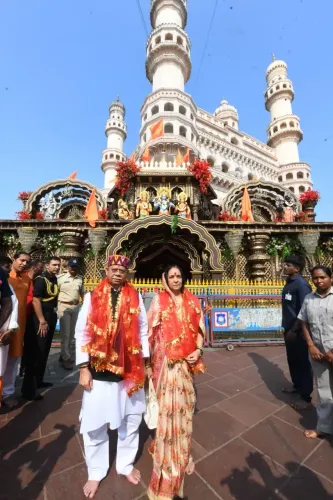
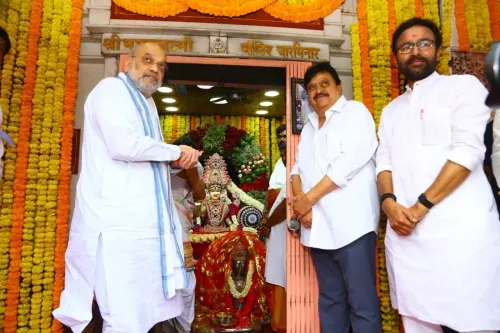
Telangana Governor Shiv Pratap Shukla and Union Home Minister Amit Shah visited the temple during the festival period.
The ASI declared the temple an 'unauthorised construction' in a 2013 RTI response; the expansion controversy remains unresolved after 14 years .
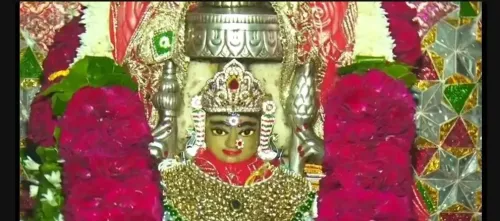
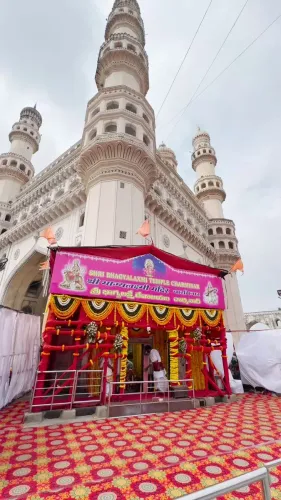
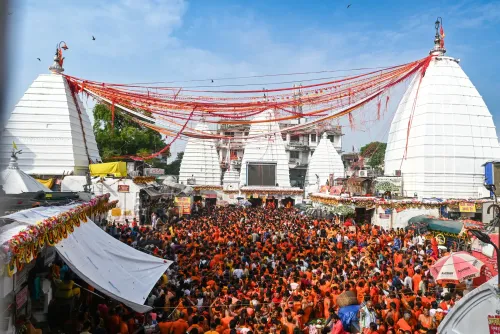
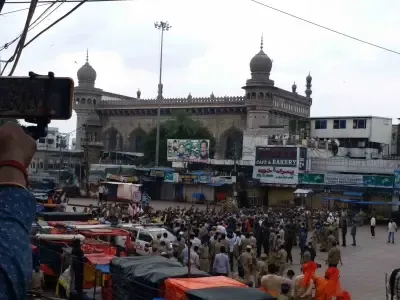
Thousands of devotees descended on Bhagyalakshmi Temple, located adjacent to the historic Charminar in Hyderabad, on Monday, 9 November 2026, for Diwali prayers and the annual distribution of 'Khazana' — the goddess's silver coins given as prasadam. Queues stretched as far as Gulzar Houz, with worshippers arriving from Hyderabad, Secunderabad, and surrounding districts.
What Is the Khazana Ritual
The 'Khazana' coins are minted from silver donated by devotees throughout the year and distributed after special prayers. The distribution began at 7 pm on Sunday and continued into its second day on Monday as the crowd swelled. Devotees believe that receiving the coins brings prosperity and wealth to their households. Temple authorities arranged orderly queues to manage the high-volume distribution event.
Crowd Impact and Security Arrangements
The scale of the gathering disrupted vehicular movement in the busy commercial zones surrounding Charminar and Gulzar Houz. Traffic slowed significantly on the Salarjung Museum–Madina Building–High Court Road stretch and the Afzalgunj Bus Stop–Nayapul corridor. Hyderabad Police made elaborate security and traffic arrangements to manage the crowd and prevent any untoward incident.
High-Profile Visits During Festival Week
The temple had been witnessing surging footfall over several days. A large number of devotees had offered prayers during Dhanteras on 6 November. Telangana Governor Shiv Pratap Shukla and his wife Janaki Shukla offered prayers at the temple on Diwali Sunday. Earlier, Union Home Minister Amit Shah had visited the temple on 2 November before leading a padyatra in Hyderabad as part of the Bharatiya Janata Party's (BJP) nationwide campaign 'Save Democracy, Remove Anarchy'.
ASI Controversy Over Temple Expansion
The festive rush has renewed a long-running debate over the temple's contested status. Many netizens questioned the silence of the Archaeological Survey of India (ASI) over the continued expansion of the structure, asking who would ensure the protection of the 435-year-old Charminar. The temple's expansion in 2012 had triggered a major controversy; the ASI maintained at the time that no permission had been granted. In a reply to an RTI query in 2013, the ASI termed the temple an 'unauthorised construction' and stated it was built post-1959. The temple committee, however, claims the shrine predates Charminar, and the structure has continued to expand over the last 14 years. The dispute remains unresolved, with no fresh directive from the ASI as of this report.
Point of View
The structure has continued to grow in the shadow of a 435-year-old protected monument, with the ASI offering no fresh directive. High-profile political visits during election-season campaigns do not simplify the heritage question — if anything, they complicate accountability. The Charminar corridor deserves a transparent, law-based resolution, not seasonal silence.
NationPress
9 Nov 2026
Frequently Asked Questions
What is the Khazana distribution at Bhagyalakshmi Temple?
Khazana refers to silver coins made from silver donated by devotees throughout the year and distributed as prasadam after special Diwali prayers at Bhagyalakshmi Temple in Hyderabad. Devotees believe receiving the coins brings prosperity and wealth to their households.
Where is Bhagyalakshmi Temple located?
Bhagyalakshmi Temple is located adjacent to the historic Charminar in the old city area of Hyderabad, Telangana. It sits within the protected zone of the 435-year-old Mughal-era monument.
Why is the ASI controversy around Bhagyalakshmi Temple significant?
In a 2013 RTI response, the Archaeological Survey of India termed the temple an 'unauthorised construction' built after 1959, with no permission granted for its 2012 expansion. Despite this, the temple has continued to expand, raising concerns about the protection of the adjacent Charminar heritage site.
Which prominent figures visited the temple during Diwali 2026?
Telangana Governor Shiv Pratap Shukla and his wife Janaki Shukla offered Diwali prayers at the temple on Sunday. Union Home Minister Amit Shah had visited on 2 November as part of the BJP's 'Save Democracy, Remove Anarchy' padyatra in Hyderabad.
How did the Diwali crowd affect Hyderabad traffic?
The large gathering slowed vehicular movement in busy commercial areas around Charminar and Gulzar Houz, particularly on the Salarjung Museum–Madina Building–High Court Road stretch and the Afzalgunj Bus Stop–Nayapul corridor. Hyderabad Police made elaborate security and traffic arrangements to manage the situation.