Hyderabad's Bibi-Ka-Alam procession on Ashura passes peacefully amid tight security
Synopsis
For over 430 years, the Bibi-Ka-Alam has been carried through Hyderabad's old city on Ashura — and on 26 June, that tradition held again, peacefully. With 2,000 police, drone surveillance, and the Nizam Trust's ceremonial participation, the procession is as much a test of civic coordination as it is an act of faith.
Key Takeaways
The Bibi-Ka-Alam procession on Yaum-e-Ashura (26 June) passed off peacefully in Hyderabad's old city .
The sacred alam, installed over 430 years ago during the Qutub Shahi dynasty , was carried on elephant Sreedevi from Kerala .
Over 2,000 police personnel were deployed; Police Commissioner V.
Sajjanar personally supervised at Charminar .
The procession ran from Bibi Ka Alawa to Chaderghat on the Musi River , passing through Charminar and other landmarks.
The HEH Nizam Trust and representatives of the ninth titular Nizam offered traditional Dhatti at Purani Haveli .
Sunni Muslims observed the day with fasting, religious gatherings, and charity programmes.
Solemnity and grief defined Yaum-e-Ashura in Hyderabad on Friday, 26 June, as the centuries-old Bibi-Ka-Alam procession wound through the old city without incident, backed by a deployment of over 2,000 police personnel. The annual Shia mourning procession, one of the largest of its kind in India, drew thousands of participants across a route stretching from Bibi Ka Alawa to Chaderghat on the banks of the Musi River.
The Route and the Ritual
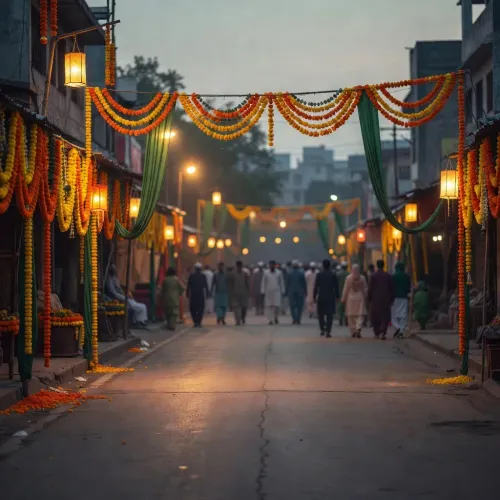
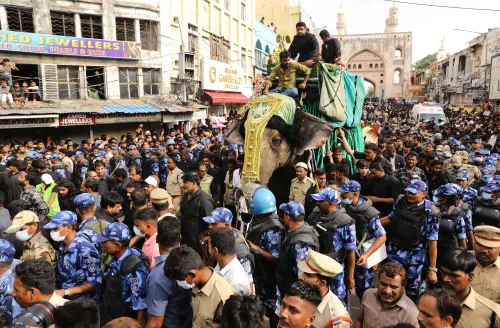
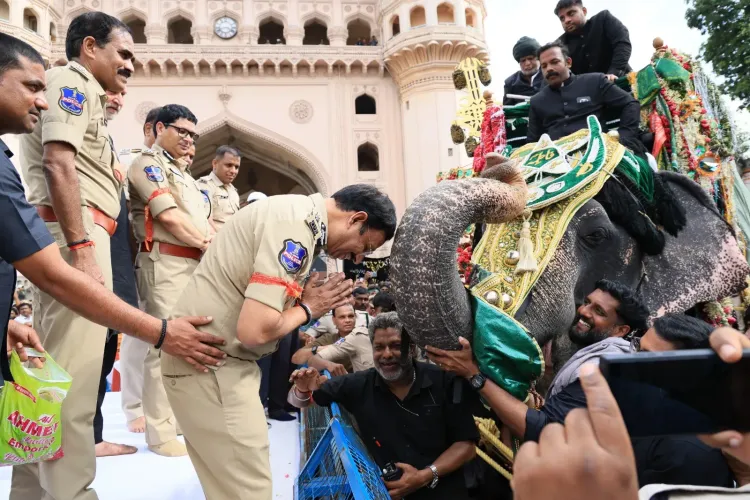
The procession traversed several historic landmarks of the old city, passing through Sheikh Faiz Kaman, Yakutpura Darwaza, Etebar Chowk, Charminar, Gulzar Houz, Panjeshah, Mani Mir Alam, Purani Haveli, and Darulshifa. At the heart of the procession was the sacred Bibi-Ka-Alam — a gold-and-diamond-studded standard believed to contain a piece of the wooden plank on which Bibi Fatima Zehra, daughter of Prophet Mohammed, received her final ablution. The alam was carried atop a caparisoned elephant named Sreedevi, brought specially from Kerala for the occasion.
The alam was first installed over 430 years ago during the Qutub Shahi dynasty, and the tradition of transporting it on an elephant has been maintained without interruption since then, making it one of Hyderabad's most enduring living traditions.
Acts of Mourning
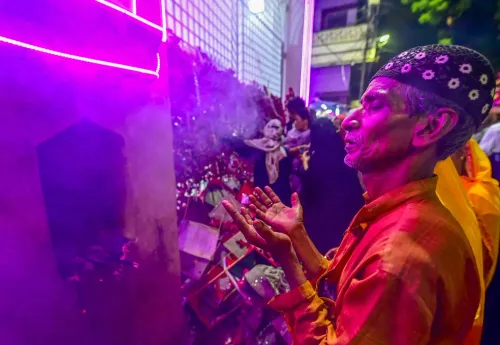
Groups of self-flagellating mourners led the procession, with bare-chested Shia devotees inflicting wounds on themselves using knives, blade-encrusted chains, and other sharp-edged implements — a practice observed to express solidarity with the suffering of the martyrs. Blood was visibly drawn from the heads and chests of participants. Cries of 'Ya Hussain', recitation of marsiya (elegies), and noha-khwani (poems of lamentation) filled the air throughout the procession. Others mourned by weeping and beating their chests.
Yaum-e-Ashura marks the 10th day of Muharram, the first month of the Islamic calendar, and commemorates the martyrdom of Imam Hussain, grandson of Prophet Mohammed, and his followers at the Battle of Karbala in 61 Hijri (681 CE) in present-day Iraq.
Security Arrangements
Hyderabad Police Commissioner V. C. Sajjanar personally stationed himself at the historic Charminar to oversee security and traffic management. Speaking to the media, Sajjanar confirmed that robust multi-layered security measures were in place, including a prior trial walk for the elephant, drone cameras for aerial surveillance along the entire route, and mounted police units piloting the procession. Traffic was diverted at several points to facilitate the movement of the large gathering.
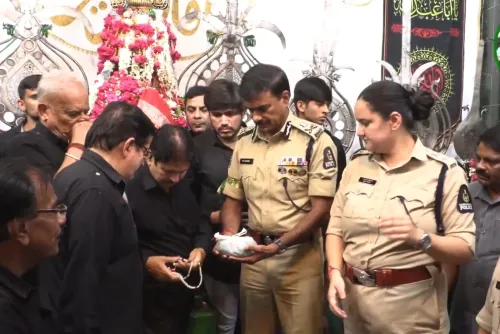
The Commissioner also credited the smooth conduct of the event to coordinated efforts between the Greater Hyderabad Municipal Corporation (GHMC), the Hyderabad Metropolitan Water Supply and Sewerage Board (HMWSSB), and the Electricity Department. Senior officers from the Law and Order and Traffic wings joined Sajjanar in offering traditional Dhattis and floral garlands to the sacred alam on behalf of the Hyderabad City Police.
Nizam Trust and Political Participation
Continuing a long-standing tradition, the HEH Nizam Trust and HEH Awqaf Committee offered Dhatti to the Bibi-Ka-Alam at Peeli Gate (Yellow Gate), Purani Haveli. Nawab Abul Faiz Khan, Trustee of the Mukarram Jah Trust for Education and Learning and the HEH Awqaf Committee, represented Nawab Mir Muhammad Azmet Ali Khan, the ninth titular Nizam of Hyderabad, at the ceremony. Charminar MLA Mir Zulfeqar Ali and senior Awqaf Committee officials were also present.
Top government officials and leaders from various political parties also offered Dhattis en route, reflecting the procession's significance beyond the Shia community.
Sunni Observances and Community Activities
Sunni Muslims marked the day through fasting — observed on either the 9th and 10th or the 10th and 11th of Muharram — and by attending religious gatherings to honour the sacrifices of Imam Hussain and his followers. Food distribution camps, charity programmes, and community events were organised by various organisations across the city.
With the procession concluding peacefully, authorities have credited the outcome to meticulous pre-event planning and inter-agency coordination — a model that will likely inform security protocols for future large-scale religious gatherings in the city.
Point of View
Layered administration — drone surveillance, mounted police, inter-agency coordination, and a trial elephant walk are not incidental details but a blueprint. What is often underreported is the procession's role as a civic stress test for one of India's most densely populated old cities. The continued participation of the Nizam Trust and political representatives across party lines also signals that this is not merely a religious event but a carefully maintained communal compact in a city with a complex sectarian history.
NationPress
25 Sept 2026
Frequently Asked Questions
What is the Bibi-Ka-Alam procession in Hyderabad?
The Bibi-Ka-Alam procession is an annual Shia Muslim mourning procession held on Yaum-e-Ashura — the 10th day of Muharram — in Hyderabad's old city. It centres on a gold-and-diamond-studded sacred standard (alam) first installed over 430 years ago during the Qutub Shahi dynasty, which is carried on a caparisoned elephant through historic landmarks from Bibi Ka Alawa to Chaderghat.
What is the significance of Yaum-e-Ashura?
Yaum-e-Ashura marks the 10th day of Muharram, the first month of the Islamic calendar, and commemorates the martyrdom of Imam Hussain, grandson of Prophet Mohammed, and his companions at the Battle of Karbala in 61 Hijri (681 CE) in present-day Iraq. Shia Muslims mourn with processions and acts of self-flagellation, while many Sunni Muslims observe the day with fasting and religious gatherings.
What security arrangements were made for the 2025 Hyderabad Ashura procession?
Over 2,000 police personnel were deployed for the procession. Police Commissioner V. C. Sajjanar personally supervised security at Charminar. Measures included a prior trial walk for the elephant, multi-layered crowd management, drone cameras for aerial surveillance along the entire route, and mounted police units. Traffic was diverted at several points.
Why is the alam carried on an elephant?
The tradition of transporting the Bibi-Ka-Alam on a caparisoned elephant dates back over 430 years to the Qutub Shahi dynasty in Hyderabad. The practice has continued uninterrupted since then. This year, the elephant named Sreedevi was brought from Kerala for the occasion.
Who participated in the Bibi-Ka-Alam procession beyond the Shia community?
The procession drew participation from top government officials, leaders of various political parties, and representatives of the Nizam family. The HEH Nizam Trust and HEH Awqaf Committee offered the traditional Dhatti at Purani Haveli, represented by Nawab Abul Faiz Khan on behalf of the ninth titular Nizam. Charminar MLA Mir Zulfeqar Ali was also present.