Moharram 2025: Karnataka villages celebrate with Hindu-Muslim unity
Synopsis
In villages across Karnataka's Dharwad, Hubballi, and Haveri districts, Moharram on 27 June was not a Muslim festival alone — Hindus joined processions, folk artists performed Heggemela and Kolata, and a Doli bearing the words 'God and Allah are One' was carried through streets. The Gudenakatti tradition, where both communities co-craft ceremonial Dolis, is a quiet but powerful counter-narrative to communal polarisation.
Key Takeaways
Moharram was celebrated across Karnataka on 27 June 2025 with joint Hindu-Muslim participation in Dharwad , Hubballi , and Haveri districts.
In Mansur village , traditional folk forms Heggemela and Kolata were performed during the Panja idol procession.
In Gudenakatti village , two ceremonial Dolis — one bearing the message 'Ishwara Allah Nee Ne Ella' — were crafted by Dawal Saab Eligyar and Khadar Saab Jatiger .
Devotees offered fruits, jaggery, and sugar as part of traditional rituals in Kundgol taluk .
In Shirabadagi village , hundreds witnessed the 'Ale Devaru' fire-walking ritual on the festival's concluding day.
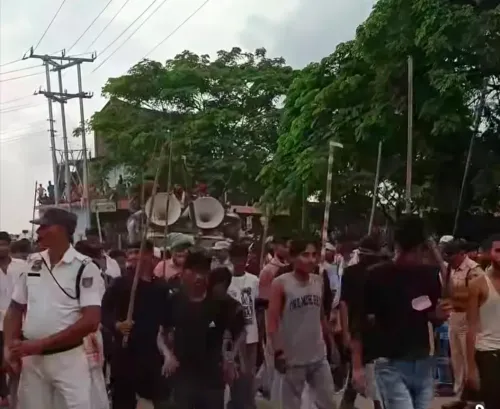
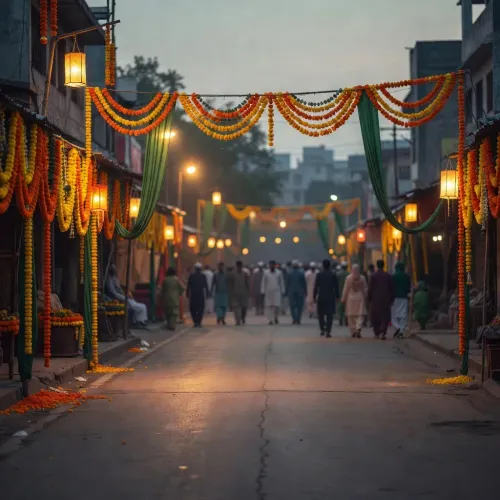
Moharram was observed with religious fervour and a striking display of communal harmony across Karnataka on Friday, 27 June, as Hindus and Muslims jointly participated in traditional processions, folk performances, and age-old rituals spanning multiple districts including Dharwad, Hubballi, and Haveri. The celebrations underscored the state's enduring tradition of interfaith solidarity during one of Islam's most solemn observances.
Dharwad: Folk Performances and the Panja Procession
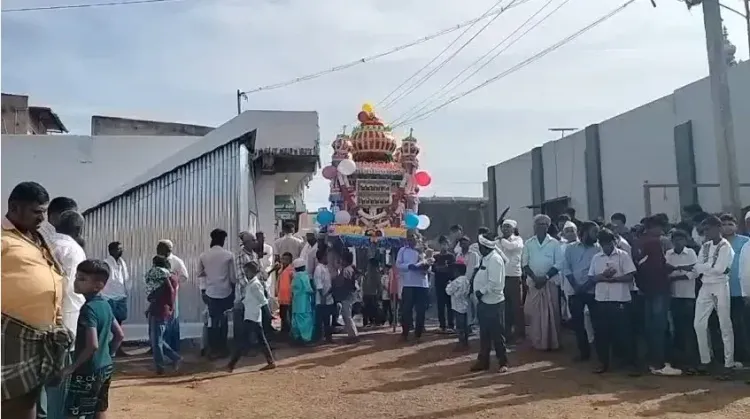
In Mansur village of Dharwad district, the Moharram procession drew enthusiastic participation from children, who danced to DJ music alongside devotees. Traditional folk art forms — Heggemela and Kolata — were performed as part of the festivities. The Panja idol was carried through the village lanes in a ceremonial procession, with residents of all ages joining in devotion and celebration. Villagers noted that this communal spirit has been a consistent feature of the festival year after year.
Gudenakatti's Dual Dolis: A Symbol of 'God and Allah Are One'
In Gudenakatti village of Kundgol taluk near Hubballi, the festival took on a particularly powerful interfaith dimension. Two ceremonial Dolis were specially crafted for the occasion — one bearing the message 'Ishwara Allah Nee Ne Ella' (God and Allah are One), alongside an image representing Lord Ishwara, and a second featuring imagery associated with the Islamic faith. The Dolis were prepared by Dawal Saab Eligyar and Khadar Saab Jatiger.
On the concluding day of Moharram, both Dolis were taken in a grand procession from the village mosques to the Government Higher Primary School grounds, where a ceremonial stage had been erected. Devotees offered fruits, jaggery, and sugar as part of traditional rituals, praying for the fulfilment of their wishes. The Dolis subsequently visited homes across the village, with residents from neighbouring communities and people of all faiths joining the celebrations.
Haveri: The 'Ale Devaru' Fire Ritual
In Shirabadagi village of Savanur taluk in Haveri district, hundreds of devotees gathered to witness the traditional 'Ale Devaru' ritual on the festival's final day. As part of this distinctive custom, iron objects were heated in blazing embers, and those believed to be possessed by Ale Devaru reportedly walked across the burning fire. Hundreds watched with reverence, offered prayers, and participated in the concluding ceremonies.
Karnataka's Tradition of Communal Harmony
This comes amid a broader national conversation about interfaith relations, making Karnataka's ground-level celebrations particularly noteworthy. The scenes across Dharwad, Hubballi, and Haveri reflect a pattern seen in several southern states, where Moharram has historically been observed as a shared community event rather than an exclusively Muslim festival. Notably, the Gudenakatti Doli tradition — with its explicit 'God and Allah are One' message — has been a recurring annual feature, pointing to a deeply rooted local culture of mutual respect. As Karnataka heads into a politically active period, such grassroots displays of unity carry resonance beyond the religious calendar.
Point of View
Localised pluralism that predates modern identity politics. The Gudenakatti Doli tradition, where craftsmen from both communities build a shared ceremonial object inscribed with 'God and Allah are One', is not a government initiative or an NGO project; it is organic, annual, and community-owned. At a time when communal flashpoints dominate national headlines, this kind of ground-up harmony rarely gets the editorial space it warrants. The Ale Devaru ritual in Haveri — where fire-walking intersects with Moharram — further illustrates how folk religion in Karnataka has historically blurred the lines between faiths in ways that resist easy categorisation. Covering only the spectacle without documenting the institutional memory behind these traditions is a missed opportunity for the Indian press.
NationPress
25 Sept 2026
Frequently Asked Questions
How is Moharram celebrated in Karnataka?
In Karnataka, Moharram is observed as a shared community event, with Hindus and Muslims jointly participating in processions, folk performances, and rituals. Celebrations in 2025 spanned Dharwad, Hubballi, and Haveri districts, featuring traditional art forms, ceremonial Doli processions, and the Ale Devaru fire ritual.
What is the significance of the Gudenakatti Doli tradition during Moharram?
In Gudenakatti village near Hubballi, two ceremonial Dolis are crafted each year — one bearing the message 'Ishwara Allah Nee Ne Ella' (God and Allah are One) with imagery of Lord Ishwara, and a second with Islamic imagery. The tradition, maintained by craftsmen from both communities, is a long-standing symbol of Hindu-Muslim brotherhood in the region.
What is the 'Ale Devaru' ritual observed during Moharram in Haveri?
The Ale Devaru ritual, observed in Shirabadagi village of Savanur taluk, involves heating iron objects in burning embers, with those believed to be possessed by Ale Devaru reportedly walking across the fire. Hundreds of devotees gather to witness the ritual on the concluding day of Moharram and offer prayers.
Which Karnataka districts celebrated Moharram in 2025?
Moharram 2025 was celebrated across Dharwad district (Mansur village), Kundgol taluk near Hubballi (Gudenakatti village), and Haveri district (Shirabadagi village), among other parts of Karnataka, on 27 June 2025.
Why is Moharram considered a symbol of communal harmony in Karnataka?
In several Karnataka villages, Moharram has historically been observed by both Hindu and Muslim communities together, with shared processions, jointly crafted ceremonial objects, and participation in each other's rituals. This tradition of interfaith celebration has been sustained annually across generations, reflecting the state's pluralistic cultural heritage.