Bhupender Yadav: India writing 1,000-year future
Synopsis
Union Environment Minister Bhupender Yadav invoked India's millennia-old civilizational heritage on 22 June 2026, asserting that the country's present actions will define the next 1,000 years — a framing increasingly central to India's domestic and international policy narrative.
Key Takeaways
Union Environment Minister Bhupender Yadav posted on 22 June 2026 that India carries a 'memory chip of ages' and is writing the future of the next 1,000 years .
The statement was made in Hindi and explicitly links India's ancient civilizational continuity to its current policy direction.
This framing aligns with India's LiFE (Lifestyle for Environment) initiative launched at COP26 in 2021 , which grounds sustainability in traditional Indian values.
Indian official communications have increasingly used multi-century time horizons to justify climate, cultural, and strategic policy choices.
The post signals the philosophical lens through which India is likely to present its positions at forthcoming COP meetings and multilateral forums.
The primary beneficiaries named in the framing are future generations , placing current governance in a legacy context beyond electoral cycles.
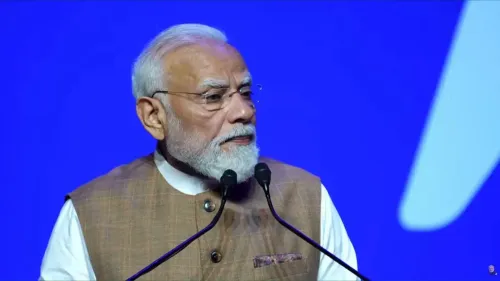
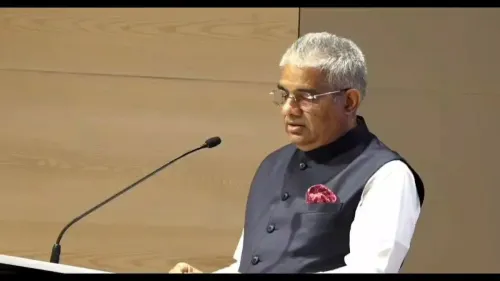
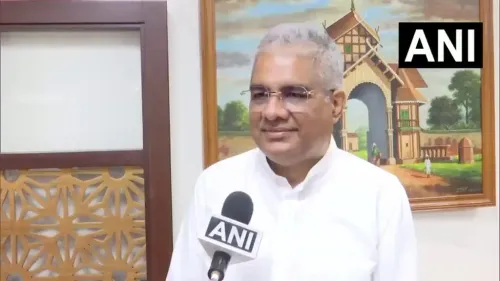
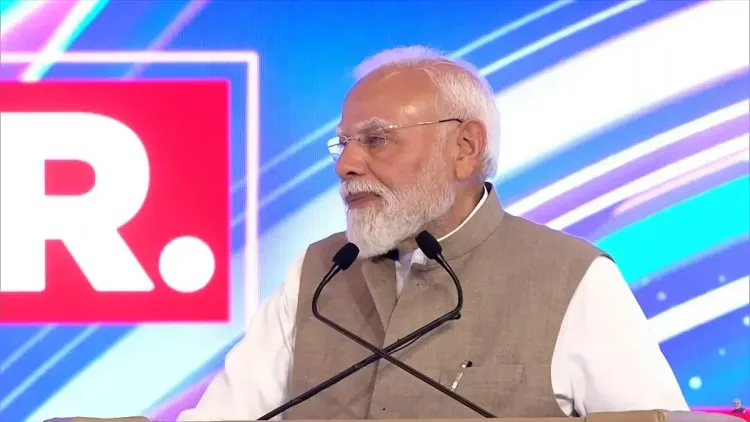
Union Environment Minister Bhupender Yadav on Monday, 22 June 2026, invoked India's civilizational depth and long-term national ambition in a post on X, asserting that the country carries millennia of collective memory and is today charting a course that will define the next one thousand years.
In Hindi, the minister wrote: 'हम वो देश है जिसमें युगों की मेमोरी चिप लगी हुई हैं, भारत जो कर रहा है वो आने वाले 1 हजार साल का भविष्य लिखने वाला है' — translated: 'We are a nation with a memory chip of ages embedded within us; what India is doing today will write the future of the next 1,000 years.'
Context
The statement draws on a well-established strand of official Indian communication that frames present-day policy through the lens of civilizational continuity. India is among the world's oldest continuous civilizations, and its documented philosophical, scientific, and cultural traditions spanning several millennia are frequently cited in government discourse to ground contemporary ambitions in historical legitimacy.
Yadav, who has consistently linked environment and sustainability policy to traditional Indian values, used the metaphor of a 'memory chip of ages' to suggest that India's ancient knowledge systems are not relics but active inputs into modern governance and global engagement.
Policy Backdrop
The framing aligns closely with India's LiFE (Lifestyle for Environment) movement, launched at COP26 in 2021, which positions sustainable living as a continuation of traditional Indian values rather than an import from Western environmentalism. The initiative explicitly argues that intergenerational stewardship of natural resources is embedded in Indian culture, making civilizational rhetoric a policy tool, not merely rhetorical flourish.
At successive multilateral climate forums, Indian delegations have argued that ancient knowledge systems — from water conservation practices to forest governance — offer scalable models for global sustainability challenges. Yadav, as the minister shepherding India's climate commitments, has been a leading voice in this framing at international platforms.
Stakeholders and Impact
The primary intended audience for such statements is future generations — the post explicitly positions current Indian policy as a legacy project measured in centuries, not electoral cycles. This framing is significant in the context of India's long-term climate targets, infrastructure buildout, and strategic positioning as a civilizational power on the world stage.
For domestic audiences, the message reinforces a narrative of national resurgence: that India is not merely catching up with developed nations but is drawing on a deeper reservoir of wisdom to lead globally. For international observers, it signals that India's policy choices will increasingly be justified through a civilizational lens that operates on time horizons far beyond conventional diplomatic planning.
What's Next
Attention will now turn to India's interventions at forthcoming COP meetings and any updates to national climate or sustainability strategies that operationalise this civilizational framing into concrete policy commitments. Whether the minister's rhetoric translates into new programmatic announcements — particularly on intergenerational environmental stewardship — will be closely watched by both domestic and international stakeholders.
As India continues to assert itself as a voice of the Global South on climate and development, statements such as this one signal the philosophical architecture within which future Indian positions are likely to be constructed.
Point of View
Yadav frames India's current actions — particularly on climate and sustainability — as the natural expression of an unbroken knowledge tradition, not a reactive response to Western-led global agendas. This is a strategic posture that simultaneously appeals to domestic pride and positions India as a civilizational counterweight in multilateral spaces. The thousand-year time horizon is also a political signal: it elevates governance above short-term electoral calculus and aligns with the BJP's broader narrative of national resurgence rooted in ancient identity.
NationPress
23 Jun 2026
Frequently Asked Questions
What did Bhupender Yadav say about India's future on 22 June 2026?
Bhupender Yadav said that India carries a 'memory chip of ages' within it and that what India is doing today will write the future of the next 1,000 years, invoking the country's civilizational heritage as the foundation for its long-term national direction.
What is the LiFE movement and how does it relate to Yadav's statement?
The LiFE (Lifestyle for Environment) movement was launched by India at COP26 in 2021 to promote sustainable living rooted in traditional Indian values. Yadav's framing of civilizational memory as a policy resource directly echoes the LiFE movement's argument that ancient Indian knowledge systems are relevant to modern global challenges.
Why does India frame its policies in civilizational terms?
Indian official communications increasingly use civilizational framing to position the country as a leader drawing on deep historical wisdom rather than following Western models, particularly in climate, sustainability, and strategic domains. This approach appeals to domestic audiences and strengthens India's voice as a representative of the Global South.
What does Bhupender Yadav's post mean for India's climate policy?
The post signals that India's climate and sustainability positions will continue to be grounded in a civilizational and intergenerational philosophy, which is likely to shape India's stance at forthcoming COP meetings and in multilateral negotiations on environmental governance.
Who is Bhupender Yadav?
Bhupender Yadav is India's Union Minister of Environment, Forest and Climate Change and a senior leader of the Bharatiya Janata Party (BJP). He has been a prominent voice linking India's environmental policy to its traditional cultural and civilizational heritage, including at international climate forums.