How did Bihar achieve a 68.79% voter turnout in phase 2 while ensuring peaceful polling?
Synopsis
The Bihar Assembly elections’ second phase witnessed a remarkable 68.79% voter turnout, showcasing a historic surge in participation compared to previous elections. With innovative security measures and comprehensive logistical planning, this election phase marks a significant milestone for democracy in Bihar. Join us as we delve deeper into the achievements and challenges faced during this crucial democratic process.
Key Takeaways
68.79% voter turnout in phase 2 No reports of violence at polling stations Deployment of 122 general observers for election oversight Introduction of innovative measures like 100% webcasting Significant security enhancements across Bihar
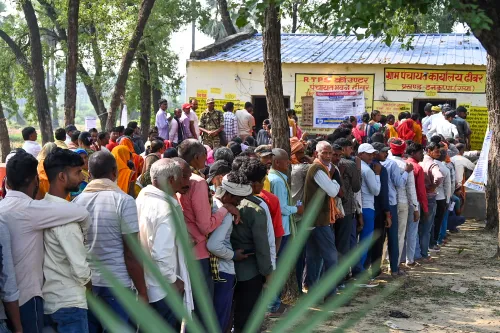
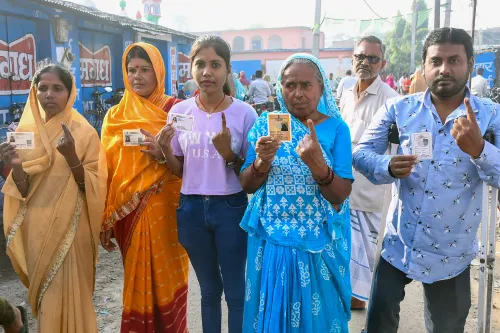
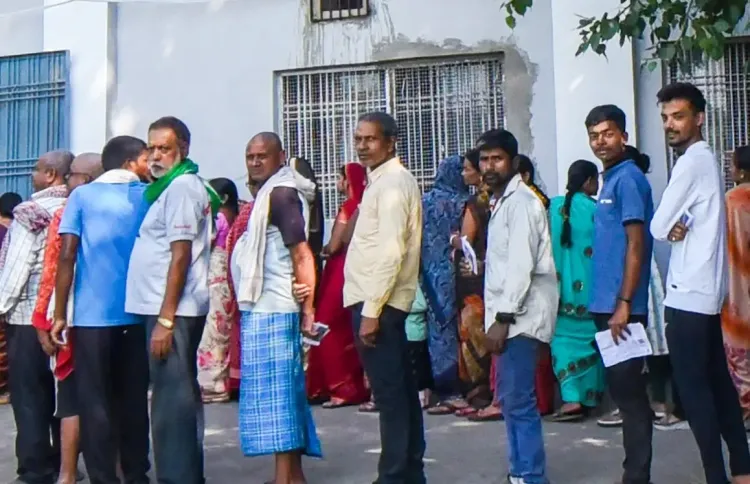
Patna, Nov 11 (NationPress) The second phase of the Bihar Assembly elections wrapped up without any disturbances on Tuesday, achieving a remarkable voter turnout of 68.79 percent. This figure is based on preliminary data from approximately 2,000 polling booths still awaiting final confirmation, as reported by Chief Electoral Officer (CEO) Vinod Singh Gunjiyal.
Gunjiyal noted that the average turnout across both the first and second phases stands at 66.90 percent, marking a significant increase of 9.6 percent from the prior Assembly elections and representing the highest turnout since the 1951-52 elections.
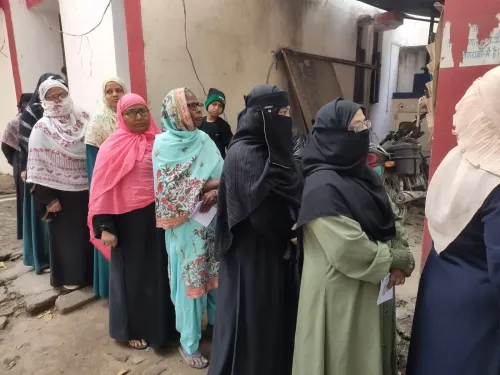
In terms of gender demographics, the turnout for male voters was 62.8 percent, while female voters accounted for 71.60 percent across both phases.
The Election Commission deployed an extensive team for the second phase, including 122 general observers, 34 expenditure observers, 20 police observers, and 2,224 micro observers.
During this phase, the Commission received a total of 230 complaints, all of which were addressed swiftly, according to Gunjiyal.
Security forces reported seizing materials valued at Rs 3.52 crore, comprising liquor, drugs, and other illegal substances worth Rs 1.7 crore, with the remainder attributed to cash and other incentives.
Since the Model Code of Conduct was enforced, confiscations across Bihar have amounted to Rs 127 crore, including Rs 78 crore in liquor and illegal goods.
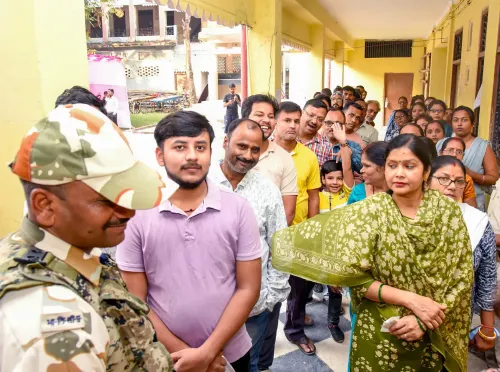
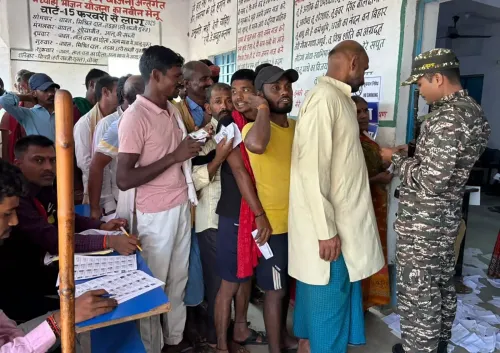
Gunjiyal confirmed that there were no reports of violence from any polling stations during this phase.
A total of 1,302 candidates contested in this phase, which covered 122 constituencies — comprising 101 general, 19 SC reserved, and 2 ST reserved seats.
According to the Election Commission, there are 3,70,13,556 electors eligible to participate in this round, which includes 10,21,812 new voters.
Male electors account for 1,95,56,899, including 5,28,954 new male voters, while female voters total 1,70,68,572, with 4,92,839 newly registered. The third-gender voter count stands at 943, with 90 newly added.
There are 7,69,356 electors in the 18–19 age group.
Phase-2 saw polling taking place at 45,399 stations, comprising 5,326 urban and 40,073 rural locations.
This included 595 women-managed booths, 91 PwD-managed booths, and 316 model stations.
Across both phases combined, 2,616 candidates participated, representing a total electorate of 7.45 crore.
The CEO emphasized several innovative measures implemented this election cycle.
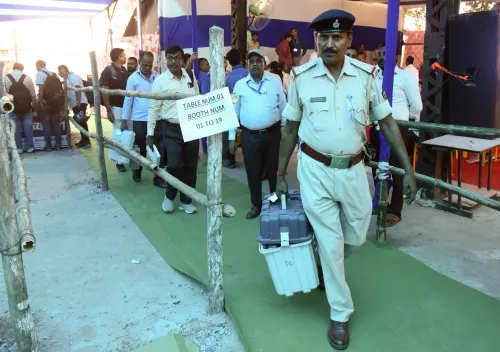
“We achieved 100 percent webcasting, with live feeds monitored directly from all polling booths. Each polling booth was equipped with two CCTV cameras — one inside and one outside. This marks the first instance of such extensive live webcasting in the nation,” he explained.
He also noted that 1,592 polling stations are situated in Naxal-affected regions.
“Historically, booths in these areas had to be relocated. This year, we maintained all polling locations, and voting proceeded smoothly. Helicopters were not necessary for transporting polling teams,” he added.
Gunjiyal highlighted that the ECI introduced several logistical advancements — including GPS tracking for vehicles transporting EVMs and VVPATs, enhanced ballot paper quality featuring larger fonts and colored candidate photographs, as well as GPS-enabled devices for boats ferrying polling officers in flood-prone and Diara areas.
“All polling materials were systematically distributed in carry bags and mobile deposit facilities were established,” the CEO stated.
Additional Director General (ADG) of Police and Nodal Officer for Election Security, Kundan Krishnan, remarked that security measures were significantly bolstered throughout Bihar following the Model Code of Conduct (MCC).
“A total of 1,625 companies of Central Paramilitary Forces were deployed during the elections. Furthermore, Bihar Military Police (BMP) and local law enforcement were mobilized to ensure the polling proceeded smoothly and peacefully,” Krishnan noted.
He added that polling was successfully conducted in a number of hyper-sensitive and Naxal-affected areas where voting had not occurred for nearly 20 years.
“In prior elections, many booths were relocated due to security risks — such as Taracua, Bichulia, and Barha under Chakarbandha police station in the Imamganj constituency (Gaya district), and Chormara village under Barhat police station in Jamui district. This season, villagers in these areas voted in their own communities for the first time in two decades,” he remarked.
Krishnan also mentioned that polling was carried out in Adhora and Rehal areas of Kaimur, both of which experienced elections for the first time in twenty years.
“In Chormara, 44 percent of voters participated, while approximately 70 percent turnout was observed in the Chakarbandha area. No violence was reported at any polling booth. Minor issues arose but were swiftly resolved,” he stated.
Between Monday evening and Tuesday evening, police apprehended 990 individuals for various offenses and confiscated 10 vehicles, Krishnan reported.
Since the MCC's enforcement, authorities have seized 844 arms throughout the state.
Point of View
The successful conduct of the second phase of the Bihar Assembly elections is a testament to the resilience of the electoral process in challenging environments. The reported increase in voter turnout reflects a growing engagement among citizens in the democratic process, underpinned by rigorous security and logistical measures. It’s crucial for the nation to continue supporting transparent and fair elections as a cornerstone of democracy.
NationPress
28 Sept 2026
Frequently Asked Questions
What was the voter turnout for the second phase of the Bihar elections?
The second phase recorded a voter turnout of 68.79% , with data from around 2,000 polling booths still pending.
Were there any incidents of violence during the elections?
No incidents of violence were reported from any polling station during the second phase of elections.
How many candidates participated in the second phase?
A total of 1,302 candidates contested in the second phase.
What security measures were implemented during the elections?
The Election Commission deployed 122 general observers , 34 expenditure observers , and 2,224 micro observers to ensure smooth polling.
How many new voters were added for this election?
A total of 10,21,812 new voters were added to the rolls for this election.