Bihar CM backs AI in governance, stresses role of Opposition
Synopsis
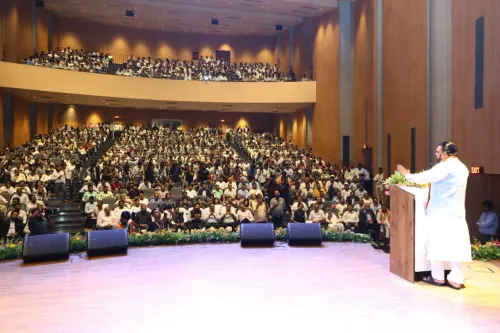
The Chief Minister's Office of Bihar shared remarks on 11 July 2026 in which the Chief Minister called AI and modern technology essential for administrative transparency and efficiency, while also affirming that both the ruling party and the opposition are equally vital to a healthy democracy.
Key Takeaways
The Chief Minister's Office of Bihar posted the remarks on 11 July 2026 .
The Chief Minister stated that both the ruling party and the opposition play an equally important role in strengthening democracy.
He described modern technology and AI as a necessity of the times for public administration.
He said AI adoption would increase transparency and bring 'notable improvement' in administrative efficiency.
The remarks align with Bihar's broader track record of pursuing e-governance under successive Nitish Kumar-led governments and the national Digital India framework.
Specific AI procurement orders or pilot projects from Bihar departments are yet to be announced.
The Chief Minister's Office of Bihar shared remarks by the Chief Minister on Saturday, 11 July 2026, underlining that both the ruling party and the opposition play equally vital roles in strengthening democracy, while also calling modern technology and artificial intelligence a necessity of the times for improving administrative transparency and efficiency.
Context
The post quoted the Chief Minister as saying, 'loktantra ko sudridh banane mein satta paksh aur vipaksh, donon ki saman roop se mahatvapurna bhumika hoti hai' ('Both the ruling side and the opposition have an equally important role in strengthening democracy'). He further stated that the use of modern technology and AI would increase transparency in administration and bring about a notable improvement in operational efficiency.
The remarks reflect a dual emphasis: a political acknowledgement of the opposition's constitutional legitimacy, and a forward-looking push for technology-driven governance in Bihar.
Policy Backdrop
Bihar's push for digital tools in public administration is not new. The state has, over successive governments led by Nitish Kumar, sought to leverage e-governance platforms for service delivery, grievance redressal, and departmental monitoring — broadly aligned with the national Digital India initiative launched in 2015.
Across India, several states have piloted AI and data-analytics tools to reduce discretion in administration and improve last-mile delivery of welfare schemes. The Chief Minister's remarks signal that Bihar intends to deepen this trajectory, though specific procurement orders or pilot project announcements are yet to follow.
Stakeholders and Impact
The primary beneficiaries of an AI-driven administrative overhaul would be Bihar's citizens — particularly those dependent on state welfare schemes — as well as government officials whose workflows could be streamlined through automation and data-driven decision-making.
The Chief Minister's explicit mention of the opposition's role is also significant for the state's legislative functioning. It signals an intent to maintain inclusive democratic deliberation even as the government pursues technocratic efficiency gains. Opposition legislators, civil-society groups, and technology vendors are all stakeholders in how these commitments translate into policy.
What's Next
Observers will watch for follow-up orders from Bihar government departments on AI procurement, pilot projects, or dedicated digital-governance task forces. The next session of the Bihar Legislative Assembly — whether the monsoon or winter session — is likely to be an early test of whether the bipartisan spirit invoked by the Chief Minister shapes actual floor proceedings.
If the state moves from rhetoric to concrete AI deployments, Bihar could join a small but growing cohort of Indian states using algorithmic tools for real-time monitoring of public expenditure and service delivery — a development that would have implications for accountability frameworks well beyond the state's borders.
Point of View
And technocrats and investors who are watching whether Bihar can modernise its administration. Invoking the opposition's legitimacy in the same breath as AI adoption is politically shrewd; it frames technology not as a tool of centralised control but as a neutral efficiency enhancer. This mirrors a broader pattern seen in Indian state politics where leaders package administrative reform in democratic-inclusivity language to pre-empt criticism. The real test will be whether follow-up policy orders and budget allocations match the rhetorical ambition.
NationPress
10 Oct 2026
Frequently Asked Questions
What did the Bihar Chief Minister say about AI and governance?
The Bihar Chief Minister said that modern technology and AI are a necessity of the times, and that their use will increase transparency in administration and bring notable improvement in efficiency.
What did Bihar CM say about the role of the opposition?
He stated that both the ruling party and the opposition have an equally important role in strengthening democracy, emphasising that neither side can be sidelined in a healthy democratic system.
Is Bihar planning to use AI in government administration?
The Chief Minister has publicly called AI adoption a requirement of the times, but as of 11 July 2026 no specific procurement orders or pilot project announcements from Bihar departments have been confirmed.
How does Bihar's AI push relate to Digital India?
Bihar's interest in AI-driven administration broadly aligns with the national Digital India initiative launched in 2015, which encouraged states to adopt e-governance tools for transparency and service delivery.
When did the Bihar CM's Office make this statement?
The Chief Minister's Office of Bihar posted the statement on Saturday, 11 July 2026 , via its official account on X.