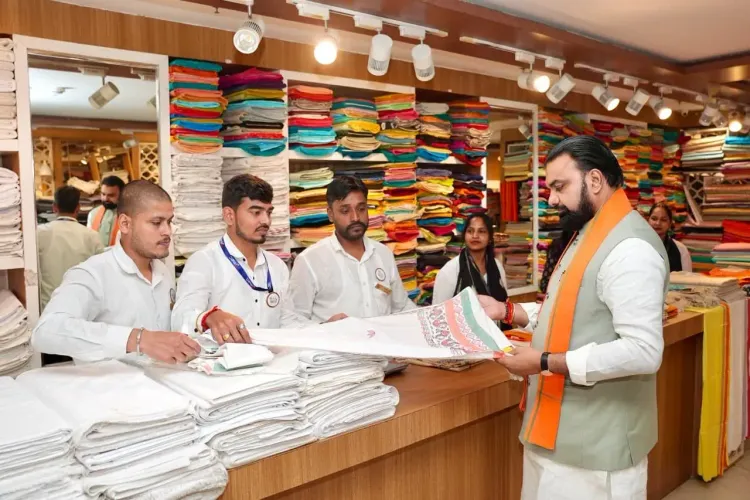
Bihar CM shops at Khadi Mall, urges support for local weavers
Synopsis
Bihar's Chief Minister shopped at a Khadi Mall on 7 August 2026 and urged state residents to adopt khadi and handloom products, spotlighting the economic lifeline these sectors provide to local weavers, craftsmen, and artisans.
Key Takeaways
Bihar's Chief Minister personally purchased khadi products at a Khadi Mall on 7 August 2026 .
The CM appealed to residents to support local weavers, craftsmen, and artisans by adopting handloom and khadi products.
Khadi is hand-spun, hand-woven cloth that channels income directly to rural households and artisan clusters across Bihar.
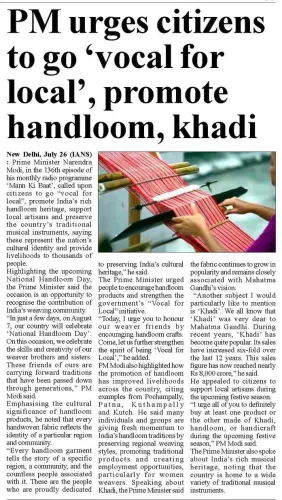
The visit aligns with a broader national push for indigenous manufacturing and 'vocal for local' consumption.
Follow-up state procurement policies or scheme expansions for Bihar's handloom sector will determine the initiative's economic impact.
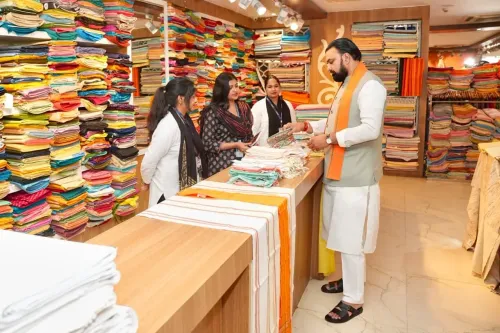
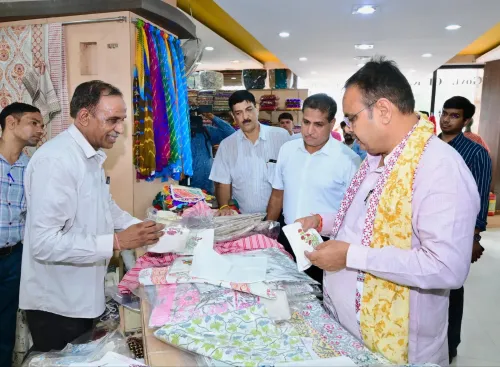
A walk through a Khadi Mall became a statement of intent. Bihar's Chief Minister personally purchased khadi products and used the occasion to call on residents across the state to back local weavers, handloom workers, and artisans — turning a routine visit into a pointed appeal for homegrown craft.
The Chief Minister's Office of Bihar shared the moment on 7 August 2026, posting that the Chief Minister 'also shopped for khadi products at the Khadi Mall and appealed to the people of the state to adopt and promote handloom and khadi products while supporting local weavers, craftsmen, and artisans.' The gesture was deliberate: lead by example, then make the ask.
Why khadi still matters to Bihar's rural economy
Khadi — hand-spun, hand-woven cloth with roots in India's independence movement — remains one of the few sectors that channels income directly to rural households. Bihar hosts established handloom and artisan clusters whose livelihoods depend almost entirely on sustained demand. When that demand dries up, so do the earnings of some of the state's most economically vulnerable workers.
Indian state governments have periodically stepped in with symbolic and structural support — from public procurement mandates to craft fairs — to keep these clusters alive. A Chief Minister visibly buying khadi in a dedicated mall signals that the government sees itself as a consumer, not just a regulator, of the sector.
The appeal to Bihar's residents
The ask directed at ordinary citizens is straightforward: choose khadi and handloom when you shop. It fits within a broader national emphasis on vocal for local — indigenous manufacturing and local economic circulation — but grounds it in something specific: the weaver in your district, the craftsman in your block, the artisan whose livelihood sits at the other end of the purchase.
Whether the appeal translates into sustained consumer behaviour — or is followed by concrete state procurement policies and scheme expansions for Bihar's handloom sector — will determine its real economic weight.
The loom is running. The question now is whether the market shows up.
Point of View
Not merely its cheerleader. For Bihar, where handloom clusters are concentrated in economically fragile districts, this kind of visible endorsement can nudge consumer behaviour in ways that subsidy announcements alone rarely do. The appeal fits neatly into the national 'vocal for local' arc, but its durability will depend on whether symbolic gestures are backed by procurement mandates or scheme expansions. Without structural follow-through, the optics risk outpacing the outcomes.
NationPress
22 Sept 2026
Frequently Asked Questions
Why did the Bihar Chief Minister visit a Khadi Mall?
The Bihar Chief Minister visited the Khadi Mall to purchase khadi products personally and to publicly appeal to residents to support local weavers, craftsmen, and artisans by choosing handloom and khadi goods.
What is khadi and why is it important for Bihar?
Khadi is hand-spun and hand-woven cloth with deep roots in India's self-reliance movement. For Bihar, it is economically significant because the state hosts established handloom and artisan clusters whose livelihoods depend on steady demand for traditional craft products.
What did the Bihar CM appeal to residents about?
The Chief Minister appealed to people across Bihar to adopt and promote handloom and khadi products while actively supporting local weavers, craftsmen, and artisans.
How does this visit connect to national policy on local manufacturing?
The visit aligns with a broader national emphasis on indigenous manufacturing and local economic activity, encouraging citizens to prefer domestically produced, artisan-made goods over mass-produced alternatives.
What should we watch for after this Khadi Mall visit?
The key development to watch is whether the Bihar government follows up with concrete state-level procurement policies or new schemes that expand financial and market support for the state's handloom and khadi sector.