Bihar CM Office to Hold Monthly Reviews of Unresolved Sahyog Shivir Cases
Synopsis
Bihar's Chief Minister's Office has announced a structured monthly review — every second Tuesday in Patna — for grievance cases unresolved at Sahyog Shivirs or contested by applicants, adding a formal CM-level escalation tier to the state's public service delivery framework.
Key Takeaways
The Chief Minister's Office of Bihar announced on 7 July 2026 that unresolved Sahyog Shivir cases will get CM-level review in Patna .
Reviews will be held on the second Tuesday of every month , creating a fixed, recurring escalation window.
Cases eligible for review include those unresolved at district camps and those where the applicant has filed an objection to the outcome.
The mechanism builds on the Bihar Right to Public Services Act, 2011 , which mandates time-bound grievance redressal across state departments.
The first review under the new schedule is expected in August 2026 .
Welfare applicants — covering pensions, land records, scheme benefits, and certificates — are the primary beneficiaries.
The Chief Minister's Office of Bihar announced on Tuesday, 7 July 2026 that cases left unresolved at Sahyog Shivirs — district-level public grievance camps — will be reviewed at the Chief Minister level in Patna on the second Tuesday of every month.
Context
The announcement, shared by the official CMO Bihar account on X, states: 'प्रत्येक माह के दूसरे मंगलवार को पटना में मुख्यमंत्री स्तर पर उन मामलों की समीक्षा की जाएगी, जिनका समाधान सहयोग शिविरों में नहीं हो सका है।' ('On the second Tuesday of every month, cases that could not be resolved at the Sahyog Shivirs, or on which the applicant has an objection, will be reviewed at the Chief Minister level in Patna.')
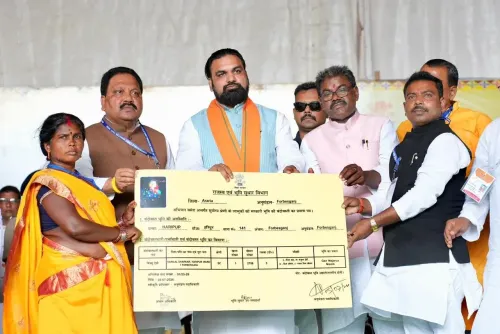
The Sahyog Shivirs are district-level camps where citizens can seek on-the-spot resolution of welfare entitlements, documentation issues, and inter-departmental grievances. The new monthly review mechanism creates a formal escalation channel for cases that slip through at the field level.
Policy Backdrop
Bihar's approach to structured grievance redressal has deep statutory roots. The Bihar Right to Public Services Act, 2011 established time-bound service delivery mandates and appellate mechanisms across state departments, making Bihar one of the early adopters of such legislation in India.
Since the mid-2010s, successive administrations have layered district-level camps with progressively higher oversight tiers to prevent bottlenecks. Chief Minister Nitish Kumar, who has led the state's administrative reform agenda since 2005, has repeatedly used periodic CM-level public darbars and review sessions as a signal of executive responsiveness.
The second-Tuesday schedule institutionalises what was previously an ad-hoc escalation process, giving applicants a predictable, recurring window for higher redressal.
Stakeholders and Impact
The primary beneficiaries are welfare applicants — including those seeking land records, pension entitlements, scheme benefits, and caste or income certificates — whose cases could not be settled at the camp stage or who dispute the outcome. For these citizens, the monthly CM-level review represents a meaningful second chance without requiring litigation or repeated visits to Patna on their own initiative.
State departments will face direct accountability at the highest administrative level for pending cases, creating an incentive to resolve more matters at the Sahyog Shivir stage itself. Civil society observers have long noted that the quality of grievance disposal at field camps varies significantly across districts.
What's Next
The first scheduled CM-level review under this mechanism is expected on the second Tuesday of August 2026. Analysts and welfare advocates will watch whether the state publishes case-disposal data from these sessions — a step that would allow independent tracking of the mechanism's effectiveness.
If disposal rates are made public, this initiative could become a model for other states seeking to close the gap between field-level grievance camps and secretariat-level accountability — a gap that remains a persistent challenge in India's public service delivery architecture.
Point of View
Discretionary override into a predictable institutional channel, which matters enormously for ordinary applicants who currently have no clear next step after a failed camp visit. By anchoring the review at the CM level rather than a departmental secretary, the Bihar government is also making a political statement about executive ownership of service delivery failures. This fits a longer arc in Bihar's governance story — using visible, high-level oversight mechanisms to counter perceptions of administrative inertia. The real test will be whether case-disposal data is published, because without transparency metrics, the mechanism risks becoming ceremonial rather than corrective.
NationPress
7 Jul 2026
Frequently Asked Questions
What is a Sahyog Shivir in Bihar?
A Sahyog Shivir is a district-level public grievance camp organised by the Bihar government where citizens can seek on-the-spot resolution of welfare entitlements, documentation issues, and inter-departmental grievances without visiting Patna.
What happens if my case is not resolved at a Sahyog Shivir?
According to the Bihar CMO's announcement of 7 July 2026, unresolved cases or cases where the applicant has an objection will now be reviewed at the Chief Minister level in Patna on the second Tuesday of every month.
When will the first CM-level review of Sahyog Shivir cases be held?
The first review under the new monthly schedule is expected on the second Tuesday of August 2026, following the announcement made on 7 July 2026.
What is the Bihar Right to Public Services Act?
The Bihar Right to Public Services Act, enacted in 2011, is a state law that mandates time-bound service delivery and creates statutory appellate mechanisms for citizen grievances across government departments.
Who can attend the monthly CM-level grievance review in Patna?
Applicants whose cases were not resolved at Sahyog Shivirs, or who have filed an objection to the outcome of their case at such camps, are eligible to have their matters taken up at the monthly CM-level review in Patna.