Bihar CM Samrat Choudhary Visits Ancient Mundeshwari Temple in Kaimur
Synopsis
Bihar Chief Minister Samrat Choudhary visited the ancient Mundeshwari Temple in Kaimur on June 16, 2026, offering prayers for the state's prosperity and peace. He hailed the millennia-old shrine as a symbol of Bihar's glorious identity, spotlighting its octagonal architecture and deep cultural heritage.
Key Takeaways
CM Samrat Choudhary visited the Mundeshwari Temple in Kaimur district on June 16, 2026 .
He prayed for Bihar's happiness, prosperity, peace, and public welfare at the shrine.
The Mundeshwari Temple is considered one of India's oldest surviving Hindu temples , with origins over a thousand years old.
The temple features a distinctive octagonal architecture and is dedicated to Goddess Mundeshwari .
CM Choudhary described the site as a symbol of Bihar's glorious cultural identity .
The visit aligns with a broader pattern of Bihar governments promoting religious tourism and heritage preservation .
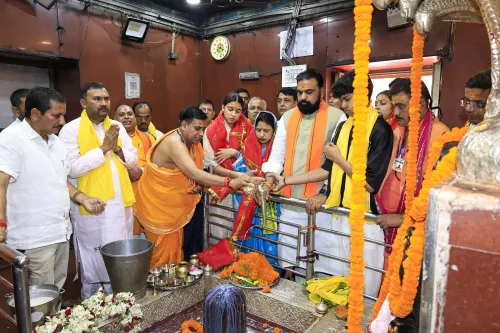
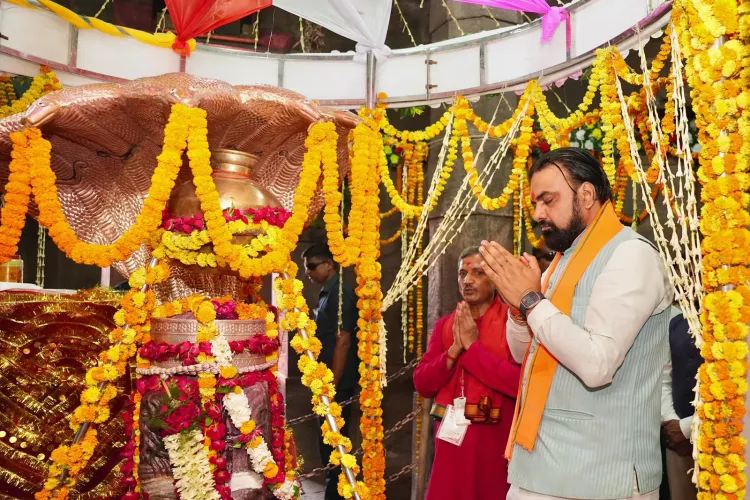
Bihar Chief Minister Samrat Choudhary visited the ancient Mundeshwari Temple in Kaimur district on Tuesday, June 16, 2026, offering prayers and invoking the goddess's blessings for the prosperity, peace, and welfare of Bihar's people.
Context
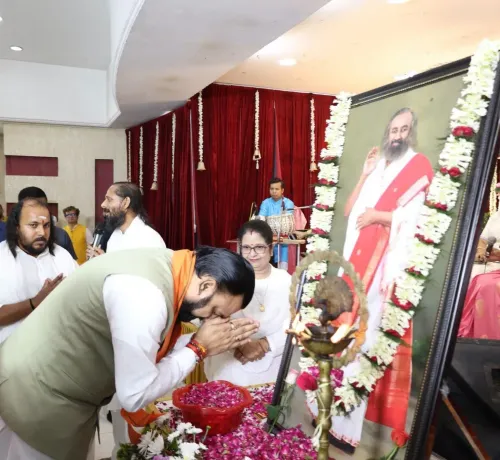
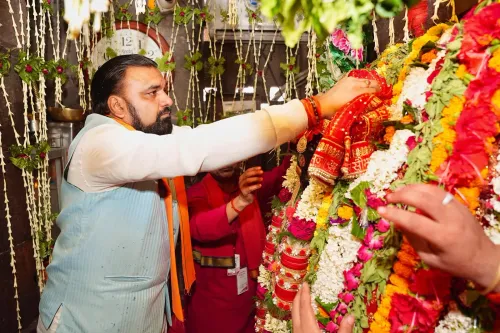
Posting on X alongside four images from the visit, CM Choudhary wrote: 'कैमूर की पावन धरती पर माता मुण्डेश्वरी जी के प्राचीन एवं ऐतिहासिक धाम में दर्शन एवं पूजा-अर्चना कर बिहार की सुख-समृद्धि, शांति और जनकल्याण की कामना की' — 'On the sacred land of Kaimur, I offered prayers at the ancient and historic shrine of Mata Mundeshwari and prayed for the happiness, prosperity, peace, and public welfare of Bihar.' He concluded the post with the invocation 'जय मां मुण्डेश्वरी!' — 'Victory to Mother Mundeshwari!'
The visit placed the Chief Minister at one of Bihar's most revered religious sites, underscoring the state government's public alignment with the region's deep-rooted spiritual and cultural heritage.
Policy Backdrop
The Mundeshwari Temple, perched atop Mundeshwari Hill in Kaimur, is widely regarded as one of the oldest surviving Hindu temples in India, with its distinctive octagonal architecture and inscriptions pointing to origins stretching back well over a thousand years. The temple is dedicated to Goddess Mundeshwari and draws pilgrims from across Bihar and neighbouring states.
CM Choudhary described the shrine as 'an extraordinary heritage of faith, culture, and Indian architectural tradition that is thousands of years old — a symbol of Bihar's glorious identity.' Bihar governments have periodically spotlighted pre-medieval temple sites as anchors for religious tourism and the preservation of early Indian architecture, situating such visits within a broader cultural-continuity agenda.
Stakeholders and Impact
The visit carries significance for Kaimur's residents and the broader community of pilgrims and heritage tourists who regard the Mundeshwari Temple as a living centre of worship rather than merely a historical monument. Heightened political attention to the site can translate into improved access infrastructure, conservation focus, and greater visibility for the district.
Indian chief ministers routinely visit ancient temples to reinforce cultural continuity and regional identity, and CM Choudhary's post fits this established pattern of public messaging that links state welfare with the veneration of historic religious landmarks.
What's Next
The visit may signal forthcoming state-level announcements on heritage infrastructure, tourism promotion, or coordination with archaeological authorities for sites in Kaimur and similar districts across Bihar. Further ministerial visits to other heritage temples in the state in the coming months are plausible given this pattern of public engagement with Bihar's religious and cultural landmarks.
Point of View
Reinforcing the BJP-led Bihar government's emphasis on Hindu heritage as a pillar of regional identity. By publicly linking his prayers to state welfare, Choudhary positions the ruling dispensation as custodians of Bihar's ancient civilisational legacy — a messaging strategy that resonates with both the party's national cultural agenda and local electoral sentiment in Kaimur. The post also implicitly draws attention to the temple's tourism potential at a time when religious tourism is a stated priority for several BJP-governed states. Whether the visit translates into concrete policy action — infrastructure upgrades, conservation funding, or formal heritage designation — will be the real measure of its significance beyond optics.
NationPress
15 Sept 2026
Frequently Asked Questions
Where is the Mundeshwari Temple located?
The Mundeshwari Temple is located on Mundeshwari Hill in Kaimur district, Bihar. It is one of the oldest surviving Hindu temples in India, known for its octagonal architecture.
Why did Bihar CM Samrat Choudhary visit Mundeshwari Temple?
CM Samrat Choudhary visited the Mundeshwari Temple on June 16, 2026, to offer prayers and seek the goddess's blessings for the prosperity, peace, and welfare of Bihar's people.
How old is the Mundeshwari Temple in Kaimur?
The Mundeshwari Temple is regarded as one of India's oldest surviving Hindu temples, with origins stretching back over a thousand years, making it a significant site of ancient Indian architecture and faith.
What did CM Samrat Choudhary say about the Mundeshwari Temple?
CM Choudhary described the temple as 'an extraordinary heritage of faith, culture, and Indian architectural tradition that is thousands of years old,' calling it a symbol of Bihar's glorious identity.
Is Mundeshwari Temple a heritage or tourist site?
Yes, the Mundeshwari Temple in Kaimur is both a living place of worship and a heritage site of national significance, attracting pilgrims and heritage tourists from across Bihar and neighbouring states.