Bihar CM Samrat Choudhary Pays Tribute to Dr. Shyama Prasad Mukherjee
Synopsis
Bihar Chief Minister Samrat Choudhary on 23 June 2026 paid homage to Dr. Shyama Prasad Mukherjee on his martyrdom day, calling the Jana Sangh founder's sacrifice an enduring inspiration for national unity and integrity. The tribute reflects the BJP's broader annual commemoration of its ideological forerunner.
Key Takeaways
Bihar CM Samrat Choudhary posted a tribute to Dr.
Shyama Prasad Mukherjee on his martyrdom day, 23 June 2026 .
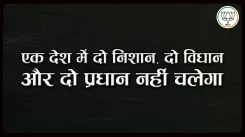
Mukherjee died on 23 June 1953 while in detention in Jammu and Kashmir , protesting the permit system that restricted entry for Indians from other states.
He founded the Bharatiya Jana Sangh on 21 October 1951 , the ideological forerunner to the BJP .
The CM described Mukherjee's 'dedication, courage, and sacrifice' as a perennial source of inspiration for national unity and self-respect.
BJP leaders across states issue annual tributes on 23 June , a practice that has intensified since the abrogation of Article 370 in 2019 .
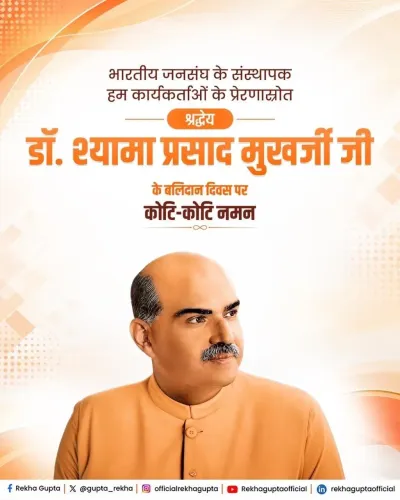
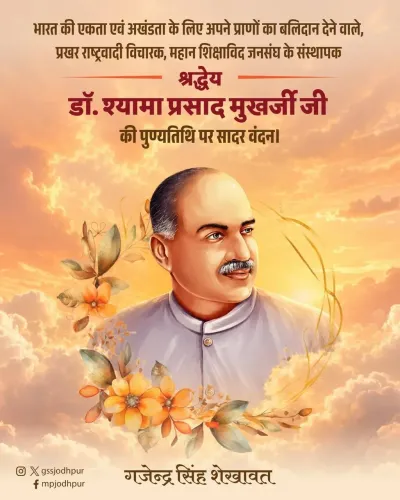
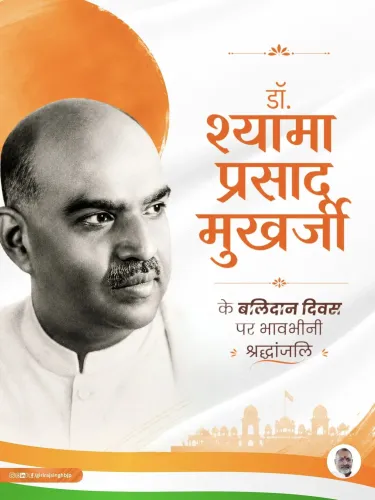
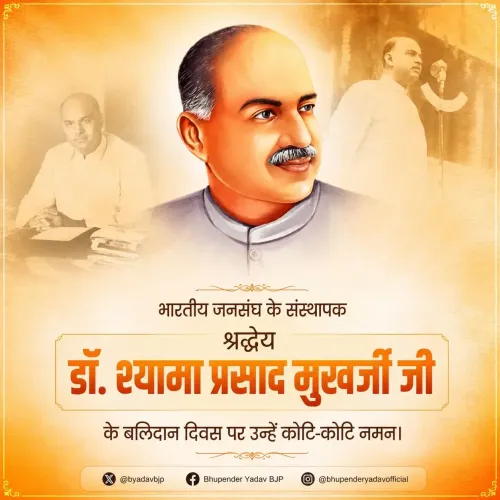
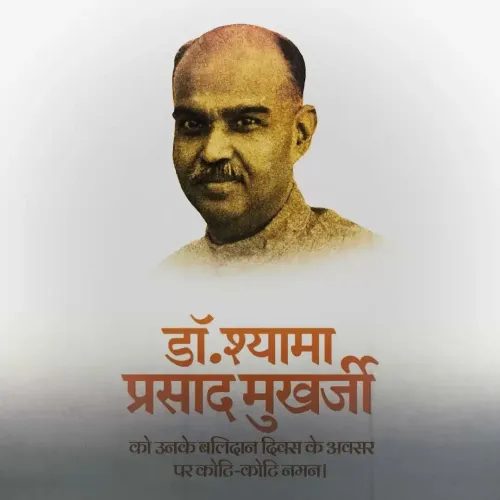
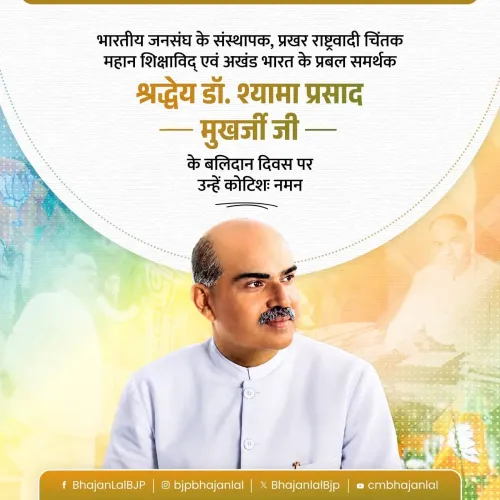
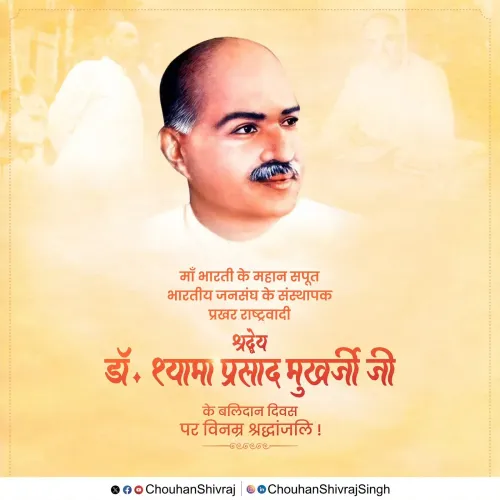
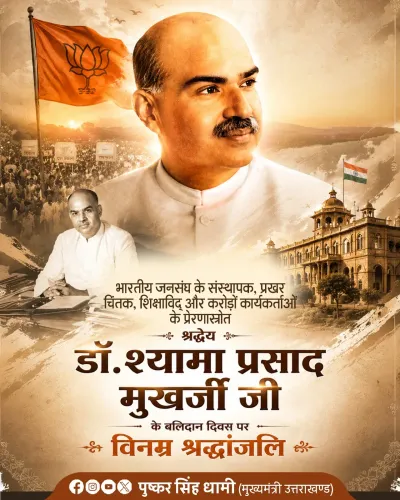
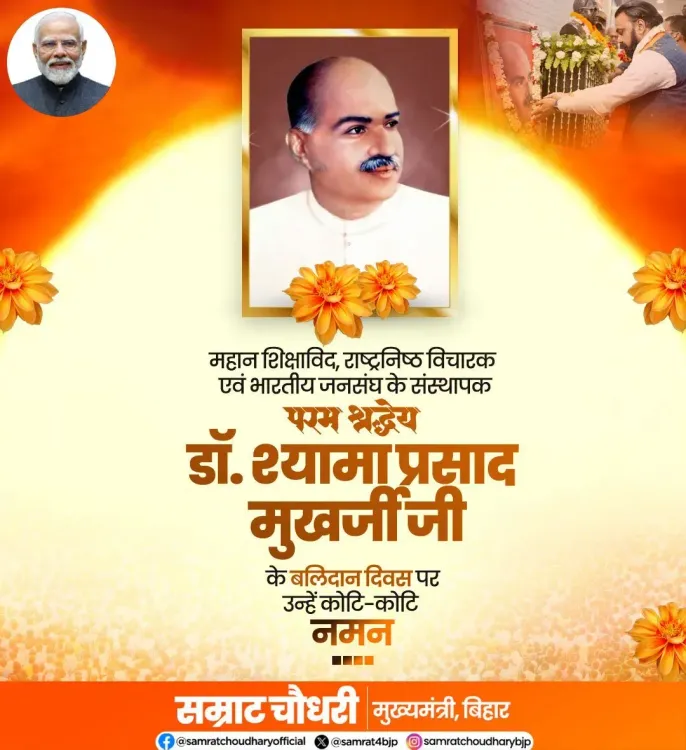
Bihar Chief Minister Samrat Choudhary paid tribute to Dr. Shyama Prasad Mukherjee on his Balidan Diwas (Martyrdom Day) on 23 June 2026, honouring the educationist, nationalist thinker, and founder of the Bharatiya Jana Sangh through a post on X.
Context
In his post, the Bihar CM offered koti-koti naman (countless salutations) to Dr. Mukherjee, writing that his 'dedication, courage, and sacrifice for the unity, integrity, and self-respect of the nation will always remain a source of inspiration.' He added that Mukherjee's 'ideas and resolve for national service will continue to guide generations to come.'
Dr. Shyama Prasad Mukherjee died on 23 June 1953 while in detention in Jammu and Kashmir, where he had gone to protest the permit system that required Indians from other states to obtain a special pass to enter the region. His death transformed him into a symbol of the struggle for complete national integration.
Policy Backdrop
Dr. Mukherjee founded the Bharatiya Jana Sangh on 21 October 1951 as a political vehicle to advance the cause of national unity. The Jana Sangh is widely regarded as the ideological forerunner to the Bharatiya Janata Party (BJP), and BJP leaders routinely invoke Mukherjee's legacy to underline the party's commitment to the principle of 'Ek Bharat' (One India).
The annual commemorations have grown more prominent since 2019, when the central government abrogated Article 370 of the Constitution, removing the special status of Jammu and Kashmir. BJP leaders have consistently framed that decision as the fulfilment of Mukherjee's foundational demand for the full integration of the region into the Indian Union.
Stakeholders and Impact
The tribute is part of a coordinated annual pattern in which BJP chief ministers and senior leaders across states issue commemorative posts on 23 June to mark Mukherjee's martyrdom. These posts serve a dual purpose: honouring a founding ideological figure and projecting organisational unity and ideological continuity within the party.
For Bihar, where the BJP is a dominant political force, such commemorations also reinforce the party's nationalist credentials among its core voter base of workers and youth who identify with the Jana Sangh's legacy.
What's Next
Observers will watch for coordinated commemorations by other BJP chief ministers and central leaders, as well as any references in future parliamentary sessions to schemes, memorials, or policy initiatives named after Dr. Mukherjee. The annual tribute cycle also tends to resurface debates around national integration and the political legacy of the abrogation of Article 370.
Point of View
Courage, and sacrifice,' the Bihar CM aligns himself with a national narrative the party has systematically amplified since the 2019 abrogation of Article 370. State-level tributes from chief ministers serve an organisational function beyond mere commemoration: they signal ideological solidarity with the central leadership and reinforce the party's claim to an unbroken lineage of nationalist politics. The pattern also keeps the Mukherjee legacy visible in states like Bihar, where the BJP uses historical symbolism to consolidate its core voter base.
NationPress
23 Jun 2026
Frequently Asked Questions
Who was Dr. Shyama Prasad Mukherjee?
Dr. Shyama Prasad Mukherjee was an educationist, nationalist thinker, and the founder of the Bharatiya Jana Sangh in 1951, the party considered the ideological forerunner to the BJP. He died on 23 June 1953 while in detention in Jammu and Kashmir, where he had gone to protest the permit system restricting entry for Indians from other states.
Why is 23 June observed as Shyama Prasad Mukherjee's Balidan Diwas?
23 June is observed as Balidan Diwas (Martyrdom Day) because Dr. Shyama Prasad Mukherjee died on this date in 1953 while in detention in Jammu and Kashmir during his protest against the permit system that required a special pass for Indians entering the region.
What did Bihar CM Samrat Choudhary say about Dr. Mukherjee?
Bihar CM Samrat Choudhary said that Mukherjee's 'dedication, courage, and sacrifice for the unity, integrity, and self-respect of the nation will always remain a source of inspiration,' and that his ideas will continue to guide future generations.
What is the connection between Shyama Prasad Mukherjee and the BJP?
Dr. Mukherjee founded the Bharatiya Jana Sangh in 1951, which is widely regarded as the ideological forerunner to the Bharatiya Janata Party. The BJP regularly cites his legacy on national integration, particularly in relation to the abrogation of Article 370 in 2019.
Why do BJP leaders commemorate Shyama Prasad Mukherjee every year?
BJP leaders issue annual tributes on 23 June to highlight the party's ideological lineage from the Bharatiya Jana Sangh and to reinforce their commitment to national unity. The commemorations have become more prominent since 2019, when the central government linked the abrogation of Article 370 to Mukherjee's historical demand for full integration of Jammu and Kashmir.