Sonowal Remembers Syama Prasad Mookerjee on Balidan Diwas
Synopsis
Union Minister Sarbananda Sonowal marked Balidan Diwas on 23 June 2026 by paying tribute to Dr. Syama Prasad Mookerjee, founder of the Bharatiya Jana Sangh, who died in Srinagar custody in 1953 while agitating for J&K's full integration with India. Sonowal linked Mookerjee's ideals to the vision of a self-reliant Bharat.
Key Takeaways
Sarbananda Sonowal , Union Minister of Ports, Shipping and Waterways, paid tribute to Dr.
Syama Prasad Mookerjee on 23 June 2026 , his Balidan Diwas.
Mookerjee died on 23 June 1953 in detention in Srinagar while protesting the permit system restricting entry into Jammu and Kashmir.
He founded the Bharatiya Jana Sangh in 1951 , the direct ideological predecessor of the BJP.
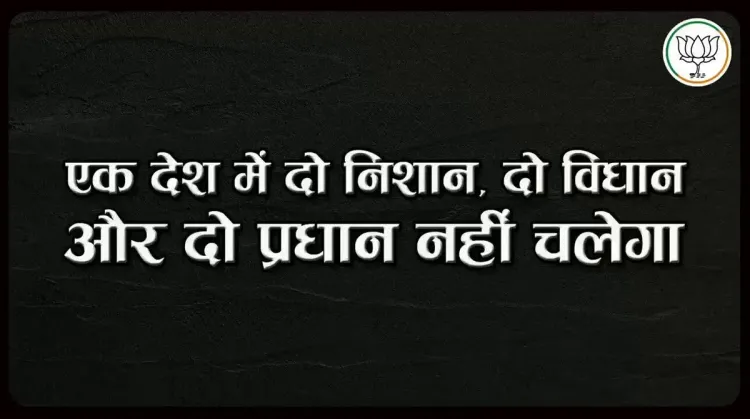
The abrogation of Article 370 in 2019 is widely cited by BJP leaders as fulfilment of Mookerjee's core demand for J&K's full constitutional integration.
Sonowal's reference to a 'self-reliant Bharat' links Mookerjee's legacy to the Atmanirbhar Bharat economic framework launched in 2020 .
Annual ministerial tributes on Balidan Diwas reflect the BJP's broader strategy of embedding historical nationalist figures across government communication.
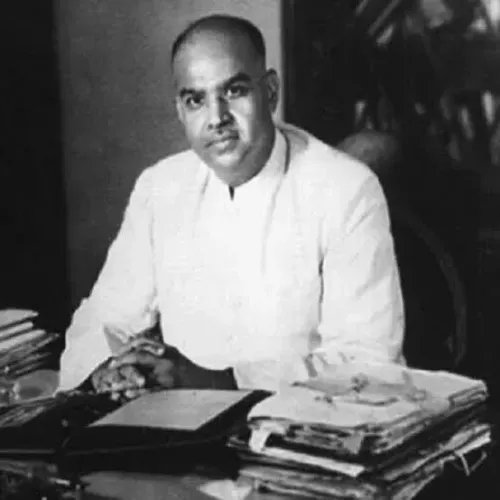
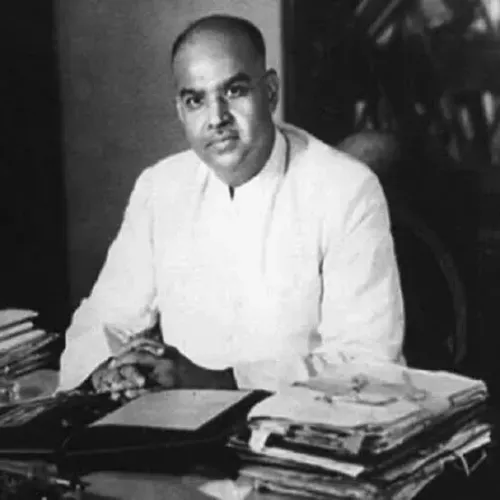
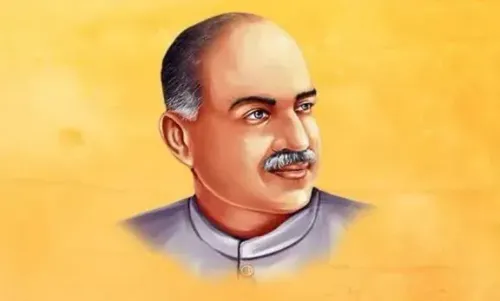
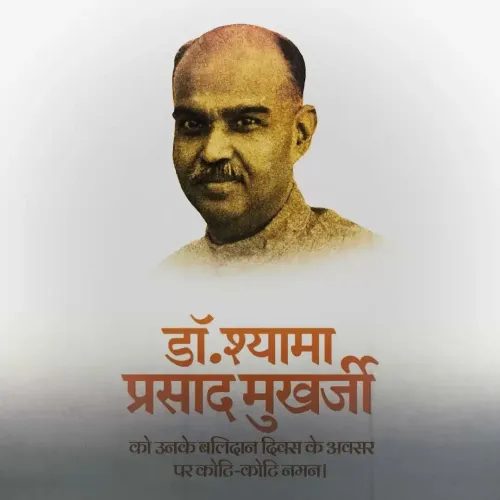
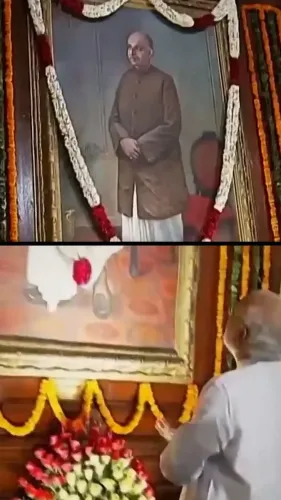
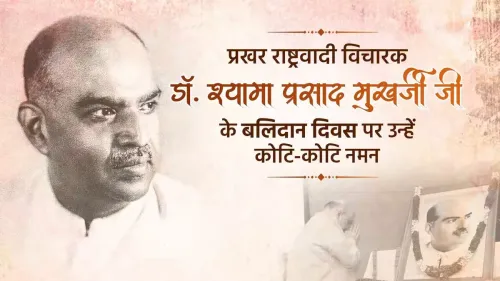
Union Minister of Ports, Shipping and Waterways Sarbananda Sonowal on Tuesday, 23 June 2026 paid tribute to Dr. Syama Prasad Mookerjee on his Balidan Diwas, honouring the nationalist leader's sacrifice for a united and sovereign India. Sonowal described Mookerjee as a 'great son of Maa Bharati' and a 'guiding light' whose visionary ideals continue to shape the country's journey toward a self-reliant Bharat.
Context
Dr. Syama Prasad Mookerjee died on 23 June 1953 in detention in Srinagar, making the date one of the most significant in the BJP's political calendar. He had entered Jammu and Kashmir without a permit to protest a restriction that required citizens from the rest of India to carry a permit before entering the state — a system he argued violated the principle of national unity. His death in custody, at the age of 52, transformed him into a martyr figure for the nationalist movement he had helped build.
Mookerjee had founded the Bharatiya Jana Sangh in 1951, the organisation whose ideological lineage runs directly to the present-day Bharatiya Janata Party. His core demand — full constitutional integration of Jammu and Kashmir with the Indian Union — remained a defining plank of that tradition for over six decades.
Policy Backdrop
The abrogation of Article 370 in August 2019 by the Narendra Modi government was widely presented by BJP leaders as the fulfilment of Mookerjee's foundational demand. The revocation ended Jammu and Kashmir's special status and reorganised it into two Union Territories, a move the party described as completing the work for which Mookerjee had given his life.
Sonowal's reference to a 'self-reliant Bharat' in his tribute carries additional resonance: it echoes the Atmanirbhar Bharat framework announced in 2020, which the government has positioned as an extension of the same integrationist and sovereignty-first logic into economic policy. The BJP regularly marks Balidan Diwas through statements by ministers across portfolios, embedding Mookerjee's legacy within the broader apparatus of government communication.
Stakeholders and Impact
BJP workers, affiliated nationalist organisations, and cultural bodies linked to the Sangh Parivar observe Balidan Diwas annually with events, rallies, and tributes across the country. For the party's base, the day serves as a reaffirmation of the ideological continuity between Mookerjee's Jana Sangh and the current ruling dispensation.
The Jana Sangh itself later merged into the Janata Party in 1977 before its members regrouped to form the BJP in 1980. Commemorations by senior ministers such as Sonowal reinforce the party's effort to position itself as the sole institutional heir to Mookerjee's political vision — particularly on questions of national integration and sovereignty.
What's Next
Balidan Diwas observances are expected to grow in scale in coming years, especially as infrastructure and connectivity projects in Jammu and Kashmir — including port-linked waterway initiatives under Sonowal's own ministry — are increasingly framed within the narrative of completing national integration. The next commemoration cycle in June 2027 will likely see similar tributes from across the council of ministers, with potential linkages drawn to ongoing development milestones in the former special-status region.
Point of View
The minister draws an implicit line from the Jana Sangh's demand for national integration to the Modi government's Atmanirbhar Bharat economic framework. The annual repetition of this ritual by ministers from diverse portfolios — including infrastructure-facing ones like Ports and Waterways — suggests a deliberate effort to keep Mookerjee's legacy relevant beyond the party's core ideological base. With J&K's post-Article 370 development now a live policy theatre, tributes from ministers with direct stakes in connectivity projects carry an added layer of political messaging.
NationPress
23 Jun 2026
Frequently Asked Questions
Who was Dr. Syama Prasad Mookerjee and why is Balidan Diwas observed?
Dr. Syama Prasad Mookerjee was the founder of the Bharatiya Jana Sangh in 1951 and a prominent nationalist leader. Balidan Diwas is observed on 23 June each year to mark his death in custody in Srinagar in 1953 , where he was detained while protesting the permit system that restricted Indians from entering Jammu and Kashmir.
Why did Syama Prasad Mookerjee die in Srinagar?
Mookerjee entered Jammu and Kashmir without a permit in 1953 to protest a rule requiring citizens from the rest of India to carry permits before entering the state. He was arrested and died in detention in Srinagar on 23 June 1953 , under circumstances that remain contested in historical accounts.
What is the connection between Syama Prasad Mookerjee and the BJP?
The BJP traces its ideological lineage directly to the Bharatiya Jana Sangh , which Mookerjee founded in 1951. The Jana Sangh later merged into the Janata Party and its members subsequently formed the BJP in 1980 , making Mookerjee a foundational figure for the party.
What did Sarbananda Sonowal say about Syama Prasad Mookerjee on Balidan Diwas 2026?
Sonowal described Mookerjee as a 'great son of Maa Bharati' and a 'guiding light,' saying his 'supreme sacrifice for a united and sovereign India will never be forgotten' and that his 'visionary ideals continue to inspire our journey toward a self-reliant Bharat.'
Is Article 370 linked to Syama Prasad Mookerjee's legacy?
Yes. Mookerjee's core demand was the full constitutional integration of Jammu and Kashmir with India, which he argued the permit system and special provisions violated. The abrogation of Article 370 in August 2019 by the Modi government has been widely described by BJP leaders as the fulfilment of Mookerjee's lifelong political goal.