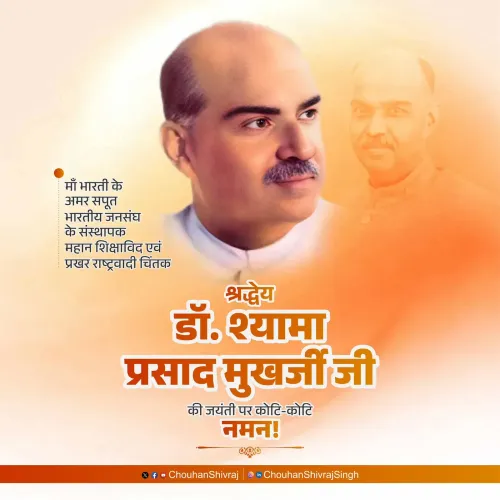
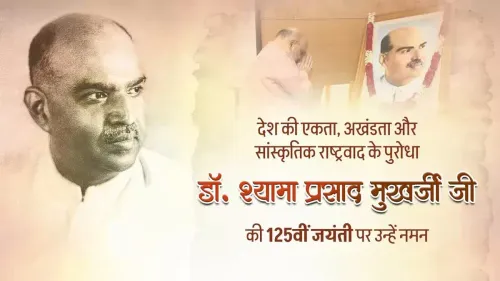
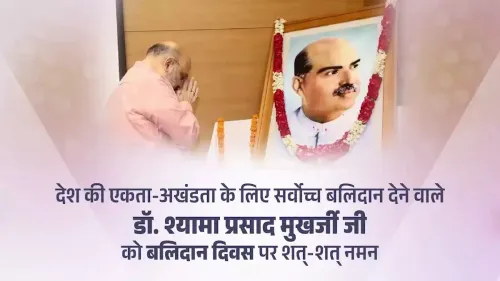
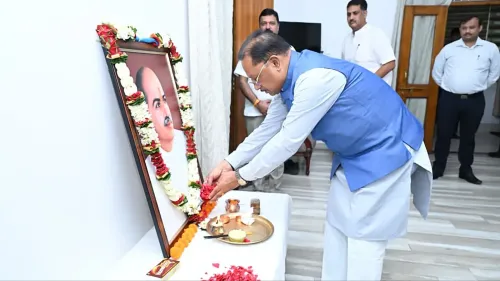
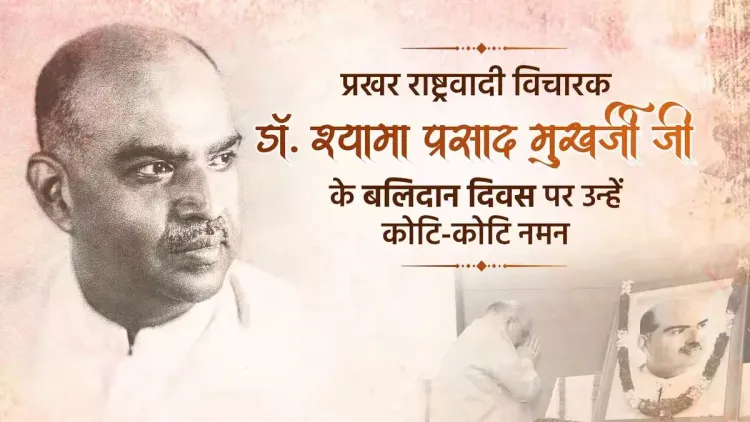
Amit Shah pays tribute to Dr. Shyama Prasad Mookerjee on Balidan Diwas
Synopsis
Union Home Minister Amit Shah on June 23, 2026, paid tribute to Dr. Shyama Prasad Mookerjee on his martyrdom anniversary, invoking the Jana Sangh founder's campaign against Article 370 and his struggle to keep Bengal in India as the ideological foundation of current national-integration policy.
Key Takeaways
Amit Shah paid homage to Dr.
Shyama Prasad Mookerjee on his Balidan Diwas on June 23, 2026 .
Mookerjee founded the Bharatiya Jana Sangh on 21 October 1951 , the direct predecessor of the BJP .
He died in detention in Kashmir in 1953 while protesting the permit system that restricted Indian citizens from entering the state.
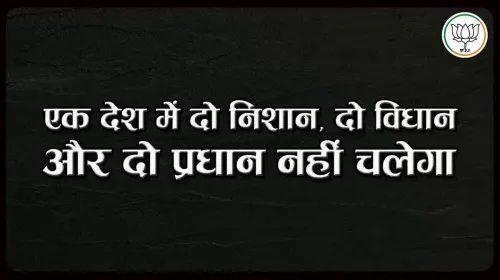
His slogan 'Ek Vidhan, Ek Nishan, Ek Pradhan' was cited as the ideological basis for the abrogation of Article 370 in August 2019 .
Shah's message linked Kashmir and West Bengal , signalling a dual national-integration and political outreach narrative.
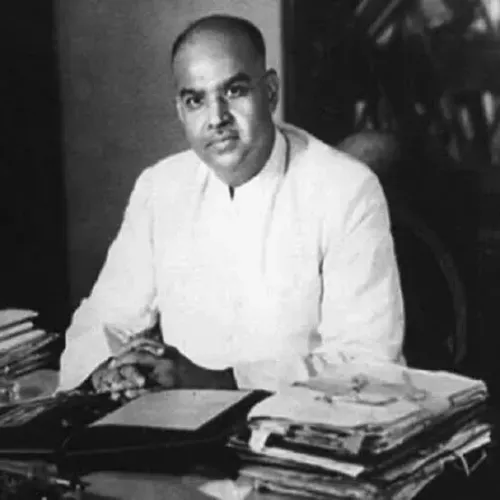
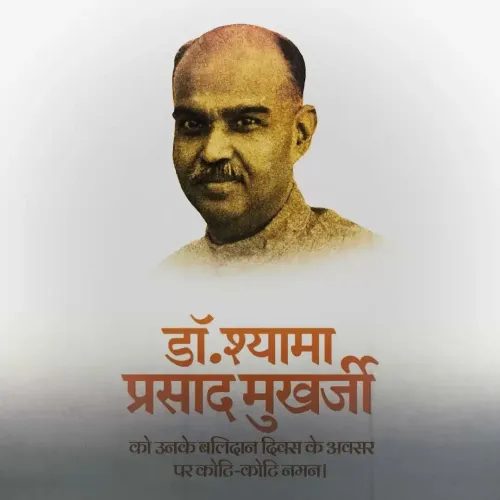
Union Home Minister Amit Shah on Tuesday, June 23, 2026, paid homage to Dr. Shyama Prasad Mookerjee, founder of the Bharatiya Jana Sangh, on his martyrdom anniversary — known as Balidan Diwas — invoking Mookerjee's legacy of national integration from Kashmir to West Bengal.
Context
In his post, Shah offered koti-koti naman (crores of salutations) to Mookerjee, describing him as a 'fervent devotee of the unity and integrity of the nation.' He recalled that Mookerjee had vigorously opposed the arrangement of 'do vidhan, do pradhan aur do nishan' — meaning 'two constitutions, two prime ministers and two flags' — that governed Jammu and Kashmir under Article 370. Shah also highlighted Mookerjee's parallel struggle to ensure that Bengal remained an integral part of India.
Mookerjee died in detention in Kashmir in 1953 while protesting the requirement that Indian citizens carry permits to enter the state. His slogan 'Ek Vidhan, Ek Nishan, Ek Pradhan' — one constitution, one flag, one prime minister — became the ideological cornerstone of the Jana Sangh and, later, the BJP.
Policy Backdrop
The tribute arrives nearly seven years after Parliament abrogated Article 370 in August 2019, converting Jammu and Kashmir into two Union Territories and ending its separate constitution, flag and prime ministerial post. The BJP has consistently presented that decision as the fulfilment of Mookerjee's decades-old demand.
The Bharatiya Jana Sangh was founded by Mookerjee on 21 October 1951 as the political expression of cultural nationalism. It was the direct organisational predecessor of the BJP, which was established in 1980. The party has long positioned its governance record — particularly on territorial integration — as a continuation of the Jana Sangh's foundational vision.
Stakeholders and Impact
Shah's post carries a dual geographic signal. By linking Kashmir and Bengal in the same message, it addresses both the BJP's national-security narrative in the north and its sustained political push in West Bengal, where the party has sought to expand its footprint by emphasising border security and cultural heritage.
For BJP cadre and supporters, Balidan Diwas is an annual occasion to reaffirm the party's ideological lineage. Shah's framing — that Mookerjee's birth land is today advancing with a 'nation-first resolve' toward security and heritage protection — reinforces the party's claim that current policy is rooted in that legacy.
What's Next
With West Bengal assembly elections on the political horizon, tributes that simultaneously invoke Mookerjee's Bengal roots and the abrogation of Article 370 are likely to intensify. Any further central government measures on border infrastructure or cultural-site protection in eastern India will be watched as potential policy extensions of this messaging. The broader pattern of invoking pre-independence and early-republic leaders to frame contemporary territorial decisions shows no sign of abating within the ruling party's communication strategy.
Point of View
The Home Minister is doing double political work: reinforcing the party's claim that the 2019 abrogation of Article 370 was a historic fulfilment, while simultaneously signalling cultural-nationalist credentials to voters in West Bengal. The recurring annual pattern of such tributes suggests they function as a calibrated communication tool, not merely a mark of respect. As West Bengal elections approach, the frequency and intensity of this messaging from senior BJP leaders is likely to rise.
NationPress
21 Sept 2026
Frequently Asked Questions
Who was Dr. Shyama Prasad Mookerjee?
Dr. Shyama Prasad Mookerjee was the founder of the Bharatiya Jana Sangh in 1951 and a prominent advocate for the full territorial integration of India. He died in detention in Kashmir in 1953 while protesting the permit system that required Indian citizens to carry passes to enter the state.
What is Balidan Diwas?
Balidan Diwas, or martyrdom day, refers to the anniversary of Dr. Shyama Prasad Mookerjee's death on June 23, 1953, in detention in Srinagar. The BJP and its affiliated organisations observe this date annually to honour his sacrifice.
What did Mookerjee mean by 'do vidhan, do pradhan, do nishan'?
The phrase — meaning 'two constitutions, two prime ministers, two flags' — referred to the special autonomous status of Jammu and Kashmir under Article 370, which gave the state its own constitution, a separate head of government titled Prime Minister, and its own state flag. Mookerjee opposed this arrangement and demanded full integration with India.
How does Article 370's abrogation connect to Mookerjee's legacy?
The BJP has consistently argued that the abrogation of Article 370 in August 2019, which ended Jammu and Kashmir's separate constitution, flag and prime ministerial post, fulfilled the central demand that Mookerjee made in the early 1950s under the slogan 'Ek Vidhan, Ek Nishan, Ek Pradhan.'
Why does Amit Shah mention West Bengal alongside Kashmir in the tribute?
Mookerjee played a key role in ensuring that West Bengal remained part of India during the partition era. By linking Bengal and Kashmir in the same message, Shah draws a continuous ideological thread from Mookerjee's national-integration struggles to the BJP's current political and policy priorities in both regions.