Amit Shah Pays Tribute to Shyama Prasad Mookerjee on Balidan Diwas
Synopsis
Union Home Minister Amit Shah on 23 June 2026 honoured Dr. Shyama Prasad Mookerjee on his Balidan Diwas, invoking the 'One Nation, One Constitution, One Prime Minister' ideal. Mookerjee, founder of the Bharatiya Jana Sangh, died in 1953 protesting Jammu and Kashmir's special constitutional status — a cause the BJP links to the 2019 abrogation of Article 370.
Key Takeaways
Amit Shah posted a tribute to Dr.
Shyama Prasad Mookerjee on his Balidan Diwas, 23 June 2026 .
Shah invoked the slogan 'Ek Rashtra, Ek Vidhan, Ek Pradhan' (One Nation, One Constitution, One Prime Minister) central to Mookerjee's campaign.
Mookerjee died on 23 June 1953 while under detention in Srinagar , protesting special-status provisions for Jammu and Kashmir .
He founded the Bharatiya Jana Sangh , the organisational predecessor of the Bharatiya Janata Party .
The BJP links his legacy to the August 2019 abrogation of Article 370 , which ended Jammu and Kashmir's special constitutional status.
The tribute connects to the ongoing debate on a Uniform Civil Code as a further expression of the 'one nation, one law' principle.
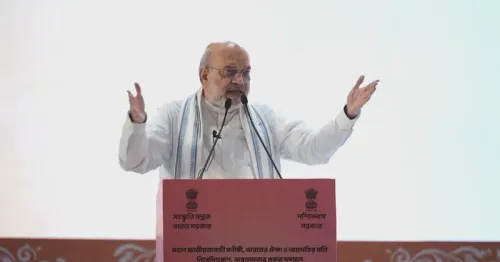
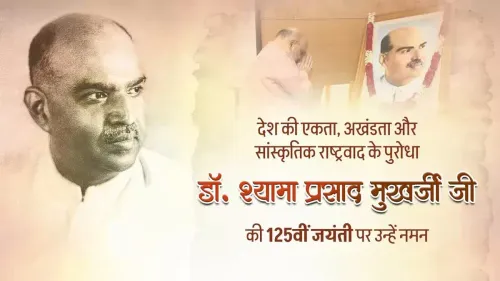
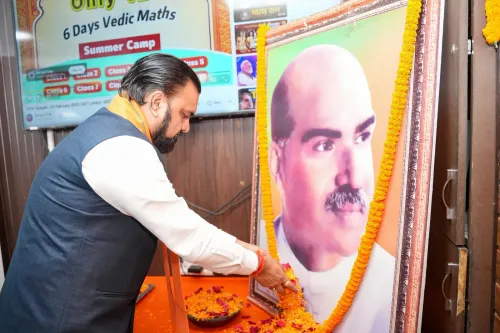
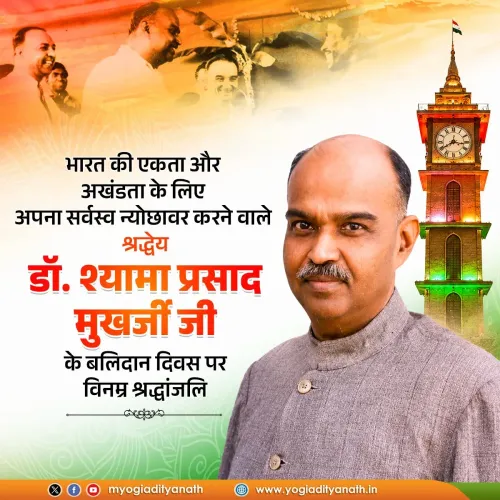
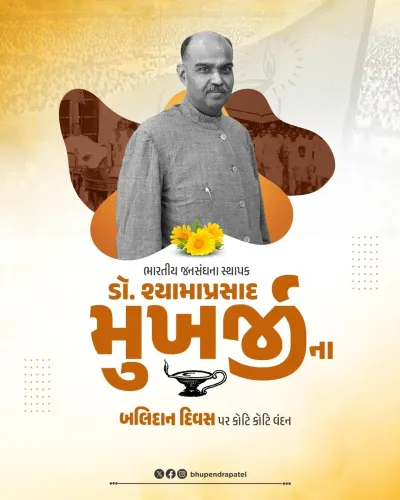
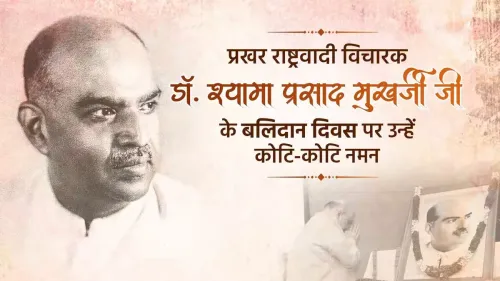
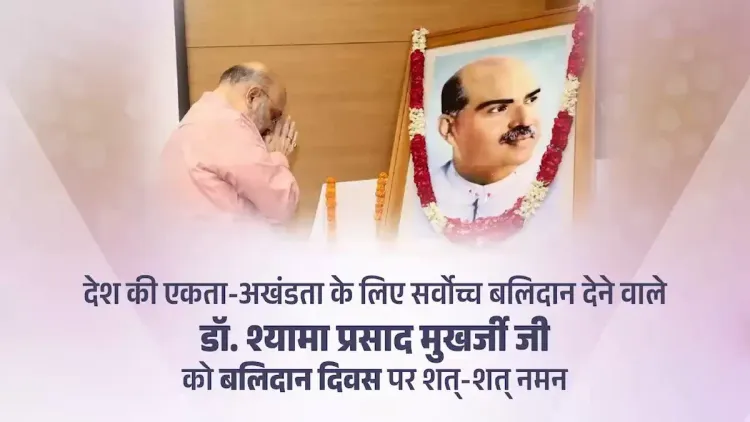
Union Home Minister Amit Shah on Tuesday, 23 June 2026 paid homage to Dr. Shyama Prasad Mookerjee on his Balidan Diwas (Martyrdom Day), honouring the nationalist leader who gave his life for the cause of India's unity and integrity.
Posting on X, Shah invoked the slogan 'Ek Rashtra, Ek Vidhan, Ek Pradhan' (One Nation, One Constitution, One Prime Minister) — the rallying cry that defined Mookerjee's campaign against the differential constitutional treatment of Jammu and Kashmir. He offered 'shata-shata naman' — a hundredfold salute — to Mookerjee for his supreme sacrifice in pursuit of that ideal.
Context
Dr. Shyama Prasad Mookerjee, founder of the Bharatiya Jana Sangh and a former Union Cabinet minister, died on 23 June 1953 while under detention in Srinagar. He had crossed into Jammu and Kashmir without a permit to protest the requirement that Indian citizens obtain a special permit to enter the state — a condition he viewed as a symbol of the region's unconstitutional separation from the Indian mainstream.
His death transformed him into a martyr figure for the nationalist movement. The slogan 'Ek Rashtra, Ek Vidhan, Ek Pradhan' encapsulated his demand that Article 370 of the Indian Constitution, which accorded special status to Jammu and Kashmir, be abrogated so that the same laws applied uniformly across all of India.
Policy Backdrop
The Bharatiya Janata Party, which traces its organisational lineage directly to Mookerjee's Bharatiya Jana Sangh, has long treated 23 June as a day of political and ideological reaffirmation. Senior party leaders mark the anniversary each year by connecting Mookerjee's 1950s campaign to subsequent policy milestones.
The most significant of those milestones came in August 2019, when the central government abrogated Article 370 and reorganised Jammu and Kashmir into two Union Territories. The government cited the principle of uniform application of laws — precisely the principle Mookerjee had championed — as the constitutional and moral basis for the move. Shah, as Home Minister, piloted that legislation through Parliament.
Stakeholders and Impact
The annual commemoration resonates with nationalist and Hindu-right organisations that regard Mookerjee as a foundational ideological figure. For residents of Jammu and Kashmir, the tribute is a yearly reminder of the political arc that led to the 2019 reorganisation, which fundamentally altered the region's constitutional relationship with the Union.
The tribute also carries symbolic weight for the broader debate on a Uniform Civil Code — another policy goal framed by BJP leaders as a continuation of the 'one nation, one law' principle that Mookerjee first articulated.
What's Next
Commemorations on 23 June are expected to continue as an annual fixture in the BJP's political calendar, with party events at national and state levels. Policy watchers will track whether this year's tributes are accompanied by fresh announcements on pending integration-related legislation, including any movement on the Uniform Civil Code. The government's stated commitment to uniform laws across India means Mookerjee's legacy will remain a live reference point in Indian political discourse.
Point of View
Reminding the BJP's base of the policy arc from a 1950s constitutional protest to the 2019 reorganisation of Jammu and Kashmir. By foregrounding the 'Ek Rashtra, Ek Vidhan' slogan, the Home Minister implicitly frames completed policy action as the fulfilment of a decades-old promise. The timing also keeps pressure on pending items in the same ideological family, particularly the Uniform Civil Code, by keeping the 'one nation, one law' vocabulary in circulation. For the opposition, these commemorations double as a reminder of the BJP's capacity to convert long-held ideological commitments into legislative reality.
NationPress
22 Sept 2026
Frequently Asked Questions
Who was Dr. Shyama Prasad Mookerjee and why is he remembered?
Dr. Shyama Prasad Mookerjee was the founder of the Bharatiya Jana Sangh and a former Union Cabinet minister who died on 23 June 1953 while detained in Srinagar. He is remembered as a martyr for Indian national integration, particularly for his campaign against the special constitutional status of Jammu and Kashmir.
What does 'Ek Rashtra, Ek Vidhan, Ek Pradhan' mean?
'Ek Rashtra, Ek Vidhan, Ek Pradhan' translates to 'One Nation, One Constitution, One Prime Minister.' It was Mookerjee's slogan demanding that the same constitution and laws apply uniformly across all of India, including Jammu and Kashmir.
What is Balidan Diwas?
Balidan Diwas, or Martyrdom Day, is observed on 23 June each year to mark the death anniversary of Dr. Shyama Prasad Mookerjee, who died on that date in 1953 while in detention in Srinagar.
How does Mookerjee's legacy connect to Article 370 abrogation?
The BJP has consistently linked Mookerjee's campaign against Jammu and Kashmir's special status to the August 2019 abrogation of Article 370. The government cited the principle of uniform application of laws — Mookerjee's core demand — as the basis for that decision.
Why does Amit Shah pay tribute to Shyama Prasad Mookerjee every year?
As a senior BJP leader and Home Minister, Shah marks 23 June annually to reaffirm the party's ideological lineage from the Bharatiya Jana Sangh and to connect Mookerjee's legacy to the BJP's governance record, including the 2019 reorganisation of Jammu and Kashmir.