CM Himanta's Concert Economy Vision to Boost Assam Tourism
Synopsis
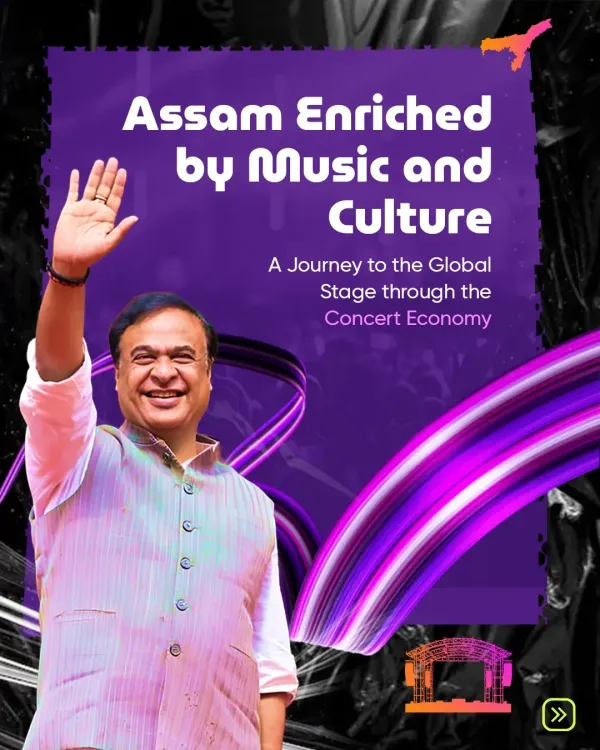
The Chief Minister's Office of Assam has announced CM Himanta Biswa Sarma's 'Concert Economy' vision, positioning large-scale live events as a catalyst for tourism, hospitality growth, local employment, and support for small businesses across the state.
Key Takeaways
The Chief Minister's Office of Assam announced CM Dr.
Himanta Biswa Sarma 's Concert Economy vision on June 23, 2026 .
The framework aims to drive tourism, boost hospitality, create employment, and support local businesses through large-scale live events.
Assam has historically relied on tea and petroleum; the Concert Economy represents a push toward services and visitor economy diversification.
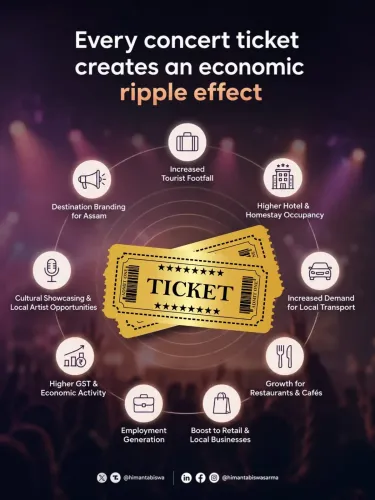
Beneficiaries identified include tourism operators, hospitality businesses, local artists, youth, and small enterprises.
Several other Indian states have adopted similar event-driven economic models to attract domestic visitors.
Specific budget allocations, venue plans, and event calendars are yet to be publicly detailed.
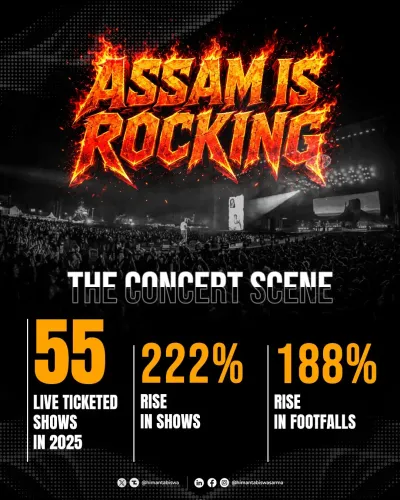
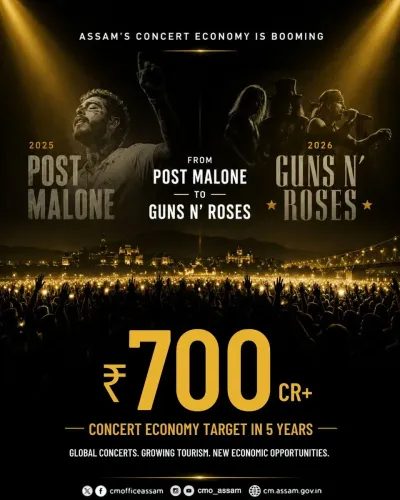
The Chief Minister's Office of Assam on Tuesday, June 23, 2026, outlined Chief Minister Dr. Himanta Biswa Sarma's vision of a 'Concert Economy' for the state, positioning large-scale live events as a driver of tourism, hospitality growth, employment, and support for local businesses.
Context
The CMO's post describes the Concert Economy as a framework designed to 'unlock new opportunities for Assam by driving tourism, boosting hospitality, creating employment and supporting local businesses.' The announcement signals a deliberate policy orientation toward the visitor and entertainment economy as a pillar of state growth. Dr. Himanta Biswa Sarma, who has served as Chief Minister of Assam since May 2021, has consistently sought to diversify the state's economic base beyond its traditional anchors of tea and petroleum.
Policy Backdrop
Assam sits at the heart of Northeast India, a region that successive state and central governments have sought to integrate more deeply into the national mainstream through infrastructure and cultural investment. The state government has previously promoted festival and cultural tourism to generate service-sector employment, building on assets that include riverine landscapes, biodiversity, and a rich tradition of folk performance. The Concert Economy framing extends this logic to organised, large-scale live entertainment — a model that several other Indian states have adopted to attract domestic visitors and stimulate hospitality spending.
Across Northeast India, state governments have collectively expanded festival infrastructure in recent years, recognising that event-led tourism can create multiplier effects for hotels, transport operators, food vendors, and local artisans. Assam's geographic position as the gateway to the Northeast gives it particular potential to serve as a regional hub for such events, drawing visitors from across the country.
Stakeholders and Impact
The sectors most directly implicated by the Concert Economy vision include tourism operators, hospitality businesses, local artists and performers, and youth seeking service-sector employment. Small and micro enterprises — from street-food vendors to handicraft sellers — stand to benefit from the foot traffic that large-scale concerts and events generate. For Assam's youth, who represent a significant share of the state's population, event-linked employment in logistics, security, production, and hospitality could open new livelihood pathways.
Local artists and musicians are also named as intended beneficiaries, suggesting the policy envisions platforms for indigenous cultural expression alongside commercial entertainment. This dual focus — on economic output and cultural visibility — aligns with the broader Northeast tourism narrative that the state has cultivated.
What's Next
The immediate question is how the Concert Economy vision translates into concrete policy instruments: budget allocations, venue infrastructure upgrades, a state tourism calendar anchored around large events, or public-private partnerships with event promoters. Observers will watch the Assam state budget and tourism department announcements for specific programmes, timelines, and financial commitments that give the framework operational substance. If implemented at scale, the initiative could position Assam as a model for event-driven economic diversification among India's northeastern states.
Point of View
Not merely experiment with, entertainment as a growth lever. Anchoring it to the Chief Minister's personal 'vision' serves a dual purpose: it elevates a policy idea into a political identity marker ahead of future electoral cycles, and it positions Assam as a proactive outlier in the Northeast's development story. The real test will be whether the vision attracts private capital and produces measurable employment data, or remains an aspirational narrative. If the state delivers visible events with documented economic outcomes, it could set a replicable template for other northeastern states.
NationPress
22 Sept 2026
Frequently Asked Questions
What is Assam's Concert Economy?
The Concert Economy is CM Himanta Biswa Sarma 's policy vision to use large-scale live concerts and events as a driver of tourism, hospitality revenue, employment, and local business growth in Assam .
How will the Concert Economy create jobs in Assam?
Large-scale events generate employment across logistics, security, production, hospitality, food vending, and handicrafts, offering service-sector livelihood opportunities particularly for Assam's youth.
Has any other Indian state tried a concert or event economy model?
Yes, several Indian states have adopted event and festival-driven tourism strategies to attract domestic visitors and stimulate hospitality spending, making Assam's approach part of a broader national trend.
What sectors benefit most from Assam's Concert Economy plan?
Tourism operators, hotels, local artists and performers, transport providers, street vendors, and handicraft sellers are among the key beneficiaries envisioned under the Concert Economy framework.
What are the next steps for Assam's Concert Economy?
Concrete next steps would include state budget allocations for event infrastructure, a tourism calendar anchored to large concerts, and public-private partnerships with event promoters — none of which have been officially detailed yet.