CM Sarma Eyes Assam as India's Next Concert Economy Hub
Synopsis
The Chief Minister's Office of Assam on June 11, 2026 declared the state's ambition to become the centre of India's next concert economy, signalling a strategic push into live events and cultural tourism as pillars of economic growth under CM Himanta Biswa Sarma.
Key Takeaways
The Chief Minister's Office of Assam officially positioned Assam as the centre of India's next concert economy on June 11, 2026 .
Chief Minister Himanta Biswa Sarma has led a push since 2021 to diversify Assam's economy through tourism and cultural events.
Assam's improved air connectivity and the Union government's Act East Policy have made large-scale event hosting more viable.
Key beneficiaries include tourism operators, performing artists and the hospitality sector .
State budget allocations for event infrastructure and new festival announcements are the key indicators to watch in coming fiscal cycles.
Assam's move reflects a broader national trend of Indian states competing to capture revenue from the growing domestic live-entertainment economy.
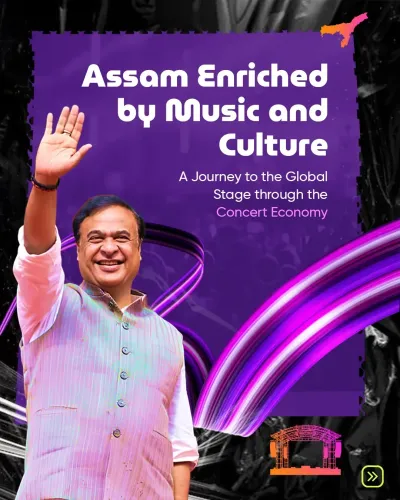
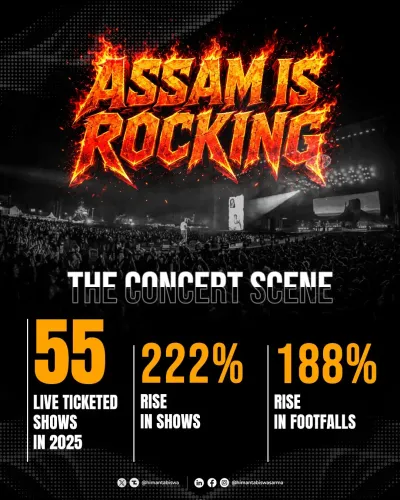
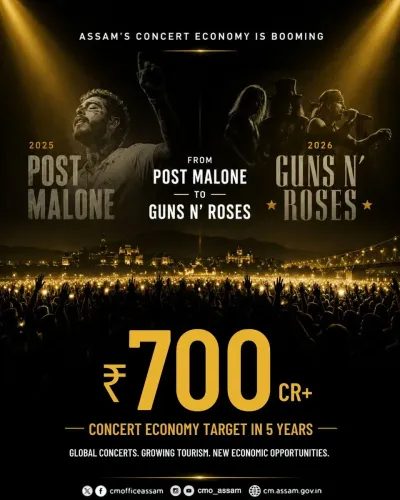
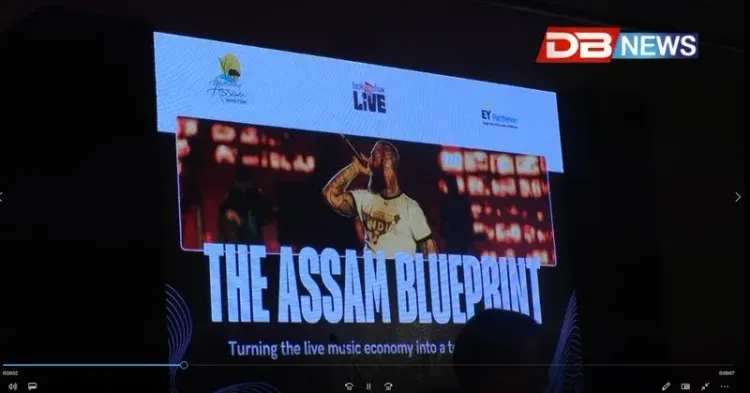
The Chief Minister's Office of Assam on Thursday, June 11, 2026 signalled the state's ambitions to emerge as the centre of India's next concert economy, sharing a post that declared Assam's rise in the live-events and cultural entertainment space.
The post, shared from the official CMO Assam handle, reads — translated from Assamese — 'ভাৰতৰ পৰৱৰ্তী কনচাৰ্ট অৰ্থনীতিৰ কেন্দ্ৰ হিচাপে উত্থান অসমৰ' ('Assam's rise as the centre of India's next concert economy'). The declaration positions Assam as a serious contender in the rapidly expanding domestic live-entertainment sector.
Context
India's live-events industry has seen explosive growth in recent years, with large-scale music festivals, cultural fairs and concerts drawing millions of domestic and international attendees annually. States across the country have begun competing aggressively to host such events, recognising the multiplier effect on hospitality, transport and local commerce.
Assam, historically known for its tea gardens, silk and biodiversity, has been actively broadening its economic identity under Chief Minister Himanta Biswa Sarma, who took office in 2021. The state government has pursued a sustained push to promote tourism and cultural events as pillars of economic diversification.
Policy Backdrop
Since 2021, the Assam government has invested in positioning the state as the gateway to India's Northeast, leveraging the Union government's Act East Policy framework to improve air connectivity and attract investment in event infrastructure. Improved flight links to Guwahati and other Assam cities have made large-scale event logistics increasingly viable.
Indian states have increasingly turned to live events, music festivals and cultural tourism to capture revenue from a growing domestic entertainment economy. Northeastern states in particular have benefited from infrastructure upgrades and policy attention since the mid-2010s, giving them a foundation to host events at a scale that was previously impractical.
Stakeholders and Impact
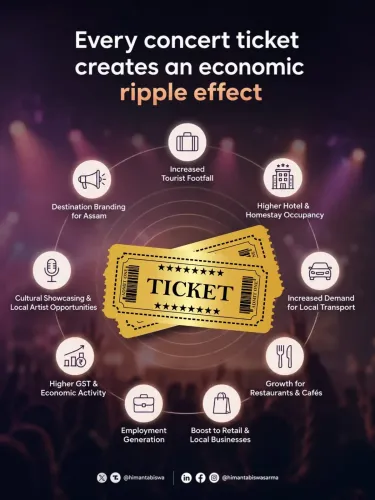
The concert-economy push stands to benefit a wide range of sectors. Tourism operators, performing artists, hospitality businesses and local vendors are among the primary stakeholders who would gain from a sustained influx of event-driven visitors to the state.
For the broader Northeast region, Assam's emergence as an entertainment hub could catalyse a spillover effect, drawing attention and investment to neighbouring states. The cultural richness of the region — spanning diverse tribal traditions, classical forms and contemporary arts — offers a differentiated proposition for event promoters and festival organisers.
What's Next
Analysts and industry observers will watch closely for concrete follow-through: state budget allocations for event infrastructure, new festival announcements in upcoming fiscal cycles, and formal partnerships with private promoters or cultural institutions. The CMO's public signalling on this front suggests that concert-economy positioning is now an explicit part of Assam's economic communication strategy.
Whether Assam can translate this ambition into a durable, revenue-generating events calendar will depend on continued infrastructure investment, policy support for artists and promoters, and the state's ability to market itself to a national and global audience hungry for new festival destinations.
Point of View
Consumption-driven identity. This fits a broader pattern of state governments using cultural soft power to attract investment and talent, particularly in regions historically seen as peripheral to India's economic mainstream. For Assam, the stakes are high: the Northeast's connectivity deficit has long constrained its ambitions, and the success of this push will hinge on whether infrastructure investment keeps pace with the rhetoric. The public declaration from the CMO also functions as a signal to private event promoters and investors that the state is open for business in the entertainment space.
NationPress
25 Sept 2026
Frequently Asked Questions
What is the 'concert economy' that Assam wants to lead?
The concert economy refers to the ecosystem of revenue generated by live music events, cultural festivals and large-scale entertainment shows — including ticket sales, hospitality, transport and local commerce. Assam is positioning itself as a prime destination for such events in India.
What has the Assam government done to promote cultural tourism?
Since 2021, the Assam government under Chief Minister Himanta Biswa Sarma has promoted tourism and cultural events as part of economic diversification, leveraging the Act East Policy framework and improved air connectivity to Guwahati and other cities.
Why is Assam well-placed to become a concert and events hub?
Assam benefits from improved air connectivity, a culturally rich and diverse heritage, and active government support for tourism and live events. The Act East Policy has also brought greater infrastructure investment to the Northeast region.
Who benefits from Assam's concert economy push?
Tourism operators, performing artists, hospitality businesses and local vendors are the primary beneficiaries. The broader Northeast region could also see a spillover effect as Assam's profile as an events destination grows.
What should we watch for next regarding Assam's entertainment economy plans?
Key indicators include state budget allocations for event infrastructure, new festival or concert announcements, and formal partnerships between the Assam government and private event promoters or cultural institutions.