CM Himanta's Concert Economy Puts Assam on Tourism Map
Synopsis
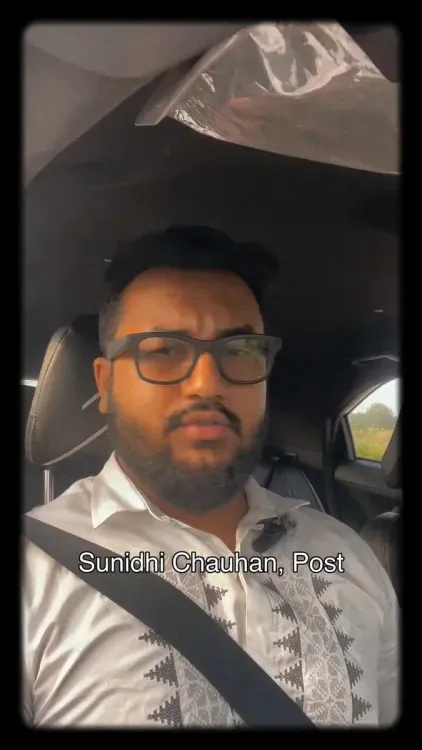
The Chief Minister's Office of Assam has shared a video spotlighting CM Dr. Himanta Biswa Sarma's concert economy initiative, with a young resident explaining how large-scale events are boosting tourism, generating jobs, and driving economic growth across the state.
Key Takeaways
The Chief Minister's Office of Assam posted a video on November 8, 2026 promoting a concert economy initiative led by CM Dr.
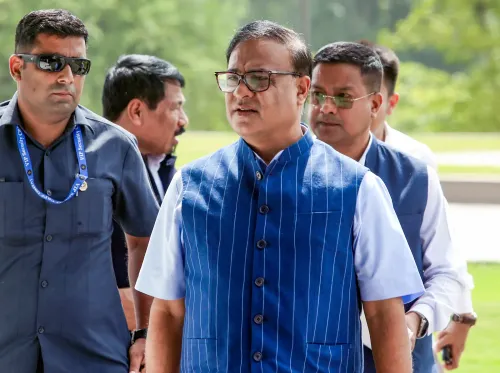
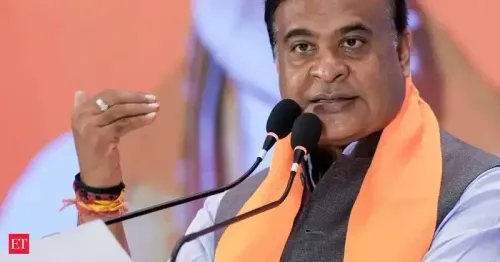
Himanta Biswa Sarma .
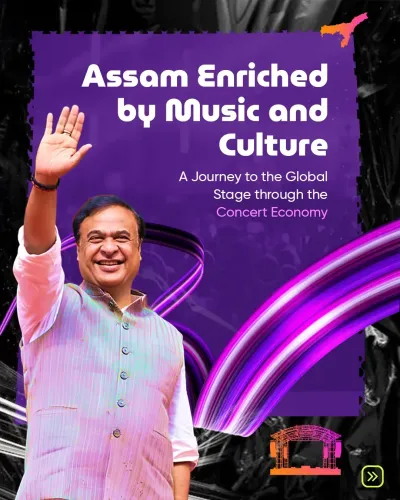
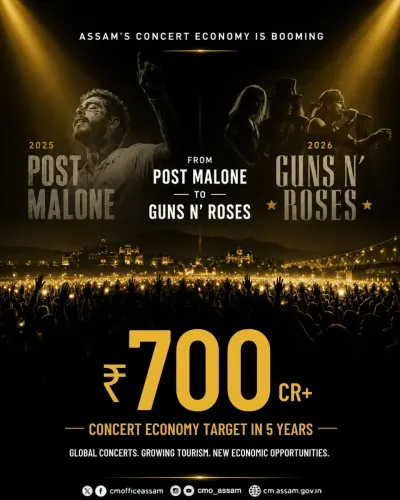
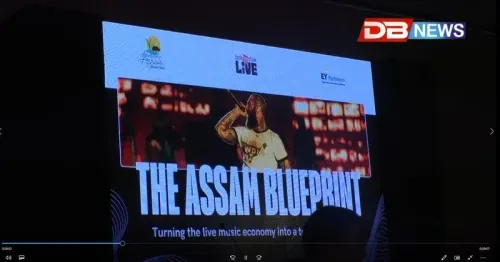
The initiative aims to use large-scale music and cultural events as economic multipliers, targeting tourism, employment, and economic diversification simultaneously.
A young Assam resident is featured in the video to give the initiative a grassroots, youth-facing voice.
CM Himanta Biswa Sarma has been in office since 2021 and has pursued broader economic diversification beyond agriculture and manufacturing.
Assam's approach mirrors event-driven tourism strategies adopted by other Indian states seeking non-industrial growth levers.
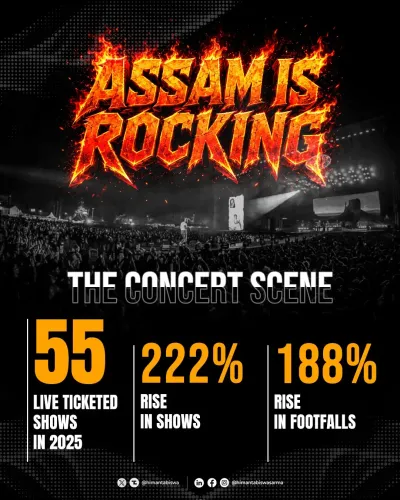
Specific figures — tourism arrivals, employment numbers, budget allocations — linked to the initiative have not yet been publicly released.
Assam is betting on beats and bass lines as an engine of economic growth — and the Chief Minister's Office is letting a young voice make the case. On Sunday, November 8, 2026, the Chief Minister's Office of Assam posted a video on X in which a young person articulates how CM Dr. Himanta Biswa Sarma's concert economy initiative is driving tourism arrivals, generating employment, and injecting fresh momentum into the state's broader economic engine.
What the Concert Economy Initiative Proposes
The idea is straightforward in ambition: position Assam as a destination state by using large-scale music and cultural events as economic multipliers. The CMO's framing — amplified through a young resident's testimony — signals a deliberate push to make event-driven growth feel grassroots, not top-down. Tourism, employment, and economic diversification are the three pillars the initiative claims to address simultaneously.
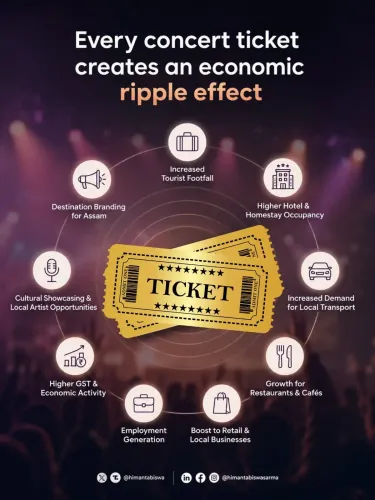
The strategic logic mirrors what several Indian states have pursued in recent years: cultural and entertainment events pull footfall, footfall drives hospitality and retail spend, and hospitality spend generates jobs across skill levels — from stage technicians to hotel staff to local vendors. Assam's geography, with its mix of scenic landscapes and cultural richness, gives it a credible pitch to festival and concert tourists who might otherwise head to metro destinations.
Himanta Biswa Sarma's Economic Diversification Push
Dr. Himanta Biswa Sarma, who has served as Chief Minister of Assam since 2021, has consistently sought to widen the state's economic base beyond agriculture and manufacturing. Event-driven tourism represents one strand of that broader diversification agenda — an attempt to monetise Assam's cultural identity and scenic appeal in ways that create visible, rapid-cycle employment for young people in particular.
The choice to put a young voice at the centre of this communication is deliberate. Youth unemployment is a pressure point across India's northeastern states, and framing concerts as job creators speaks directly to that anxiety — while also projecting an image of a state that is dynamic, connected, and open for business.
What Numbers Would Tell the Full Story
The initiative's credibility will ultimately rest on data the state has not yet publicly released: tourism arrival figures tied to specific events, verifiable employment numbers, and any dedicated budget allocations for concert and event infrastructure. Those benchmarks — whenever they emerge — will determine whether the concert economy is a genuine structural shift or an energetic experiment still in search of scale.
For now, Assam is making the argument through storytelling. If the numbers follow the narrative, it could become a replicable model for smaller Indian states looking to unlock economic value from culture rather than conventional industry.
Point of View
High-visibility growth lever, and anchoring it to a young person's voice reframes what is essentially a supply-side policy as a demand-side benefit felt on the ground. The strategic risk is that without published data, the initiative risks being perceived as optics over outcomes — a gap the government will need to close as the initiative matures. If Assam can eventually publish verified employment and arrival figures, it could export this model to other northeastern states seeking non-industrial growth pathways.
NationPress
8 Nov 2026
Frequently Asked Questions
What is Assam's concert economy initiative?
It is a policy push by CM Dr. Himanta Biswa Sarma to use large-scale music and cultural events as economic multipliers, with the stated goals of boosting tourism, generating employment, and driving broader economic growth across Assam.
How do concerts help boost tourism in Assam?
Large concerts and cultural events attract visitors from outside the state, increasing footfall in hospitality, retail, and local services — creating a ripple effect of economic activity beyond the events themselves.
Who is Himanta Biswa Sarma?
Dr. Himanta Biswa Sarma is the Chief Minister of Assam, serving since 2021 . He has led efforts to diversify the state's economy beyond traditional sectors like agriculture and manufacturing.
Does the concert economy initiative have verified employment numbers?
As of November 2026 , specific employment figures, tourism arrival data, and budget allocations linked directly to the concert economy initiative have not been publicly released by the state government.
Which other Indian states use event-driven tourism strategies?
Several Indian states have pursued cultural and music events as economic multipliers to generate employment and revenue outside traditional sectors — a national pattern that Assam's initiative is now part of.