CM Himanta flags India's concert economy nearing ₹15,000 cr
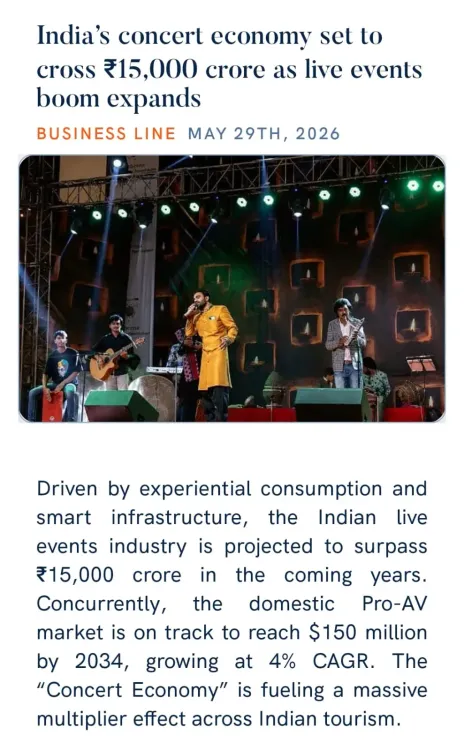
Synopsis
Assam Chief Minister Himanta Biswa Sarma amplified a report on 30 May 2026 projecting India's concert economy will cross ₹15,000 crore, sharing it via the NaMo App as live events and cultural spending surge across the country.
Key Takeaways
Assam CM Himanta Biswa Sarma shared a report on 30 May 2026 projecting India's concert economy will cross ₹15,000 crore .
The post was amplified through Prime Minister Narendra Modi's NaMo App , a platform BJP leaders use to highlight governance and economic milestones.
India's live events sector has expanded rapidly in the post-pandemic period, driven by rising middle-class leisure spending.
The hospitality sector and event organisers are among the primary beneficiaries of the live events boom.
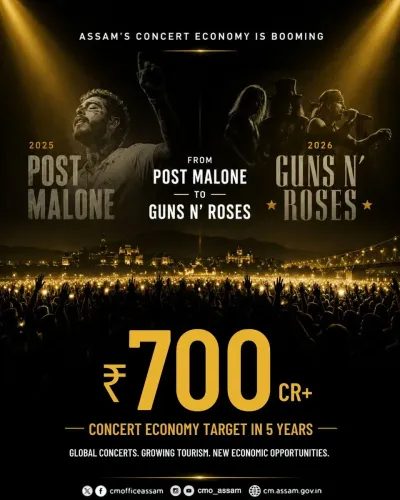
North-Eastern states , including Assam, are positioned to attract a share of the growing national concert and cultural events market.
Future Union and state budgets may include targeted provisions for the entertainment and live-events industry if the growth trend continues.
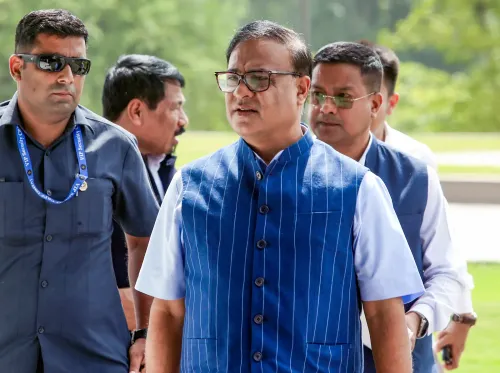
Assam Chief Minister Himanta Biswa Sarma on Saturday, 30 May 2026, shared a report projecting that India's concert economy is set to cross ₹15,000 crore as the country's live events sector continues its rapid expansion, amplifying the story through Prime Minister Narendra Modi's NaMo App.
Context
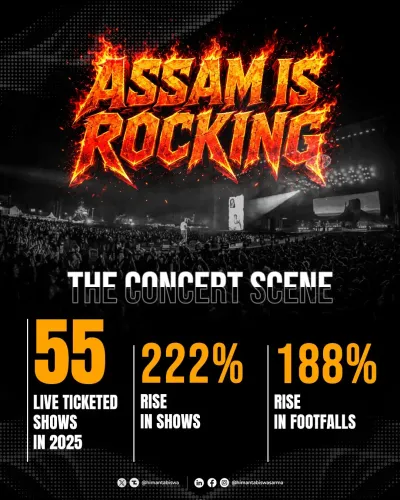
The post shared by CM Sarma highlights a sectoral milestone for India's entertainment and live events industry, which has seen sustained growth in the years following the pandemic. The projection of ₹15,000 crore in concert economy value reflects rising consumer spending on live performances, music festivals, and large-scale cultural gatherings across the country.
BJP leaders, including state chief ministers, routinely use the NaMo App to amplify economic growth narratives aligned with the party's governance messaging. CM Sarma's decision to share this particular report underscores the broader political emphasis on India's services-sector expansion as a marker of economic progress.
Policy Backdrop
India's services sector has grown substantially over the past several years, driven by a rising middle class with greater disposable income directed toward leisure, travel, and live entertainment. Central and state governments have increasingly promoted cultural events, MICE (Meetings, Incentives, Conferences, and Exhibitions) tourism, and large-scale festivals as instruments of economic diversification.
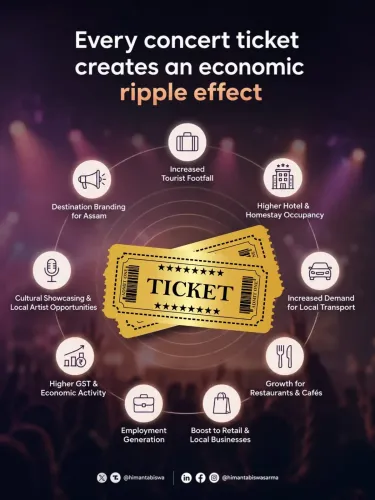
Post-pandemic recovery strategies at both the Union and state levels have included incentives for event organisers and investments in venue infrastructure. The live events boom is seen as a multiplier for allied sectors including hospitality, logistics, ticketing, and local tourism.
Stakeholders and Impact
Event organisers and promoters stand to benefit most directly from the industry's projected growth, as higher valuations attract institutional investment and sponsor interest. The hospitality sector — hotels, restaurants, and transport providers — gains significantly from large-scale concerts and music festivals that draw audiences from across states and, increasingly, from abroad.
For North-Eastern states like Assam, where CM Sarma has championed tourism and cultural identity as economic drivers, the national concert economy trend carries particular relevance. Assam and its neighbours have hosted large cultural festivals and are positioned to attract a share of the growing live-events market.
What's Next
Analysts will watch for whether the Union Budget or upcoming state budgets — including Assam's — contain specific allocations or policy provisions for the entertainment and live-events sector. Any state-level announcements on concert infrastructure, cultural festival funding, or tourism corridors in the North-East would signal a direct policy translation of this economic momentum.
If the concert economy sustains its current trajectory, it could prompt formal regulatory frameworks around ticketing, artist contracts, and venue safety — areas that have seen growing public debate as the industry scales rapidly toward the ₹15,000 crore threshold.
Point of View
He reinforces a narrative that frames rising consumer spending as a governance dividend. For a leader who has positioned Assam and the North-East as emerging destinations for tourism and cultural investment, flagging the concert economy's scale also carries a subtle regional pitch. The post reflects how state-level BJP leaders increasingly use economic data points as political messaging tools, blurring the line between governance communication and party promotion.
NationPress
23 Sept 2026
Frequently Asked Questions
What is India's concert economy projected to be worth?
India's concert economy is projected to cross ₹15,000 crore , according to a report shared by Assam CM Himanta Biswa Sarma on 30 May 2026.
Why did CM Himanta Biswa Sarma share the concert economy report?
CM Sarma shared the report via the NaMo App to highlight India's live events sector growth, consistent with the BJP's practice of amplifying economic progress stories through official digital platforms.
What is the NaMo App and why do BJP leaders use it?
The NaMo App is Prime Minister Narendra Modi's official mobile application; BJP leaders use it to share governance updates, economic data, and party messaging with a wide digital audience.
Which sectors benefit from India's live events boom?
The hospitality sector , event organisers, ticketing platforms, logistics providers, and local tourism businesses are among the primary beneficiaries of India's growing live events and concert economy.
How does the concert economy growth affect North-East India?
North-Eastern states like Assam , which have been promoting cultural festivals and tourism, stand to attract a share of the national live-events market as the industry expands beyond metro cities.