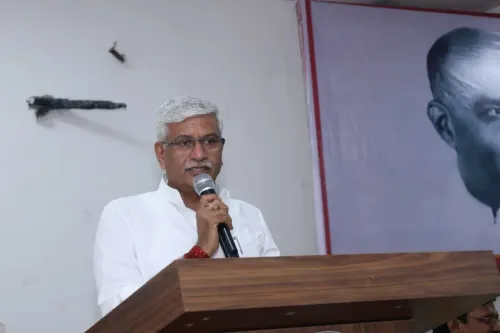
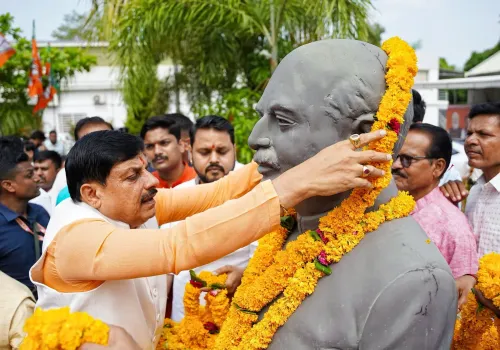
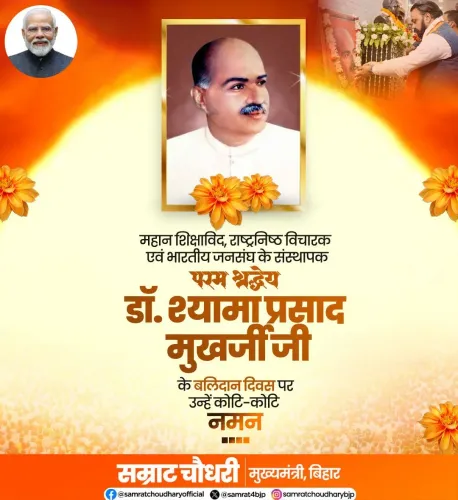
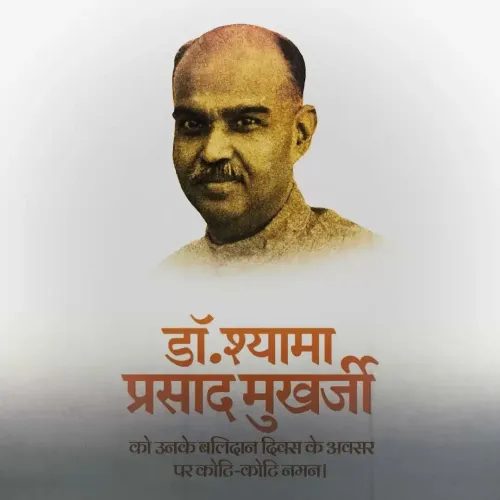
Shekhawat pays tribute to Jana Sangh founder Shyama Prasad Mukherjee
Synopsis
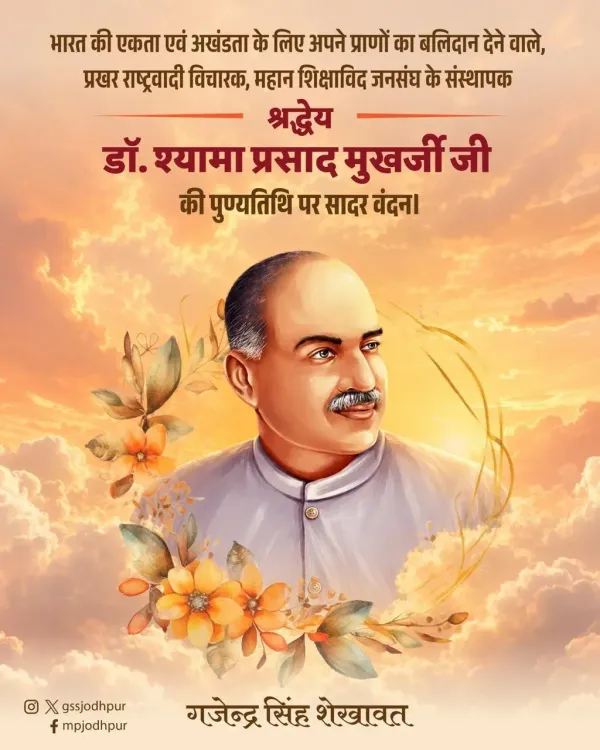
Union Minister Gajendra Singh Shekhawat on June 23, 2026, paid homage to Dr. Shyama Prasad Mukherjee on his death anniversary, honouring the Jana Sangh founder as a nationalist martyr and educationist who gave his life for India's unity and territorial integrity.
Key Takeaways
Gajendra Singh Shekhawat , Union Minister of Culture and Tourism, paid tribute to Dr.
Shyama Prasad Mukherjee on June 23, 2026 , his death anniversary.
Mukherjee died on June 23, 1953 , making this his 73rd death anniversary .
He founded the Bharatiya Jana Sangh in 1951 , the ideological predecessor of the BJP .
Mukherjee is credited with championing the full constitutional integration of Jammu and Kashmir with India.
The BJP has linked the abrogation of Article 370 in August 2019 to the fulfilment of Dr.
Mukherjee's core political demand.
Annual June 23 tributes by BJP leaders reinforce the party's claimed ideological continuity with the Jana Sangh's nationalist founding principles.
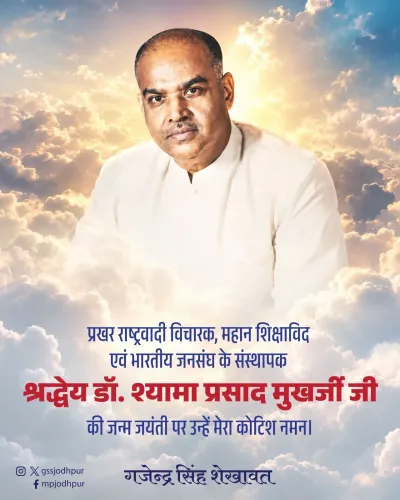
Union Culture and Tourism Minister Gajendra Singh Shekhawat on Tuesday, June 23, 2026, paid homage to Dr. Shyama Prasad Mukherjee on his death anniversary, honouring the Jana Sangh founder as a fervent nationalist thinker, eminent educationist, and martyr for India's unity and territorial integrity.
Context
Shekhawat's post, written in Hindi, offered a respectful salute — 'saadar vandan' (a respectful bow) — to Dr. Shyama Prasad Mukherjee, describing him as a 'prakhar rashtravadi vicharak' (ardent nationalist thinker) and 'mahan shikshavid' (great educationist) who sacrificed his life for the unity and integrity of India. The tribute was shared on the 73rd death anniversary of the Jana Sangh founder, who died on June 23, 1953.
Dr. Mukherjee founded the Bharatiya Jana Sangh in 1951 as a nationalist political alternative, championing the cause of complete constitutional integration of Jammu and Kashmir with India at a time when the region held a special autonomous status. His death while in detention in Kashmir elevated him to a defining symbol of the nationalist movement.
Policy Backdrop
The Bharatiya Jana Sangh, which Dr. Mukherjee established, is widely regarded as the ideological predecessor of the Bharatiya Janata Party (BJP). The BJP has consistently framed the abrogation of Article 370 in August 2019 as the fulfilment of Dr. Mukherjee's central political demand — the full constitutional merger of Jammu and Kashmir into the Indian Union.
Annual commemorations on June 23 by BJP leaders and ministers serve to reinforce the party's claimed ideological continuity with the Jana Sangh's founding principles of national unity, cultural nationalism, and federal integration. As Union Minister for Culture, Shekhawat's tribute carries additional institutional weight, linking the government's cultural mandate to the legacy of historical nationalist figures.
Stakeholders and Impact
The tribute resonates most directly with BJP workers, affiliated nationalist organisations, and ideological networks that trace their intellectual lineage to the Jana Sangh. Dr. Mukherjee is also remembered as a distinguished academic administrator — he served as Vice-Chancellor of Calcutta University and as a Union Cabinet minister in independent India's first government before founding his own party.
For the broader public, such commemorations keep alive the historical debate over Jammu and Kashmir's integration and the role of nationalist politics in shaping post-independence India. Shekhawat, representing Jodhpur in Rajasthan, is among the senior BJP figures who regularly mark this anniversary as part of the party's annual political calendar.
What's Next
The Ministry of Culture may organise academic seminars or public programmes around future June 23 anniversaries to further institutionalise Dr. Mukherjee's legacy within the government's cultural outreach framework. References to his contributions are also likely to feature in BJP national executive deliberations as the party continues to position the Article 370 abrogation as a historic fulfilment of a founding nationalist promise.
Point of View
Designed to reaffirm the party's ideological bloodline from the Jana Sangh to its current dispensation. As Union Culture Minister, his participation elevates the homage beyond mere party sentiment, embedding it within the state's cultural narrative. The consistent framing of Dr. Mukherjee as a martyr for Kashmir's integration keeps the Article 370 abrogation anchored in a long historical arc rather than presenting it as a purely contemporary political decision. Such commemorations cumulatively serve to legitimise the BJP's nationalist policy positions through the authority of a revered founding figure.
NationPress
21 Sept 2026
Frequently Asked Questions
Who was Dr. Shyama Prasad Mukherjee?
Dr. Shyama Prasad Mukherjee was a prominent Indian nationalist politician, educationist, and the founder of the Bharatiya Jana Sangh in 1951, which later evolved into the Bharatiya Janata Party. He was a vocal advocate for the full constitutional integration of Jammu and Kashmir with India and died on June 23, 1953, while in detention in Kashmir.
Why is June 23 significant in Indian political history?
June 23 marks the death anniversary of Dr. Shyama Prasad Mukherjee, who died on this date in 1953 while in detention in Jammu and Kashmir. The day is observed annually by BJP leaders and nationalist organisations as a tribute to his sacrifice for India's unity.
What is the connection between Jana Sangh and the BJP?
The Bharatiya Jana Sangh, founded by Dr. Shyama Prasad Mukherjee in 1951, is widely regarded as the ideological predecessor of the Bharatiya Janata Party. The BJP traces its nationalist ideology and political lineage directly to the Jana Sangh's founding principles.
Why did Gajendra Singh Shekhawat pay tribute to Shyama Prasad Mukherjee?
As Union Minister of Culture and Tourism and a senior BJP leader, Gajendra Singh Shekhawat paid tribute to Dr. Shyama Prasad Mukherjee on his death anniversary on June 23, 2026, honouring him as a nationalist martyr and educationist — a practice common among BJP leaders on this date each year.
What was Dr. Shyama Prasad Mukherjee's stand on Jammu and Kashmir?
Dr. Mukherjee strongly opposed the special autonomous status granted to Jammu and Kashmir and demanded its full constitutional integration with India. The BJP has cited the abrogation of Article 370 in August 2019 as the fulfilment of his longstanding political demand.