Shekhawat pays tribute to Jana Sangh founder Dr. Shyama Prasad Mukherjee
Synopsis
Union Culture and Tourism Minister Gajendra Singh Shekhawat marked the birth anniversary of Bharatiya Jana Sangh founder Dr. Shyama Prasad Mukherjee on 6 July 2026, offering 'kotish naman' and hailing him as a fierce nationalist thinker and great educationist.
Key Takeaways
Gajendra Singh Shekhawat , Union Minister of Culture and Tourism, paid tribute to Dr.
Shyama Prasad Mukherjee on his birth anniversary on 6 July 2026 .
Mukherjee founded the Bharatiya Jana Sangh on 21 October 1951 , the direct ideological precursor to the BJP .
Mukherjee resigned as India's first central Industries Minister in 1950 over the Nehru-Liaquat Pact .
He died in Jammu custody in 1953 while protesting the permit system for entry into Jammu and Kashmir.
The Ministry of Culture has held official commemorations of Mukherjee's birth anniversary for over a decade.
BJP leaders routinely mark the anniversary to underline the party's ideological lineage from the Jana Sangh.
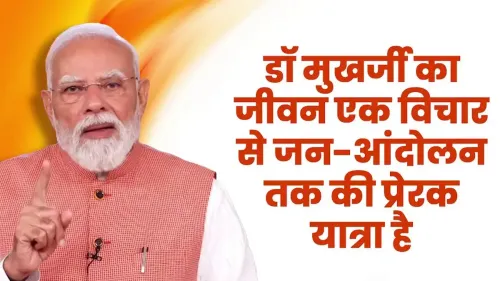
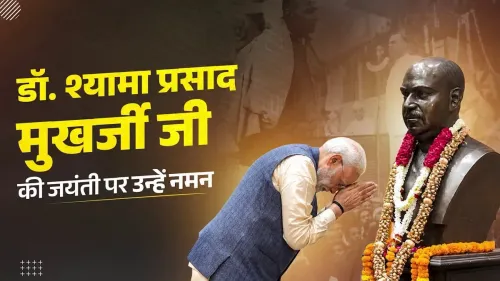
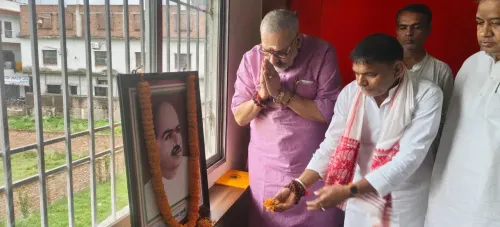
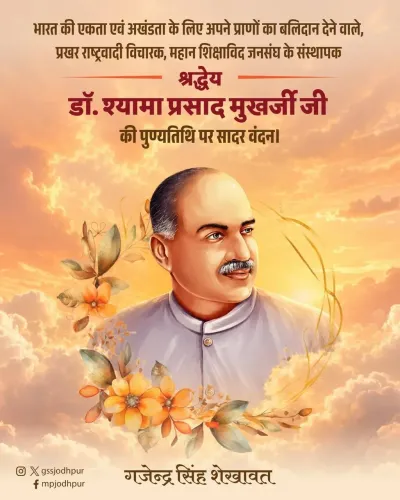
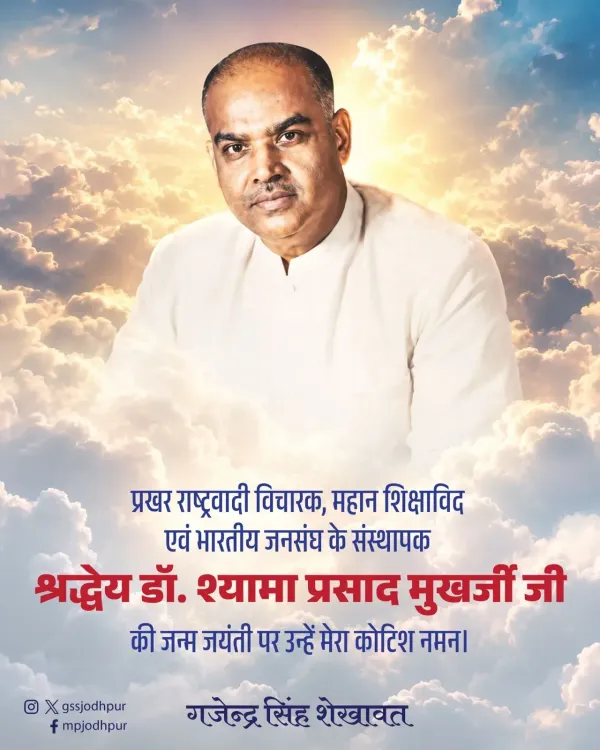
Union Culture and Tourism Minister Gajendra Singh Shekhawat paid homage to Dr. Shyama Prasad Mukherjee on his birth anniversary on Monday, 6 July 2026, hailing him as a fierce nationalist thinker, great educationist, and founder of the Bharatiya Jana Sangh.
In a post on X, Shekhawat offered his 'kotish naman' — kotish naman [countless salutations] — to Mukherjee, describing him as 'prakkhar rashtravadi vicharak, mahan shikshavid evam Bharatiya Jana Sangh ke sansthapak' [a fierce nationalist thinker, great educationist, and founder of the Bharatiya Jana Sangh].
Context
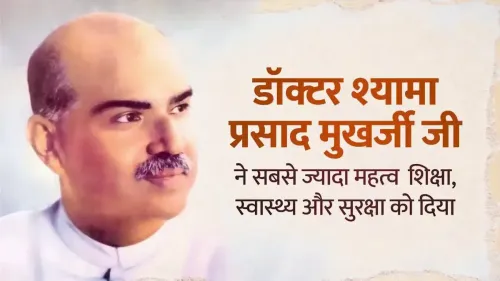
Dr. Shyama Prasad Mukherjee was born on 6 July 1901 in Calcutta and went on to become one of independent India's most consequential political figures. He served as the country's first central Industries Minister before resigning in 1950 in protest against the Nehru-Liaquat Pact, which he believed compromised the rights of Hindus in East Pakistan. He died in custody in Jammu in 1953 while agitating against the requirement of a permit to enter Jammu and Kashmir.
Mukherjee founded the Bharatiya Jana Sangh on 21 October 1951 as a nationalist alternative to the then-dominant Congress party. The Jana Sangh later merged into the Janata Party and is widely regarded as the direct ideological precursor to the Bharatiya Janata Party (BJP).
Policy Backdrop
The BJP and its affiliated organisations have long treated Mukherjee's birth and death anniversaries as occasions to reaffirm the party's ideological roots. The Ministry of Culture has organised official commemorations of Mukherjee's birth anniversary for over a decade, underlining the government's effort to institutionalise the memory of pre-Independence and early post-Independence nationalist figures.
Mukherjee's positions — on Kashmir's special status, the Nehru government's economic planning, and the rights of minorities across the subcontinent — have remained touchstone references for BJP leaders seeking to contrast their ideological lineage with that of the Congress.
Stakeholders and Impact
BJP workers, nationalist ideologues, and cultural organisations affiliated with the broader Sangh Parivar observe 6 July as a day of remembrance and ideological reaffirmation. Tributes from senior Union Ministers carry institutional weight, signalling that Mukherjee's legacy is not merely a party concern but a matter of official cultural policy.
As the Union Minister in charge of Culture, Shekhawat's tribute carries added significance: his ministry is the nodal body for state-sponsored commemorations of national figures, and his public post reinforces the government's positioning of Mukherjee within the mainstream nationalist canon.
What's Next
The Ministry of Culture is expected to continue organising events and programmes in subsequent years to mark Mukherjee's anniversary, potentially expanding outreach through cultural institutions and educational bodies. Observers will watch for any new schemes, memorials, or parliamentary references that further cement Mukherjee's place in India's officially recognised nationalist heritage.
Point of View
Particularly his opposition to Nehruvian policies on Kashmir and minorities. As Culture Minister, his participation carries institutional weight beyond routine party messaging, effectively positioning Mukherjee within the state's officially sanctioned nationalist canon. The annual cadence of such tributes from senior ministers reflects a deliberate strategy to shape cultural memory through the machinery of government. Over time, this pattern suggests the BJP intends to deepen institutional commemoration of pre-1960s nationalist figures as a counterweight to the Congress-centric historiography of the independence era.
NationPress
5 Oct 2026
Frequently Asked Questions
Who was Dr. Shyama Prasad Mukherjee?
Dr. Shyama Prasad Mukherjee was a prominent Indian nationalist politician, educationist, and the founder of the Bharatiya Jana Sangh in 1951. He served as India's first central Industries Minister and died in Jammu custody in 1953 while protesting the permit system for entry into Jammu and Kashmir.
When is Dr. Shyama Prasad Mukherjee's birth anniversary?
Dr. Shyama Prasad Mukherjee was born on 6 July 1901, and his birth anniversary is observed on 6 July every year.
What is the connection between the Jana Sangh and the BJP?
The Bharatiya Jana Sangh, founded by Dr. Mukherjee in 1951, later merged into the Janata Party in 1977 and is widely regarded as the direct ideological precursor to the Bharatiya Janata Party, which was established in 1980.
Why did Shyama Prasad Mukherjee resign as Industries Minister?
Dr. Mukherjee resigned as India's first central Industries Minister in 1950 in protest against the Nehru-Liaquat Pact, which he believed failed to adequately protect the rights of Hindus in East Pakistan.
What did Gajendra Singh Shekhawat say about Dr. Mukherjee?
Union Culture and Tourism Minister Gajendra Singh Shekhawat described Dr. Mukherjee as a fierce nationalist thinker, great educationist, and founder of the Bharatiya Jana Sangh, offering him 'kotish naman' — countless salutations — on his birth anniversary on 6 July 2026.