Bihar CM's Office Honours Top Students with Gold, Silver, Bronze Medals
Synopsis
The Chief Minister's Office of Bihar announced that students finishing first, second, and third in an academic competition were honoured with gold, silver, and bronze medals and certificates of academic excellence, continuing the state's tradition of publicly recognising merit in government schools.
Key Takeaways
The Chief Minister's Office of Bihar shared details of a student felicitation ceremony on 18 July 2026 .
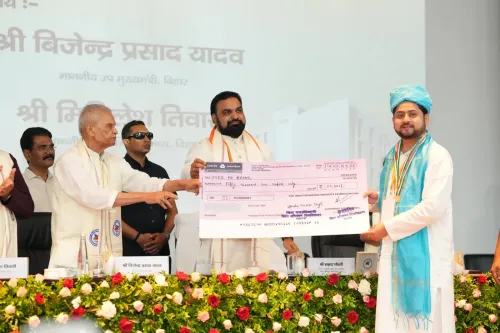
Students ranked first, second, and third received gold, silver, and bronze medals respectively.
Each rank-holder also received a formal certificate of academic excellence .
The event is part of Bihar's practice of state-level merit recognition dating to around 2010 .
The Bihar Education Department oversees such ceremonies alongside board examinations and merit-list publication.
The felicitation aligns with broader state education initiatives including the Mukhyamantri Balika Cycle Yojana launched in 2006 .
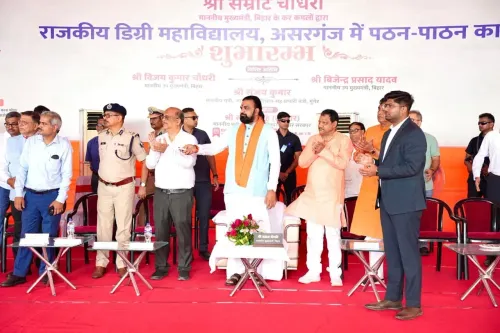
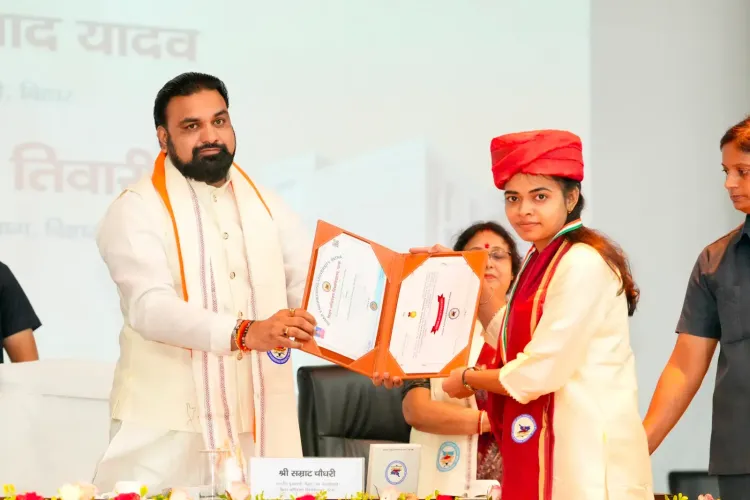
The Chief Minister's Office of Bihar shared on Saturday, 18 July 2026 that a senior state dignitary felicitated students who secured the first, second, and third ranks in an academic competition, presenting them with gold, silver, and bronze medals respectively, along with certificates of academic excellence.
Context
The post, a reply to BJP leader Samrat Chaudhary (@samrat4bjp), describes a formal felicitation ceremony in which rank-holders were honoured in descending order of merit. In the original Hindi: 'प्रथम, द्वितीय एवं तृतीय स्थान प्राप्त करने वाले विद्यार्थियों को क्रमशः स्वर्ण, रजत एवं कांस्य पदक तथा शैक्षणिक उत्कृष्टता प्रमाण-पत्र देकर सम्मानित किया' — meaning, 'students who secured first, second, and third place were honoured with gold, silver, and bronze medals respectively, along with certificates of academic excellence.'
The ceremony reflects the Bihar government's continuing practice of publicly recognising academic merit at state-level functions, a tradition that has been a visible feature of education policy under Chief Minister Nitish Kumar.
Policy Backdrop
Bihar's culture of formal student recognition at the state level took shape from around 2010, when the government began conducting annual award functions for top performers in Class 10 and Class 12 board examinations, publishing merit lists and distributing prizes at high-profile ceremonies.
This approach sits alongside longer-running initiatives such as the Mukhyamantri Balika Cycle Yojana, launched in 2006, which sought to raise girls' secondary-school enrolment through material incentives. Together, these measures reflect a dual strategy: infrastructure spending combined with symbolic rewards designed to motivate students and build public confidence in government schools.
The Bihar Education Department oversees the conduct of board examinations, the preparation of merit lists, and the organisation of such felicitation events, coordinating with district administrations for reach and visibility.
Stakeholders and Impact
The immediate beneficiaries are the school students who placed first, second, and third — each receiving a tiered medal (gold, silver, bronze) and a formal certificate of academic excellence. Such recognition carries both motivational and reputational weight for students from government schools, where competition for top ranks is intense.
Broader stakeholders include state education officials, teachers, and parents, for whom these ceremonies serve as public proof that academic achievement in Bihar's government school system is acknowledged and rewarded at the highest level. The involvement of a senior official from the Chief Minister's Office lends the event added institutional gravity.
Bihar has faced persistent challenges in learning outcomes and teacher vacancies, as documented in successive annual surveys of education. Against that backdrop, visible merit-recognition events are also read as signals of the government's commitment to quality alongside quantity in schooling.
What's Next
Attention will turn to state budget allocations for education in the coming cycle and whether the government issues new guidelines for district-level award ceremonies following the next round of board examinations. The pattern of state-level felicitation is likely to continue, with each cycle potentially expanding the number of students recognised and the categories of excellence rewarded.
Point of View
Visible student recognition has served a dual purpose: reinforcing the administration's education credentials while providing shareable proof of governance for party allies. The tiered medal format (gold, silver, bronze) mirrors competitive sporting conventions and is calibrated to generate aspirational appeal among students and parents in a state where government-school outcomes remain a live political issue. Whether such symbolic gestures translate into measurable improvement in learning levels will be the harder test that successive education surveys continue to pose.
NationPress
17 Oct 2026
Frequently Asked Questions
What medals were given to students by the Bihar government?
Students who finished first, second, and third received gold, silver, and bronze medals respectively, along with certificates of academic excellence, as announced by the Chief Minister's Office of Bihar.
Who organised the student felicitation ceremony in Bihar?
The event was organised under the aegis of the Bihar state government, with the Chief Minister's Office sharing details of the ceremony. The Bihar Education Department oversees such award functions.
What is Bihar's history of recognising academic toppers?
Bihar began holding formal state-level award functions for board examination rank-holders from around 2010, publishing merit lists and distributing prizes at high-profile ceremonies under Chief Minister Nitish Kumar's administration.
What is the Mukhyamantri Balika Cycle Yojana mentioned in Bihar education policy?
The Mukhyamantri Balika Cycle Yojana was launched in 2006 by the Nitish Kumar government to increase girls' enrolment in secondary schools by providing bicycles as an incentive.
Why does the Bihar government publicly recognise student merit?
Public recognition of academic toppers is part of a broader strategy to build confidence in government schools, motivate students, and demonstrate the administration's commitment to education quality alongside infrastructure investment.