Rahul Gandhi Hails Vikram-1 Flight, India's First Private Orbital Rocket

Synopsis
Congress leader Rahul Gandhi praised the successful flight of Vikram-1, India's first privately developed orbital rocket, congratulating Skyroot Aerospace, ISRO and IN-SPACe and calling for stronger public-private collaboration in the space sector.
Key Takeaways
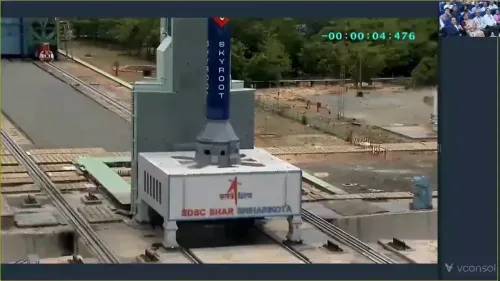
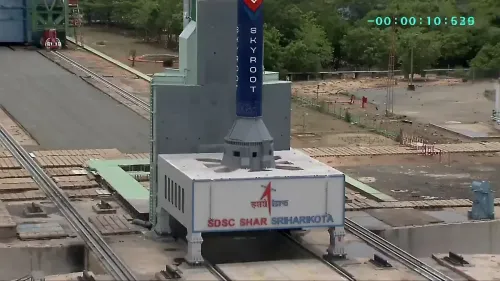
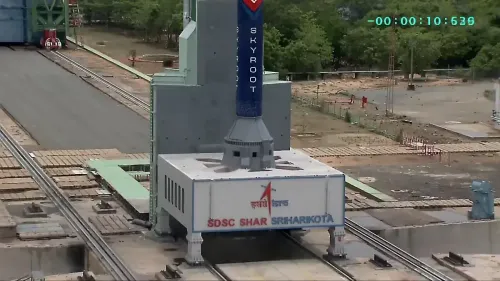
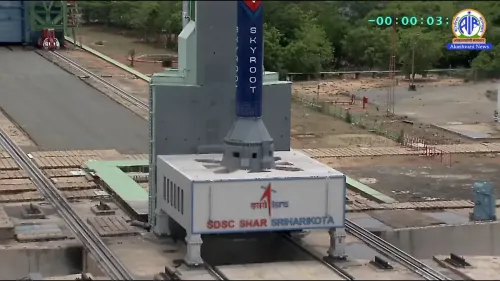
Vikram-1 , described as India's first privately developed orbital rocket built by Skyroot Aerospace , completed a successful flight.
Congress leader Rahul Gandhi congratulated the Skyroot team along with ISRO and IN-SPACe for supporting the mission.
Gandhi called for deeper collaboration between public institutions and private enterprise 'in the service of science and society.' IN-SPACe was established in 2020 as India's nodal body to regulate and promote private sector participation in space activities.
The Indian Space Policy 2023 codified roles for private entities alongside ISRO in manufacturing, launches and data services.
The Vikram-1 milestone is seen as a product of India's multi-year liberalisation of the space sector mirroring global NewSpace trends.
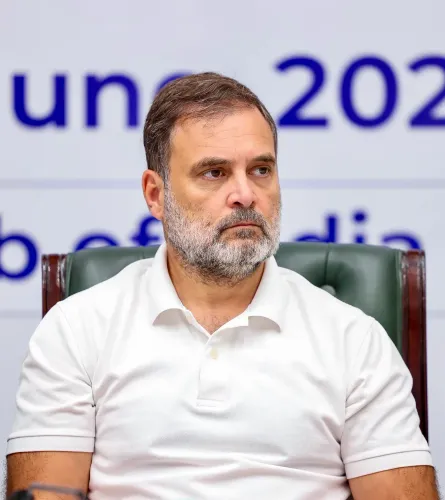
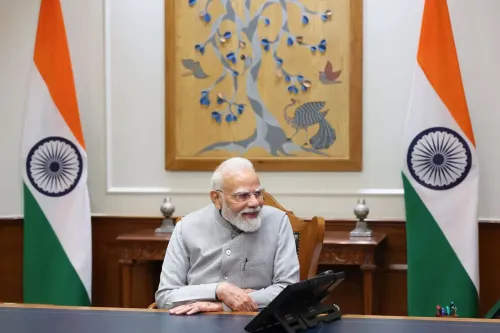
Congress leader and Leader of the Opposition in Lok Sabha Rahul Gandhi on Saturday, 18 July 2026, congratulated Skyroot Aerospace and its partners after the successful flight of Vikram-1, described as India's first privately developed orbital rocket. Gandhi credited the achievement to the sustained effort of scientists, engineers and technicians, and called for deeper collaboration between public institutions and private enterprise in the space sector.
Context
In his post on X, Gandhi wrote that the Vikram-1 flight is 'a tribute to years of patience, precision and quiet work by scientists, engineers and technicians.' He extended congratulations to 'the remarkable young team at Skyroot Aerospace, and to everyone at ISRO and IN-SPACe who supported this mission.' The statement is notable for recognising both the private startup and the state institutions that enabled the launch.
Gandhi added that 'India is strongest when public institutions and private enterprise build upon each other's capabilities in the service of science and society, and when our youth are given the opportunity and trust to turn ambitious ideas into reality.' The framing positions the flight as a model for broader national development through youth empowerment and institutional collaboration.
Policy Backdrop
Skyroot Aerospace is a Hyderabad-based startup founded in 2018 that has developed the Vikram series of small satellite launch vehicles. The company has operated within a policy environment that has progressively opened India's space sector to private players. In 2020, the Government of India created IN-SPACe — the Indian National Space Promotion and Authorisation Centre — as the nodal regulatory body to authorise and promote private sector participation alongside ISRO.
The Indian Space Policy 2023 further codified the roles of private entities in manufacturing, launches and data services, explicitly encouraging startups to complement ISRO's established capabilities. The Vikram-1 orbital flight, if it marks a commercial milestone, would represent a concrete outcome of that multi-year liberalisation effort. India's approach mirrors global 'NewSpace' trends seen in the United States and Europe, where private launch companies have reshaped the satellite deployment market.
Stakeholders and Impact
The primary beneficiaries of a successful Vikram-1 mission are the growing cohort of Indian private space startups seeking affordable domestic launch options, as well as the small satellite operators they serve. ISRO stands to benefit from a complementary private launch ecosystem that can absorb commercial demand while the national agency focuses on deep-space and strategic missions.
For the broader Indian economy, a credible domestic private launch capability could reduce dependence on foreign launch providers and position India as a competitive destination for global satellite deployment contracts. Gandhi's statement underscores the political salience of the space economy as a symbol of national ambition and youth-driven innovation.
What's Next
Attention will now turn to Skyroot Aerospace's subsequent test and commercial flight schedule, as well as the pipeline of orders from domestic and international satellite operators. Parliamentary scrutiny of the pending Space Activities Bill and any revisions to IN-SPACe authorisation rules are also expected to shape how quickly the private sector can scale operations.
Gandhi's public endorsement adds political weight to the case for sustained government support of private space ventures, and may prompt further debate on funding, regulatory timelines and the role of public-sector mentorship in nurturing deep-tech startups across India.
Point of View
Avoiding any partisan framing that could pit one against the other. By invoking youth opportunity and trust, he connects a specific technological milestone to a broader political narrative around empowering the next generation — a consistent theme in his public positioning. The endorsement also implicitly pressures the ruling dispensation to maintain and deepen the policy reforms that made such launches possible, without directly attacking the government. In the context of India's competitive space ambitions, cross-party affirmation of the NewSpace agenda signals rare political consensus that could accelerate regulatory progress.
NationPress
19 Jul 2026
Frequently Asked Questions
What is Vikram-1 and who built it?
Vikram-1 is India's first privately developed orbital rocket, built by Skyroot Aerospace , a Hyderabad -based space startup founded in 2018 . It is designed to carry small satellites into orbit and is the first such vehicle in India developed entirely by a private company.
What did Rahul Gandhi say about the Vikram-1 launch?
Rahul Gandhi called the flight 'a tribute to years of patience, precision and quiet work by scientists, engineers and technicians.' He congratulated Skyroot Aerospace, ISRO and IN-SPACe, and said India is strongest when public institutions and private enterprise collaborate in the service of science and society.
What is IN-SPACe and what role did it play?
IN-SPACe — the Indian National Space Promotion and Authorisation Centre — is a regulatory body created in 2020 to authorise and promote private sector participation in India's space activities. It provided the regulatory framework under which Skyroot Aerospace developed and launched Vikram-1.
How has India opened its space sector to private companies?
India began liberalising its space sector in 2020 by creating IN-SPACe and allowing private firms to manufacture rockets, operate launch vehicles and provide satellite services. The Indian Space Policy 2023 further codified these roles, enabling startups like Skyroot Aerospace to operate alongside ISRO.
Why is the Vikram-1 launch significant for India?
A successful Vikram-1 orbital flight would mark the first time a privately built Indian rocket reached orbit, demonstrating that domestic startups can complement ISRO's capabilities. It could reduce India's dependence on foreign launch providers and position the country as a competitive player in the global small satellite launch market.