Rahul Gandhi hails Vikram-1 launch as triumph of India's public-private space push

Synopsis
Rahul Gandhi's praise for Vikram-1 is more than a congratulatory gesture — it is a rare cross-aisle endorsement of India's private space push. With Skyroot Aerospace becoming the first Indian private firm to achieve orbital flight, backed by ISRO and IN-SPACe, the launch marks the most tangible proof yet that India's 2023 space liberalisation policy is delivering real results.
Key Takeaways
Rahul Gandhi on 18 July congratulated Skyroot Aerospace on the successful launch of Vikram-1 , India's first privately developed orbital rocket.
Gandhi praised the 'remarkable young team at Skyroot Aerospace' and acknowledged critical support from ISRO and IN-SPACe .
He emphasised the importance of synergy between public institutions and private enterprise for scientific progress.
Vikram-1 's successful flight is a landmark for India's commercial space sector, enabled partly by the Indian Space Policy 2023 .
The launch positions India as a potential competitive low-cost orbital launch provider in the global market.
Leader of the Opposition in the Lok Sabha Rahul Gandhi on Saturday, 18 July congratulated the team behind Vikram-1, India's first privately developed orbital rocket, calling its successful flight a proud moment that demonstrates the power of patience, precision, and collaborative innovation. Gandhi extended his remarks via a post on X, specifically applauding Skyroot Aerospace and the institutional backing provided by ISRO and IN-SPACe.
What Gandhi Said
In his post, Gandhi praised the 'remarkable young team at Skyroot Aerospace' and acknowledged all those at ISRO and IN-SPACe who supported the mission. He described the launch as a tribute to 'years of patience, precision and quiet work by scientists, engineers and technicians.'
Gandhi emphasised that India is strongest 'when public institutions and private enterprise build upon each other's capabilities in the service of science and society, and when youth are given the opportunity and trust to turn ambitious ideas into reality.'
The Vikram-1 Milestone
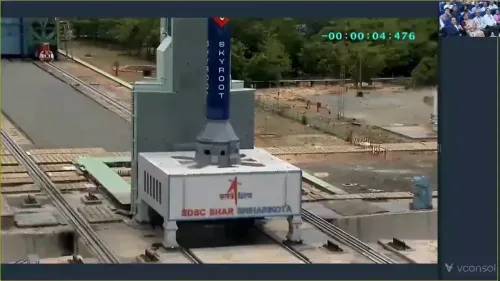
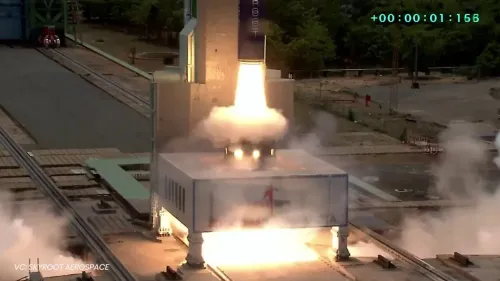
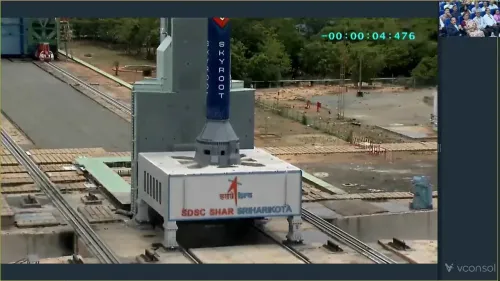
The successful orbital flight of Vikram-1 marks a historic milestone for India's private space sector. Skyroot Aerospace, a Hyderabad-based start-up, became the first Indian private company to place an orbital rocket into flight — a feat that underscores the growing maturity of the country's commercial aerospace ecosystem.
The mission was enabled in part by IN-SPACe (Indian National Space Promotion and Authorisation Centre), the regulatory and facilitation body set up to open India's space sector to private players. ISRO's technical support and infrastructure access were also critical to the launch's success.
Significance for India's Space Economy
The Vikram-1 launch is widely regarded as a landmark in India's bid to carve out a larger share of the global commercial launch market, currently dominated by players like SpaceX. India's space economy is projected to grow significantly over the next decade, and private participation — long restricted — is now seen as central to that ambition.
Notably, this launch comes against a backdrop of sustained government effort to liberalise the space sector, including the Indian Space Policy 2023, which formally opened launch, satellite, and ground-segment activities to private enterprise. Vikram-1's success is arguably the most visible validation of that policy shift so far.
Broader Political and Scientific Context
Gandhi's congratulatory message carries political weight beyond courtesy. As Leader of the Opposition, his acknowledgement of a government-backed initiative — while framing it around youth empowerment and public-private collaboration — signals a bipartisan consensus on space as a national priority. His remarks also implicitly call for continued investment in research, skill development, and entrepreneurship in emerging technology sectors.
With Vikram-1 now in its success column, Skyroot Aerospace is expected to pursue further commercial launch contracts, potentially positioning India as a competitive low-cost orbital launch provider on the world stage.
Point of View
Yet frames the credit around youth, science, and collaboration rather than policy. That framing matters: it lets the Opposition claim the narrative of inclusive innovation without conceding political ground. The deeper question the Vikram-1 moment raises is whether India's space liberalisation can sustain momentum beyond marquee launches — Skyroot still needs commercial contracts, and IN-SPACe's regulatory pipeline remains untested at scale. One successful orbital flight is a proof of concept, not yet a commercial ecosystem.
NationPress
17 Oct 2026
Frequently Asked Questions
What is Vikram-1 and why is its launch significant?
Vikram-1 is India's first privately developed orbital rocket, built by Hyderabad-based start-up Skyroot Aerospace. Its successful flight marks a historic milestone for India's commercial space sector, demonstrating that private Indian firms can independently achieve orbital launch capability.
What did Rahul Gandhi say about the Vikram-1 launch?
Rahul Gandhi, in a post on X, congratulated Skyroot Aerospace and praised the 'remarkable young team' behind the rocket. He called the launch a tribute to years of patience and precision, and stressed that India is strongest when public institutions and private enterprise work together in the service of science and society.
What role did ISRO and IN-SPACe play in the Vikram-1 mission?
ISRO provided technical support and infrastructure access, while IN-SPACe — the government body set up to facilitate private space activity — offered regulatory and facilitation support. Both were specifically acknowledged by Rahul Gandhi in his congratulatory message.
How does Vikram-1 fit into India's broader space policy?
The launch is a direct outcome of the Indian Space Policy 2023, which opened launch, satellite, and ground-segment activities to private players. Vikram-1's success is widely seen as the most visible validation of that policy shift to date.
What happens next for Skyroot Aerospace after Vikram-1?
Following the successful orbital flight, Skyroot Aerospace is expected to pursue commercial launch contracts, potentially positioning India as a competitive low-cost launch provider in the global market. Further missions and payload agreements are anticipated.